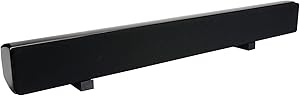
VIZIO vs Dayton Audio: Overview
Comparing VIZIO and Dayton Audio helps you determine which brand is best suited for your needs in Soundbars. Both brands offer strong choices depending on your budget and key feature requirements.
Key Features & Comparison
Evaluate factors such as build quality, warranty, customer satisfaction, and total value before making your final purchase choice between VIZIO and Dayton Audio.
Product Selection
VIZIO commands a massive presence in the consumer home theater market, offering an extensive, tiered catalog that caters to virtually every consumer bracket. Their portfolio spans straightforward, ultra-compact 2.0-channel bars designed for bedroom TVs up to elaborate 5.1.2 and 5.1.4 Dolby Atmos systems equipped with dedicated wireless subwoofers, up-firing transducers, and discreet satellite speakers. Series tiers like the V-Series, M-Series, and the high-end Elevate line demonstrate a clear engineering progression, giving mainstream consumers turnkey surround sound solutions that integrate modern decoding standards right out of the box.
In contrast, Dayton Audio approaches product selection from an audiophile and DIY-enthusiast perspective, resulting in a substantially narrower and more specialized lineup. Rather than flooding the market with dozens of pre-packaged consumer variants, Dayton Audio focuses on functional audio utility, offering select powered soundbars like the modern-classic DTA-series bars or passive soundbar enclosures meant to be powered by external multi-channel amplifiers. This selective catalog appeals primarily to custom installers and audio hobbyists who prioritize modularity, system integration, and raw speaker components over mass-market, all-in-one convenience.
Design/Look
VIZIO designs its soundbars with a sleek, contemporary consumer aesthetic intended to seamlessly complement modern ultra-thin television panels. The aesthetic language leans heavily on slim profiles, rounded contours, and acoustically transparent fabric wraps punctuated by brushed dark finishes. A prime example of their industrial design ingenuity is the flagship Elevate soundbar, which incorporates mechanically rotating speaker pods that automatically pivot upward for height-channel immersion and forward for stereo playback, blending sophisticated mechanical engineering with a striking visual statement.
Dayton Audio rejects lifestyle-oriented ornamentation in favor of a utilitarian, pro-audio design philosophy. Their soundbars often feature squared-off MDF (medium-density fiberboard) cabinets, durable vinyl wraps, and rigid metal or standard mesh grilles, emphasizing acoustic rigidity and durability over living-room elegance. While VIZIO aims to blend invisibly into modern home decor or stand out as a high-tech centerpiece, Dayton Audio's hardware presents an unpretentious, retro-industrial footprint that reflects its background in bench-tested audio parts and custom integration components.
Affordability
VIZIO has long established itself as a value-to-performance benchmark in mainstream consumer electronics, leveraging vast supply chain scale to offer competitive pricing. Consumers can purchase entry-level stereo bars for well under one hundred dollars, while their fully-featured Dolby Atmos and DTS:X surround packages often undercut premium competitors by significant margins while including subwoofers and satellites in the base price. This aggressive pricing strategy delivers high perceived value per dollar for buyers seeking complete, multi-channel immersive setups without requiring additional audio hardware investments.
Dayton Audio offers an alternative approach to affordability that focuses on long-term hardware value and component quality over bundle features. While the initial retail price of a standalone Dayton Audio bar is remarkably accessible, true cost calculations depend on the implementation; passive models necessitate outboard amplification, subwoofers, and cabling. For consumers who already own audio hardware, Dayton provides audiophile-grade crossover components and robust motor assemblies at prices mass-market brands cannot match, but for those seeking a standalone, plug-and-play solution with out-of-the-box decoders, VIZIO offers greater initial economic value.
Sound Quality
VIZIO tunes its systems to meet mainstream cinematic expectations, employing sophisticated digital signal processing (DSP) to achieve crisp dialog projection, expansive virtual staging, and thunderous low-frequency impact. The integration of dedicated wireless subwoofers across mid-tier and flagship models ensures powerful bass extension for movie playback, while discrete center channels effectively isolate vocal frequencies. However, higher-volume playback on mid-tier models can occasionally introduce DSP-induced compression or slight upper-midrange harshness, favoring high-impact cinema dynamics over clinical musical neutrality.
Dayton Audio excels in acoustic purity, driver mechanics, and natural frequency response, appealing directly to discerning ears that prioritize Hi-Fi performance over spatial DSP tricks. Thanks to well-damped cabinet construction, high-grade tweeters, and proper analog crossover networks, Dayton Audio soundbars deliver exceptional midrange transparency, accurate vocal timbre, and smooth stereo separation. While they generally lack the complex native Dolby Atmos height virtualization or heavy onboard digital processing found in VIZIO systems, their acoustic output is distinctly more linear and organic, making them far superior for critical music listening.