VIZIO vs Sonos: Overview & Brand Philosophy
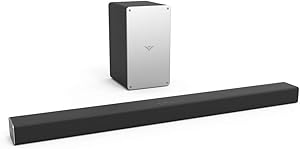
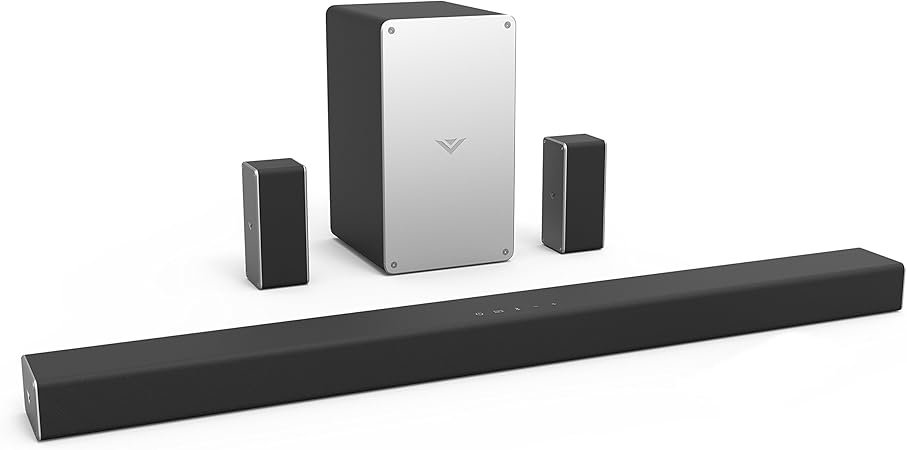
The home theater audio market has evolved dramatically over the last decade, transitioning from complex, wire-heavy AV receiver setups to sleek, intelligent soundbars. Within this competitive landscape, VIZIO and Sonos represent two diametrically opposed philosophies of home audio engineering and consumer positioning. VIZIO has long championed the concept of democratized technology, aiming to deliver high-channel-count, immersive surround sound systems at pricing tiers that undercut traditional audio heavyweights. Their design thesis focuses on out-of-the-box, comprehensive solutions—frequently bundling wireless subwoofers and physical rear satellite speakers directly into the purchase price.
Sonos, by contrast, operates with an architectural and ecosystem-first mindset. Originating as a pioneer in multi-room wireless audio, Sonos treats the soundbar not merely as a television speaker, but as the foundational anchor of a modular, whole-home acoustic network. The Sonos philosophy emphasizes acoustic purism, proprietary software integration, minimalist Scandinavian-inspired aesthetics, and seamless streaming interoperability. Rather than packing maximum hardware components into a single budget-friendly box, Sonos prioritizes premium build quality, advanced digital signal processing (DSP), and long-term software support.
Understanding these distinct brand identities is essential for consumers navigating the market. A choice between Sonos and VIZIO is rarely just about decibels or frequency response; it is a fundamental decision between an all-in-one, high-value home theater package and a scalable, premium software-driven audio ecosystem.
Key Differences & Technological Comparison
The technological divergence between Sonos and VIZIO spans connectivity protocols, spatial audio rendering, modularity, and acoustic calibration.
Acoustic Architecture and Spatial Audio: Sonos relies heavily on bespoke acoustic engineering. Flagship models like the Sonos Arc utilize custom elliptical drivers, angled silk-dome tweeters, and dedicated up-firing arrays designed to bounce sound off the ceiling to generate Dolby Atmos height channels. VIZIO, in models such as the Elevate series, approaches physics with mechanical innovation—employing motorized, rotating speaker pods that automatically reposition themselves upward when an Atmos or DTS:X signal is detected, and forward for standard stereo. Furthermore, VIZIO natively supports both major 3D audio codecs (Dolby Atmos and DTS:X), whereas Sonos historically prioritized Dolby formats and offers limited or no support for DTS:X and DTS-HD Master Audio.
Ecosystem and Multi-Room Capabilities: Sonos dominates software networking. Operating via the robust Sonos S2 platform, their soundbars integrate flawlessly with services like Apple AirPlay 2, Spotify Connect, and a vast array of streaming platforms. Sonos allows users to start with a standalone bar (such as the Beam or Ray) and later introduce a Sonos Sub and Era-series surrounds over ultra-low-latency Wi-Fi. VIZIO systems are predominantly self-contained. While they feature Bluetooth and occasionally integrated casting capabilities, they lack a dedicated multi-room synchronization protocol and do not allow modular expansion; the hardware you buy in the box is the permanent configuration of that system.
Calibration and Tuning: Sonos utilizes Trueplay, an advanced acoustic tuning software that uses an iOS device's microphone (or built-in far-field mics on newer products) to analyze room reflections and alter the soundbar’s parametric equalization accordingly. VIZIO relies primarily on preset DSP sound modes (Movie, Music, Direct, Game) and manual channel-level adjustments via a physical remote control or mobile app, providing less automated room-correction intelligence but faster, platform-agnostic manual adjustments.
Hardware Connectivity: Both brands heavily utilize HDMI eARC (Enhanced Audio Return Channel) for uncompressed spatial audio transmission. However, Sonos products are famously minimalist, omitting secondary HDMI pass-through ports entirely. Some premium VIZIO bars feature HDMI in/out pass-through with support for 4K Dolby Vision, allowing users with limited TV ports to route an external streaming box or gaming console directly through the soundbar.
Pros & Cons Comparison
VIZIO Soundbars
- Pros:
- Exceptional price-to-performance ratio with true physical surround sound included.
- Broad codec support including both Dolby Atmos and DTS:X formats.
- Select models feature HDMI pass-through ports for flexible input routing.
- Independent remote control with built-in LCD screen eliminates reliance on a smartphone app.
- Cons:
- Lacks modular expandability; cannot easily add or upgrade individual components later.
- No multi-room wireless audio ecosystem comparable to Sonos.
- Inconsistent software and firmware reliability over extended product lifespans.
- Industrial design and materials (cloth mesh, plastics) are less durable and premium.
Sonos Soundbars
- Pros:
- Industry-leading multi-room audio platform with deep streaming service integration.
- Fully modular design allows incremental upgrades (add subs and rears over time).
- Superior acoustic fidelity, vocal clarity, and sophisticated Trueplay room calibration.
- Exceptional industrial build quality with continuous, long-term software updates.
- Cons:
- Significantly higher cost of entry, especially when building a full 5.1 or Atmos setup.
- No HDMI pass-through ports; relies entirely on the television’s internal port selection.
- Absence of physical remote controls out of the box (controlled via TV remote, app, or voice).
- Restricted support for DTS audio formats compared to universal Dolby prioritization.
Performance, Durability & Value Analysis
From an audio performance perspective, the comparison hinges on physical immersion versus acoustic accuracy. VIZIO excels at providing an authentic surround envelope at a fractional cost. Because most VIZIO mid-to-high-tier systems include physical rear satellite speakers that wire into a wireless subwoofer, the sense of directional spatial audio is genuine rather than psychoacoustically simulated. However, Sonos delivers superior micro-detail, tonal balance, and vocal clarity. Dialog processing on a Sonos Arc or Beam Gen 2 is noticeably crisper, free of the midrange muddiness or cabinet resonance that can sometimes plague VIZIO enclosures at elevated listening volumes. For music playback, Sonos is unequivocally superior, offering wider dynamic range and natural instrument separation.
In terms of durability and long-term value, Sonos operates on an entirely different tier. Sonos products are manufactured using robust polycarbonate enclosures, micro-drilled grilles, and premium internal components designed to remain in service for seven to ten years or more, continually refreshed by cloud-based firmware upgrades. VIZIO units deliver incredible short-term value per dollar spent, but their long-term reliability is more volatile. Consumer reports and industry service data note higher rates of HDMI handshake glitches, wireless subwoofer dropouts, and power-supply degradation in VIZIO units after 3 to 5 years of steady use. Sonos requires a substantially higher initial capital outlay, but its residual value and lifecycle longevity make it a sound technological investment.
Final Verdict: Which Brand Should You Choose?
Choosing between Sonos and VIZIO ultimately comes down to your financial threshold, your room's requirements, and how you consume media.
Choose VIZIO if: You are seeking an immediate, cinematic, out-of-the-box surround sound or Dolby Atmos setup on a defined budget. If your primary goal is watching movies and gaming with physical rear speakers firing behind you, and you want everything needed inside a single box without spending upwards of a thousand dollars, VIZIO offers the most aggressive, high-performing value proposition on the market.
Choose Sonos if: You value premium acoustic fidelity, architectural aesthetics, and a cohesive smart-home ecosystem. Sonos is the definitive choice if you listen to as much music as you do television audio, if you prioritize seamless multi-room playback throughout your living space, or if you prefer an iterative approach—buying a phenomenal standalone soundbar today with the intention of adding a dedicated subwoofer and surround speakers over time.
Product Selection
When evaluating product selection in the soundbar category, VIZIO and Sonos adopt fundamentally contrasting engineering and market strategies. VIZIO operates on a traditional, packaged-solution model, offering a vast and stratified catalog categorized into tiered lines such as the V-Series, M-Series, and the flagship Elevate series. The primary technical strength of VIZIO’s catalog is the sheer variety of out-of-the-box configurations. Consumers can select from ultra-compact 2.0-channel bars up to fully integrated 5.1.2-channel Dolby Atmos systems that include wireless subwoofers and discrete satellite speakers in a single SKU. Furthermore, VIZIO demonstrates unique electromechanical innovation at the higher end, such as the rotating height drivers in the Elevate, alongside ubiquitous HDMI eARC and DTS:X support across even mid-range offerings. This breadth allows budget-conscious and mid-tier buyers to achieve true physical surround sound without purchasing additional components, though it comes at the expense of modularity and future scalability.
Conversely, Sonos utilizes a curated, highly focused portfolio centered on modularity, platform longevity, and custom acoustic architecture. Rather than offering dozens of bundled iterations, Sonos focuses on a distinct three-tier primary lineup: the entry-level Ray (optical-only, directional stereo), the mid-range Beam (compact with virtualized Dolby Atmos), and the flagship Arc or Arc Ultra (featuring complex acoustic waveguide arrays and Sound Motion driver technology for discrete spatial audio). The engineering triumph of the Sonos lineup is not breadth, but architectural cohesion and system interoperability. Every Sonos soundbar acts as an anchor within a larger wireless multi-room ecosystem, allowing users to asynchronously add dedicated wireless subwoofers (Sub or Sub Mini) and various architectural or rear surround speakers (Era 100, Era 300) over time. This approach also integrates sophisticated Trueplay room-correction DSP and broad music streaming platform interoperability via Wi-Fi, which VIZIO largely foregoes in favor of lower manufacturing costs and simple Bluetooth pairing.
From a practical consumer standpoint, the trade-offs between these two product portfolios center on immediate completeness versus long-term flexibility and investment scale. VIZIO’s product selection excels for users seeking high price-to-performance ratios and complete surround systems without the hassle of building an ecosystem; you buy a specific model for a specific room and get maximum channel count per dollar. However, VIZIO offers virtually no modular upgrade path—if you outgrow a 2.1 system, you must replace the entire unit. Sonos requires a significantly higher capital investment, often selling subwoofers and satellites as premium individual components, and relies strictly on Dolby audio processing while eschewing DTS codecs. Ultimately, VIZIO provides the superior catalog for plug-and-play, fixed-budget home theater enthusiasts, while Sonos offers a far more refined, scalable, and acoustically consistent lineup for smart-home adopters building a synchronized audio network.
Design/Look
When evaluating the industrial design and aesthetic execution of soundbars, Sonos and VIZIO represent two fundamentally different product philosophies. Sonos champions an architectural, Scandinavian-inspired minimalism engineered to seamlessly integrate into modern interior decor. Utilizing continuous, precision-drilled polycarbonate grilles—free of visible seams, screws, or branding clutter—devices like the Sonos Arc and Beam Gen 2 boast an ultra-refined, monolithic look. Sonos places significant engineering emphasis on structural rigidity, using dense composite plastics that eliminate internal resonance while presenting a premium matte finish in either clean white or subtle black. In contrast, VIZIO designs with an utilitarian, angular approach tailored for functional home entertainment systems. While higher-end VIZIO offerings, such as the Elevate, introduce striking mechanical engineering with rotating height-channel speakers that pivot dynamically, their entry-to-mid-range lineups primarily utilize standard acoustic fabric wraps and lightweight plastics. This fabric wrapping, while acoustically transparent, acts as a dust magnet over time and is far more susceptible to wear and tear than Sonos’s rigid, easily cleanable shells.
From an ergonomic and physical integration perspective, the design trade-offs between the two brands directly impact living room spatial dynamics. Sonos strictly adheres to low-profile cylindrical and elliptical enclosures engineered with touch-capacitive controls that sit flush against the top chassis, maintaining a clean visual plane. Their wall-mounting systems are nearly invisible, and peripheral components like the Sub and Era satellite speakers echo the same cohesive aesthetic language, allowing for visually harmonious modular expansion. VIZIO, conversely, focuses on a compact, geometric footprint characterized by sharp corners, metallic side-caps, and exterior status LEDs. While VIZIO’s integrated, dot-matrix LED displays on the soundbar face offer superior immediate visual feedback compared to Sonos’s single ambiguous status LED, the physical form factor can sometimes block lower TV bezels due to taller, blockier front profiles. Furthermore, VIZIO’s secondary components, particularly their wireless subwoofers and wired-to-sub satellite speakers, lack the design sophistication of Sonos, often appearing utilitarian and requiring messy cable routing between the surrounds and the bass box.
Ultimately, the choice in design reflects distinct consumer priorities between pure aesthetic prestige and pragmatic functionality. Sonos soundbars are luxury design objects engineered with obsessive attention to acoustic-friendly materials, premium tactile interfaces, and a cohesive design language that elevates high-end living spaces. VIZIO delivers competent, modern hardware with occasional engineering highlights like motorized drivers, but makes noticeable material compromises—such as utilizing less premium plastics, generic cloth coverings, and industrial-looking peripherals—to optimize cost-to-performance. For consumers prioritizing a sleek, durable, and sophisticated centerpiece that complements a modern television setup, Sonos is the clear design leader; however, VIZIO remains a capable, functionally engineered option for users willing to trade luxury industrial aesthetics for high-value acoustic components.
Affordability
When evaluating affordability, VIZIO and Sonos represent fundamentally opposed market philosophies, driven by differing approaches to acoustic engineering and manufacturing economies of scale. VIZIO has historically dominated the budget-to-midrange space by maximizing hardware inclusion per dollar. For the price of an entry-level standalone bar from premium competitors, VIZIO frequently packages true multi-channel surround sound configurations—often including a dedicated wireless subwoofer and discreet satellite speakers alongside decoding support for formats like Dolby Atmos and DTS:X. The technical trade-off, however, lies in physical componentry and long-term chassis durability: VIZIO leverages cost-effective plastics, standard acoustic fabric, and simpler analog-digital conversion circuitry that, while competent and high-performing out of the box, lacks the bespoke acoustic tuning and premium inert materials found in higher tiers.
Conversely, Sonos completely redefines the purchase barrier by anchoring its portfolio in the premium segment, where initial affordability is low but total cost of ownership is offset by sustained ecosystem longevity. Rather than competing on bundled hardware volume, a single Sonos speaker, such as the compact Ray or the flagship Arc, represents an investment in high-grade custom drivers, individual Class-D digital amplifiers per transducer, and advanced architectural acoustics that mitigate internal cabinet resonance. Features like proprietary Trueplay room-tuning utilize active algorithmic DSP optimization that vastly outperforms the static EQ presets typical of cheaper hardware. However, building out a true 5.1-channel or higher configuration requires purchasing subwoofers and satellite surrounds piecemeal, driving overall system costs exponentially higher than anything in the VIZIO catalog.
Ultimately, the practical trade-off between the two brands centers on immediate acoustic value versus modular, long-term software support. VIZIO is the definitive champion of raw, direct affordability, offering an unmatched price-to-performance ratio for consumers seeking complete, cinematic multi-channel audio without a substantial financial commitment. Sonos, while undeniably a luxury spend with high entry and expansion costs, justifies its price tag over time through cross-product interoperability, exceptional build tolerances, multi-room Wi-Fi streaming stability, and an industry-leading software lifecycle that provides functional updates for years after hardware production ends.
Sound Quality
When evaluating sound quality, Sonos and VIZIO represent fundamentally different engineering philosophies and price-to-performance tiers. Sonos approaches acoustic design from a high-fidelity, software-calibrated perspective. Flagship models like the Sonos Arc and the compact Beam (Gen 2) employ custom-designed elliptical woofers, angled silk-dome tweeters, and dedicated Class-D digital amplifiers that produce an exceptionally clean, neutral sound signature. The midrange performance on Sonos systems is a benchmark for the category; dialogue clarity remains pristine even amidst chaotic audio mixes, avoiding the boxy or muffled characteristics common in lower-tier systems. Furthermore, Sonos leverages Trueplay tuning technology, which uses acoustic measurements to map the soundbar's output to the specific dimensions and reflective surfaces of your room, virtually eliminating acoustic dead spots and muddy frequency buildup.
VIZIO, by contrast, focuses on delivering high-impact, physical immersion per dollar through multi-channel hardware rather than relying on sophisticated spatial psychoacoustics. Even at entry-to-midrange price points (such as the V-Series and M-Series), VIZIO frequently includes dedicated wireless subwoofers and physical rear satellite speakers. This hardware-heavy approach gives VIZIO an undeniable advantage in raw, visceral low-frequency extension and true directional surround sound compared to a standalone Sonos bar. However, VIZIO's acoustic engineering leans heavily toward a V-shaped sound profile, emphasizing booming bass and sharp highs at the expense of midrange nuance. The soundstage, while expansive due to physical satellites, can suffer from noticeable tonal imbalances, slightly harsh treble spikes at high volumes, and dialogue that requires frequent manual calibration via equalizer presets to cut through the bass.
Ultimately, the sound quality trade-off between the two brands hinges on fidelity versus scale. Sonos is the undisputed leader in refined acoustic balance, dynamic range, and vocal precision, providing a cohesive, audiophile-grade soundstage that excels at both Dolby Atmos movie playback and high-resolution music streaming—though fully realizing its deep-bass potential requires the expensive addition of a Sonos Sub. VIZIO delivers a theater-like, chest-thumping presentation out of the box that excels at action-heavy cinema, making it the practical choice for budget-conscious consumers who prioritize spatial envelopment and raw bass impact over Sonos's clinical acoustic accuracy and sophisticated room correction.