Klipsch vs Sonos: Overview & Brand Philosophy
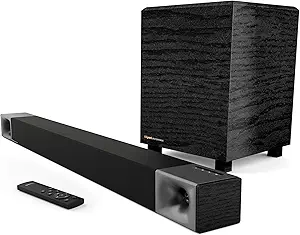
When approaching the premium soundbar market, few brands present as stark and fascinating a contrast in design philosophy as Klipsch and Sonos. Klipsch, an American heritage brand founded in 1946 by audio pioneer Paul W. Klipsch, approaches soundbar engineering from an old-school, high-fidelity acoustic perspective. Renowned for their proprietary horn-loaded drivers and real-wood craftsmanship, Klipsch views the soundbar as a direct extension of classic home theater separates. Their mission is to deliver raw dynamic energy, pristine acoustic efficiency, and the visceral punch of a traditional cinema system, prioritizing physical acoustics over digital manipulation.
In contrast, Sonos revolutionized consumer audio in the early 2000s by pioneering whole-home wireless audio, and their modern soundbars reflect that software-first pedigree. Sonos approaches home theater through the lens of seamless networked integration, computational audio processing, and minimalist aesthetic design. Rather than relying on oversized cabinets or high-efficiency acoustic horns, Sonos leverages advanced Digital Signal Processing (DSP), beamforming acoustic arrays, and automated room-tuning algorithms (Trueplay) to achieve immersive, expansive soundstages. Their philosophy centers on effortless multi-room synchronization, smart-home interoperability, and continuous software refinement delivered over-the-air.
For the modern consumer, this fundamental divergence shapes the user experience. Choosing between Sonos and Klipsch is not merely a decision between two speaker brands; it is a choice between traditional acoustic power with traditional AV connectivity versus a streamlined, cloud-connected digital ecosystem designed for both cinema sound and effortless music streaming.
Key Differences & Technological Comparison
The core architectural difference between Sonos and Klipsch lies in driver technology and physical cabinet construction. Klipsch soundbars—such as the Cinema series and the modular Flexus series (engineered in partnership with Onkyo)—heavily feature their patented Tractrix horns and high-efficiency tweeters. Horn loading mechanically amplifies sound, yielding lower distortion at high volumes, greater dynamic range, and exceptional dialogue intelligibility. Furthermore, Klipsch frequently uses real wood (MDF) composite enclosures, adding physical resonance control that synthetic enclosures often struggle to match.
Sonos takes a distinctly computational approach to driver integration. In flagships like the Sonos Arc Ultra and mid-tier models like the Beam Gen 2, custom-designed elliptical woofers, angled tweeters, and cutting-edge transducer technologies (such as the Sound Motion woofer) work alongside complex software to steer audio precisely across the room. Sonos relies heavily on its Trueplay calibration software, which uses microphone arrays to map the room's reflective surfaces and adjust the EQ dynamically, compensating for suboptimal room geometries where non-calibrated systems might suffer.
Connectivity and the smart ecosystem represent another major battleground. Sonos systems operate primarily over Wi-Fi, utilizing the robust Sonos S2 platform to integrate seamlessly with dozens of streaming services, Apple AirPlay 2, and major voice assistants. However, this minimalist network approach comes at a physical cost: Sonos bars notably omit auxiliary HDMI inputs, requiring all external media devices to pass through your television's eARC port. Klipsch soundbars, conversely, embrace traditional physical AV flexibility. They frequently include dedicated HDMI pass-through ports (supporting 4K/HDR switching), optical inputs, analog 3.5mm jacks, and standard Bluetooth alongside dedicated RCA subwoofer pre-outs, allowing users to connect virtually any standard powered subwoofer alongside proprietary wireless units.
Pros & Cons Comparison
Klipsch Soundbars
- Pros:
- Exceptional dynamic headroom and volume output without audible distortion, driven by Tractrix horn technology.
- Superior dialogue clarity that cuts cleanly through complex, explosive movie mixes.
- Physical connectivity options often include multiple HDMI pass-through ports and standard RCA sub outs.
- Heavier, resonance-damped cabinets often built with real wood materials.
- Cons:
- Accompanying companion mobile apps can be basic, inconsistent, and prone to firmware connectivity hiccups.
- Limited multi-room streaming flexibility compared to modern networked audio platforms.
- Virtual surround and spatial beamforming are generally less convincing than computational alternatives.
Sonos Soundbars
- Pros:
- Industry-leading multi-room wireless integration and extremely stable software ecosystem.
- Class-leading spatial separation and Dolby Atmos soundstage expansion via computational beamforming.
- Trueplay automated room calibration tunes audio accurately to irregular living spaces.
- Effortless modular expandability with Sonos rear surrounds and subwoofers.
- Cons:
- Lacks secondary HDMI inputs, limiting setups to TV-dependent eARC pass-through only.
- Ecosystem lock-in: proprietary subwoofers are mandatory and carry a high price tag.
- Absence of Bluetooth connectivity on flagship living-room bars (like the original Arc) requires Wi-Fi reliance.
Performance, Durability & Value Analysis
When assessing raw acoustic performance and hardware longevity, Klipsch delivers outstanding value per decibel. Because horn-loaded drivers require significantly less electrical power to produce high sound pressure levels, Klipsch internal amplifiers run cooler, potentially mitigating thermal stress over years of intense operation. Users seeking explosive transients—such as gunfire, high-impact cinema scores, and live concert footage—will find that Klipsch products often outperform Sonos in sheer visceral punch at comparable price points. Moreover, the ability to integrate non-proprietary subwoofers means a Klipsch system can be upgraded incrementally without retiring the entire setup, preserving your financial investment over the long haul.
Sonos justifies its premium pricing through unparalleled software longevity, aesthetic design, and system-wide synergy. Sonos historically supports its legacy products with software updates long past typical consumer-tech lifespans, meaning a Sonos soundbar remains functionally modern and secure for the better part of a decade. While adding a Sonos Sub and dedicated surrounds (such as Era 100s or 300s) quickly compounds the overall cost into four-figure territory, the resulting system creates an ultra-refined, low-clutter environment where music streaming is just as pristine and simple as cinematic playback. Sonos products retain remarkable resale value on the secondary market, offsetting initial capital expenditures.
Final Verdict: Which Brand Should You Choose?
The choice between Sonos and Klipsch hinges squarely on whether you prioritize raw cinematic audio horsepower and physical hardware flexibility, or seamless digital integration and polished multi-room lifestyle audio.
Choose Klipsch if: Your primary objective is an authentic, high-impact home theater experience for movies and gaming. If you demand thunderous bass dynamics, crystalline dialogue that never gets buried, dedicated HDMI pass-through inputs for external media consoles, or the freedom to connect standard third-party subwoofers, Klipsch provides the physical performance and acoustic muscle your living room demands.
Choose Sonos if: You value sleek, unobtrusive design, state-of-the-art computational Dolby Atmos processing, and an effortless whole-home music ecosystem. If you plan to expand your audio across multiple rooms, desire quick smartphone-guided room tuning (Trueplay), and prefer clean wireless modularity over physical cables and complex AV menus, Sonos represents the gold standard of modern smart home audio.
Product Selection
When evaluating product selection in the soundbar category, Klipsch and Sonos represent two fundamentally distinct engineering philosophies and market strategies. Klipsch structures its catalog around traditional acoustic principles, offering options ranging from accessible, plug-and-play systems to expansive, modular home theater solutions like the Cinema and Flexus series. The brand's lineup heavily emphasizes dynamic horn-loaded drivers, wood composite enclosures, and high-SPL (sound pressure level) output. Klipsch provides consumers with choices that often package dedicated, high-output wireless subwoofers directly in the box, appealing to home theater purists seeking dynamic audio and tangible physical connectivity—such as dedicated analog inputs and subwoofer pre-outs—straight from purchase without necessitating a proprietary software framework.
Conversely, Sonos employs a highly deliberate, tier-based ecosystem model that prioritizes software integration, wireless multi-room audio, and room-correction technology. Its soundbar selection is sharply segmented into well-defined price and performance tiers: the ultra-compact Ray for secondary spaces and optical-only setups, the mid-range Beam with virtualized Dolby Atmos for small-to-medium rooms, and the flagship Arc, which features dedicated upward-firing and side-angled transducers for uncompromised spatial audio. Rather than bundling subwoofers by default, Sonos leverages a mix-and-match modularity, allowing users to pair any soundbar with either the Sub Mini or full-size Sub, alongside various architectural or bookshelf surround speakers. This modular portfolio excels in smart home ecosystem cohesion, offering robust streaming protocol support (Apple AirPlay 2, Spotify Connect, Sonos S2 platform) and Trueplay tuning, though it sacrifices physical I/O options by universally omitting aux inputs and HDMI passthrough ports.
Ultimately, the practical trade-off between the two product portfolios comes down to theater-first hardware versus lifestyle-driven flexibility. Klipsch delivers superior out-of-the-box acoustic value and connection versatility, making its selection ideal for buyers wanting turnkey home theater punch with expansive low-frequency drivers included at lower price points. However, Sonos offers a vastly superior software platform and a more seamless upgrade path. While Sonos requires a higher overall investment due to standalone soundbars and separate component pricing, its tightly curated hardware selection provides an unmatched multi-room deployment that avoids the firmware inconsistencies that have occasionally affected Klipsch's connected platforms.
Design/Look
When evaluating industrial design and aesthetic execution in the soundbar category, Klipsch and Sonos embody fundamentally divergent design philosophies. Sonos champions a minimalist, contemporary Scandinavian-inspired aesthetic characterized by seamless polycarbonate enclosures, precision-drilled acoustic grilles, and gentle, rounded contours. Models like the Sonos Arc and Beam Gen 2 are engineered to visually disappear into modern living spaces, offering monochromatic matte black or matte white finishes that complement sleek OLED televisions and minimalist furniture. In stark contrast, Klipsch leans into high-end audio heritage and mid-century modern architectural cues, particularly through its Heritage and Cinema series. Klipsch utilizes real wood-veneer cabinets, textured acoustic fabrics, and exposed, spun-copper tactile accents that highlight the brand's proprietary Tractrix horn-loaded tweeters. Where Sonos strives for discreet, integrated architecture, Klipsch designs its soundbars to be assertive, furniture-grade centerpiece audio components that celebrate classic analog craftsmanship.
From an engineering and technical standpoint, the materials chosen by each brand dictate distinct acoustical and physical advantages. Sonos relies on rigid, injection-molded resin compounds that allow for continuous 270-degree acoustic grilles, effectively eliminating visible seams while strategically dispersing sound from upward- and side-firing drivers without acoustic impedance. This monolithic construction makes Sonos products exceptionally durable, impervious to warping, and easy to clean, though their touch-capacitive top panels are prone to visible fingerprint oils. Klipsch’s use of dense MDF and real wood-grain materials provides exceptional acoustic damping, naturally reducing cabinet resonance and standing waves. However, Klipsch's physical footprint is often bulkier, with angular, high-profile silhouettes that risk partially obstructing the bottom bezel or infrared receiver of low-clearance television stands. Furthermore, Klipsch’s removable fabric grilles and textured badges offer a customizable, artisanal look, but they are more susceptible to long-term wear and dust accumulation compared to Sonos's hard-shell surfaces.
The practical trade-offs between the two brands ultimately center on interior decor synergy and physical integration. Sonos delivers an unobtrusive, unified ecosystem where the soundbars, subwoofers (Sub Mini, Sub Gen 3), and surrounds share a coherent, curved design language that adapts effortlessly to almost any modern room layout, supported by clever low-profile wall-mounting hardware. Klipsch appeals to the enthusiast who views audio equipment as an artistic statement rather than hidden technology. While a Klipsch system pairs impeccably with rich woods, exposed brick, and traditional home theater spaces, its dramatic copper highlights and industrial edges can clash violently in ultra-modern, minimalist environments. Sonos wins on seamless interior harmonization and functional discretion, whereas Klipsch captures the advantage for consumers who prioritize tangible material authenticity and prominent, vintage-inspired speaker architecture.
Affordability
When evaluating affordability in the soundbar category, Klipsch and Sonos take fundamentally different architectural approaches to consumer value, impacting both immediate purchase costs and total cost of ownership. Klipsch traditionally dominates in "out-of-the-box" value engineering, frequently packaging standalone soundbars with dedicated wireless subwoofers and even satellite speakers at competitive, mid-tier price points (as seen across the Cinema and Flexus series). By leveraging high-efficiency horn-loaded tweeters and standard class-D amplification, Klipsch maximizes acoustic volume and dynamic range per dollar spent, eliminating the immediate necessity to buy add-on peripherals to achieve a full, room-filling cinematic experience. Conversely, Sonos positions its soundbars—namely the Ray, Beam, and flagship Arc—as standalone architectural audio components. While the entry price of a compact Sonos bar can rival mid-level Klipsch packages, achieving true full-range cinema sound requires adding a Sonos Sub or Sub Mini and Era rear speakers, which swiftly escalates the overall financial investment into high-end luxury territory.
From a technical and feature-set perspective, the price-to-performance trade-offs reflect differing priorities between raw acoustic hardware and intelligent software integration. Klipsch justifies its hardware-first pricing by delivering higher SPL-per-watt capabilities, physical connectivity options (such as multiple HDMI inputs and analog/optical ports), and traditional physical component modularity via partnerships with technology leaders like Onkyo. However, Klipsch systems historically depreciate faster and can suffer from occasional firmware limitations relative to their initial retail price. Sonos, on the other hand, offsets its premium pricing through sustained long-term value: its proprietary multi-room audio architecture, automatic Trueplay room-tuning DSP, robust voice-assistant integration, and continuous over-the-air firmware upgrades ensure that soundbars retain functional and resale value for years. For buyers seeking a powerful home theater setup with deep bass on a set budget, Klipsch offers undeniably superior immediate affordability, while Sonos represents a higher-cost platform tailored for users who value software polish, ecosystem scalability, and unified smart-home infrastructure.
Sound Quality
When evaluating sound quality, Klipsch and Sonos take fundamentally different engineering paths that cater to distinct acoustic preferences. Klipsch soundbars, such as the Cinema and Flexus series, leverage the brand's heritage of high-efficiency horn-loaded tweeters (Tractrix horns) paired with large, dedicated subwoofers. This acoustic architecture delivers a dynamic, cinema-first sound profile characterized by exceptionally crisp highs, impactful transient response, and deep, physical low-end rumble. Dialogue clarity is a particular strength of Klipsch’s hardware, as the horn design naturally focuses high and mid frequencies toward the listening position without requiring aggressive digital signal processing. However, this forward, bright acoustic signature can occasionally become fatiguing during extended music sessions, and Klipsch bars typically offer less refined surround spatialization without physical rear speakers.
Conversely, Sonos—anchored by flagships like the Arc and Beam Gen 2—relies on computational acoustics, multi-driver arrays, and class-leading digital signal processing (DSP) to achieve sonic excellence. Sonos soundbars are tuned for a neutral, balanced, and immersive soundstage, making them equally adept at handling critical music listening and high-octane Dolby Atmos film tracks. The brand's proprietary Trueplay tuning technology uses room acoustics to automatically calibrate frequency response, effectively mitigating harsh room reflections and bass bloat. While standalone Sonos units lack the floor-shaking sub-bass out of the box that Klipsch packages provide via their included wireless subwoofers, Sonos excels in midrange coherence, vocal naturalism, and convincing multi-directional height and width imaging.
Ultimately, the sound quality trade-off between the two brands hinges on mechanical dynamism versus computational immersion. Klipsch provides an uncompressed, visceral, and punchy theater experience that excels in raw power and center-channel intelligibility, making it the superior choice for dedicated movie enthusiasts who crave the traditional theater "snap." On the other hand, Sonos offers an audiophile-friendly, well-rounded sound profile that is more versatile across diverse content genres, delivering a wider and more seamless Atmos bubble through sophisticated algorithmic spatialization. For consumers with irregular room layouts, Sonos's adaptive software tuning yields more consistent audio quality, whereas Klipsch wins for raw, plug-and-play acoustic impact.