Sonos vs JBL: Overview
Comparing Sonos and JBL helps you determine which brand is best suited for your needs in Soundbars. Both brands offer strong choices depending on your budget and key feature requirements.
Key Features & Comparison
Evaluate factors such as build quality, warranty, customer satisfaction, and total value before making your final purchase choice between Sonos and JBL.
Product Selection
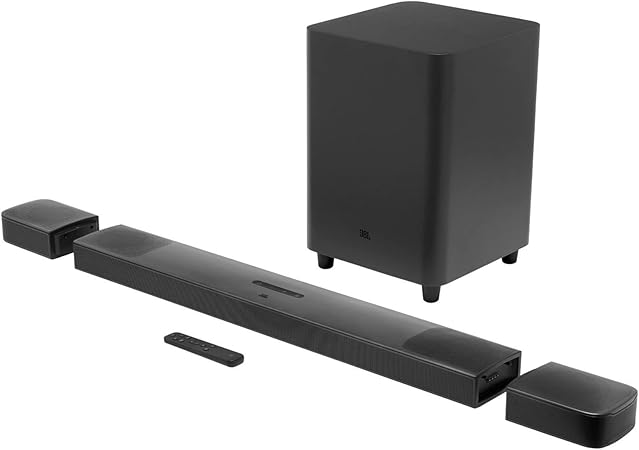
When evaluating product selection, JBL and Sonos take fundamentally divergent architectural approaches to building their soundbar catalogs. JBL adopts a wide-net, tiered strategy characterized by broad granularity and turnkey convenience. Their current lineup, anchored by the versatile Bar series, ranges from compact, budget-conscious entry-level options like the Bar 2.0 All-in-One to high-end, feature-dense flagships such as the Bar 1000 and Bar 1300X. In contrast, Sonos maintains a highly disciplined, curated portfolio comprising a select hierarchy of core models: the budget-tier Ray, the mid-tier Beam (Gen 2), and the flagship Arc Ultra. While JBL segments its catalog by providing distinct, self-contained home-theater-in-a-box configurations at nearly every price tier, Sonos treats its soundbars as foundational anchors within an expansive, modular smart-audio ecosystem.
The technical differentiation within their selections highlights distinct engineering priorities. JBL’s hardware selection stands out for its mechanical ingenuity and physical connectivity, offering bundled high-excursion wireless subwoofers and its signature truly wireless, battery-powered detachable rear surround speakers on upper-tier models. Furthermore, JBL ensures broader physical I/O versatility across its catalog, frequently integrating dedicated HDMI passthrough ports with 4K Dolby Vision and HDR10 passthrough alongside eARC. Sonos, conversely, limits individual product variations to maintain sleek, minimalist industrial designs and seamless software uniformity. Sonos soundbars are engineered with minimal physical inputs—relying solely on a single eARC or optical connection—and instead defer spatial flexibility to wireless modularity, allowing buyers to pair any core bar with external components like the Sub, Sub Mini, or Era satellite speakers.
Ultimately, the practical trade-offs of each brand's product selection depend on the consumer's installation preferences and ecosystem goals. JBL provides superior out-of-the-box flexibility for buyers who want an all-inclusive physical surround sound package tailored directly to their budget without needing to source ancillary components or navigate multi-room software setups. Sonos delivers unmatched long-term adaptability, appealing to consumers who prioritize multi-room network cohesion, Trueplay acoustic tuning, and the freedom to build out a home theater incrementally. While JBL wins on variety, direct feature-per-dollar packaging, and physical connectivity, Sonos excels in ecosystem synergy, delivering a tightly controlled product range where every bar integrates flawlessly into a broader whole-home audio architecture.
Design/Look
When evaluating industrial design, Sonos and JBL approach soundbar aesthetics from fundamentally opposing design philosophies: Sonos leans into architectural minimalism, while JBL prioritizes utilitarian, cinema-focused functionality. Sonos treats its hardware as an extension of interior decor, utilizing unibody, pill-shaped silhouettes crafted from high-grade matte polycarbonate in monochromatic black or white finishes. By engineering thousands of micro-perforated acoustic holes directly into the rigid shell—rather than relying on acoustic fabric that stretches or gathers dust—models like the Arc and Beam deliver exceptional structural integrity and timeless elegance. In contrast, JBL employs an aggressive, tech-forward aesthetic defined by sharp geometric lines, gunmetal grilles, and robust, impact-resistant plastics. JBL's visual language does not attempt to hide among furniture; instead, it boldly communicates performance-oriented home theater capability, prioritizing acoustic ventilation and functional port placement over living-space camouflage.
The practical trade-offs of these design directions become especially apparent in their physical interfaces and structural modularity. Sonos embraces extreme visual restraint by concealing its tech: capacitive touch surfaces are integrated flush into the top panel, and there is a total absence of a front alphanumeric display, using only a single ambient-dimming status LED to prevent visual distraction during dark-room viewing. JBL, conversely, addresses immediate consumer usability by integrating a high-contrast dot-matrix LED display hidden behind the front mesh, offering clear feedback on input switching, audio formats (such as Dolby Atmos), and volume levels. Furthermore, JBL's engineering pinnacle is its modularity, evidenced in the Bar series with detachable, battery-powered wireless rear satellites. While this mechanical dock-and-release system is a triumph of functional utility, it introduces visible seam lines, exposed docking contacts, and an overall bulkier, segmented chassis that disrupts visual fluidity.
Ultimately, your choice in design hinges on whether you value seamless interior cohesion or overt functional versatility. Sonos represents the gold standard in premium, minimalist consumer electronics, effortlessly blending beneath wall-mounted OLEDs with clean recessed cable bays and a monolithic profile that appeals to design-conscious homeowners. JBL excels in environments where the equipment is meant to look and feel like an authentic, high-impact entertainment hub, sacrificing sleek minimalism in exchange for tactile practicality, informative on-chassis displays, and dynamic mechanical engineering.
Affordability
When evaluating affordability in the soundbar category, the fundamental distinction between JBL and Sonos lies in the difference between complete out-of-the-box hardware packages and modular, ecosystem-based pricing. JBL is a market leader in hardware value, engineering soundbars that deliver high acoustic output, dedicated wireless subwoofers, and, in models like the Bar series, detachable battery-powered rear surrounds within a single upfront purchase. From entry-level 2.0 bars to flagship multi-channel systems like the Bar 1300X, JBL maximizes decibels and driver count per dollar. In contrast, Sonos adopts an à la carte pricing model; while entry bars like the Ray or mid-tier Beam Gen 2 have accessible base prices, they function strictly as standalone enclosures. Achieving true multi-channel surround sound or cinematic low-end reproduction with Sonos requires purchasing discrete add-ons, such as the Sub Mini and Era surrounds, rapidly escalating the total financial barrier to entry compared to JBL's all-inclusive bundles.
The trade-offs inherent in this price disparity manifest in software longevity, ecosystem integration, and architectural polish. Sonos justifies its higher long-term cost through exceptional industrial design, continuous firmware enhancements, sophisticated room calibration via Trueplay, and an industry-leading multi-room audio infrastructure that resists rapid obsolescence. Conversely, JBL keeps capital expenditures low by avoiding complex proprietary software layers, prioritizing standard consumer connectivity like HDMI eARC, Dolby Atmos decoding, and basic Google Cast/AirPlay streaming. While Sonos delivers a more seamless, premium whole-home audio experience for consumers willing to invest substantially over time, JBL offers far superior raw performance-to-price efficiency, making it the definitively more affordable choice for home theater enthusiasts who demand high dynamic impact and full surround capability without ongoing micro-investments.
Sound Quality
When evaluating sound quality, Sonos and JBL represent two distinct acoustic philosophies: Sonos champions computational precision, tonal neutrality, and vocal clarity, whereas JBL leans into raw dynamic headroom, cinematic slam, and visceral low-frequency impact. Sonos soundbars, anchored by flagships like the Arc and the compact Beam (Gen 2), rely on custom-engineered elliptical drivers, silk-dome tweeters, and sophisticated phased-array waveguides. Paired with Sonos’s proprietary Trueplay room-calibration software, these systems deliver an impeccably balanced sound signature. Dialogue articulation is arguably best-in-class, rendering speech with natural timber and zero boxiness even during complex action sequences. Sonos’s tuning remains disciplined across the frequency spectrum, ensuring that music playback—particularly acoustic, jazz, and classical genres—retains audiophile-adjacent imaging, realistic instrument separation, and flat frequency response free of artificial coloration.
Conversely, JBL approaches sound engineering through the lens of high-energy, theater-grade sound reinforcement, drawing heavily from its commercial cinema heritage. Models like the JBL Bar 1000 and Bar 1300X prioritize explosive dynamics, high sound pressure levels (SPL) without distortion, and unmatched low-end response. Unlike Sonos, which sells subwoofers as expensive modular add-ons, top-tier JBL systems frequently bundle massive 10-inch down-firing wireless subwoofers that produce authentic sub-bass extension reaching well below 35Hz. Furthermore, JBL's innovative use of detachable, battery-powered wireless rear satellites allows for true discrete multi-channel surround sound, offering genuine physical immersion rather than relying solely on psychoacoustic beamforming. JBL also natively supports DTS:X alongside Dolby Atmos, giving it an objective technical edge in object-based surround format decoding over Sonos, which offers only limited DTS support.
The practical trade-off between the two brands ultimately hinges on content consumption and spatial realism. Sonos provides a wider, more refined front soundstage with superior mid-range transparency, making it the superior choice for users who prioritize hi-fi music streaming and crystal-clear television dialogue out of a clean, standalone enclosure. However, a standalone Sonos bar will exhibit steep bass roll-off to protect its smaller drivers, lacking the chest-thumping authority of a dedicated low-frequency transducer. JBL dominates for blockbuster home cinema and high-intensity gaming, delivering the visceral, theater-like impact that low-end enthusiasts crave. While JBL’s mid-range can occasionally sound slightly recessed or aggressive compared to the polished warmth of Sonos, its physical surround architecture and unmatched sub-bass power make it the more exhilarating acoustic platform for pure movie immersion.