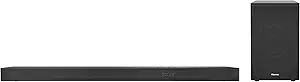
Samsung vs Hisense: Overview & Brand Philosophy
In the home theater landscape, the soundbar market has evolved from simple television speaker replacements into sophisticated, multi-channel acoustic systems. Samsung and Hisense represent two distinct approaches to this space. Samsung, a global market leader in home audio for over a decade, operates at the cutting edge of acoustic engineering. Through its dedicated Audio Lab in Valencia, California, Samsung focuses on high-end innovation, psychoacoustics, and proprietary hardware design to deliver premium soundbars that rival traditional component home theaters.
Conversely, Hisense has built its brand philosophy around aggressive value and democratization of modern features. Historically known for value-driven televisions, Hisense has expanded its audio portfolio to deliver maximum on-paper specifications—such as dedicated wireless subwoofers and Dolby Atmos decoding—at price points accessible to budget-conscious consumers. Rather than pushing the absolute boundaries of proprietary audio research, Hisense focuses on cost efficiency, out-of-the-box simplicity, and packaging high-demand consumer features into affordable packages.
The fundamental contrast lies in their market targets: Samsung offers a comprehensive ecosystem stretching from basic entry-level bars to industry-leading 11.1.4-channel flagship monsters with room-correction intelligence. Hisense concentrates heavily on the entry-level to mid-tier brackets, ensuring consumers on a budget do not have to settle for built-in TV audio, while continuously expanding into mid-range multi-channel configurations.
Key Differences & Technological Comparison
When comparing acoustic capabilities, driver quality, and DSP (Digital Signal Processing), several clear distinctions emerge between Samsung and Hisense:
- Acoustic Architecture and Surround Performance: Samsung’s flagship Q-Series (such as the Q990 series) utilizes physical up-firing, side-firing, and corner-firing drivers to achieve true 11.1.4-channel surround sound with physical rear satellite speakers. In contrast, most Hisense systems rely heavily on psychoacoustic virtualization to simulate spatial audio, with fewer models offering physical rear surrounds. Samsung's discrete channels produce vastly superior directional accuracy and soundstage immersion.
- Ecosystem Integration: Samsung features advanced proprietary features like Q-Symphony, which synchronizes the soundbar drivers with compatible Samsung TV speakers to create a richer, taller front soundstage. Hisense utilizes its EzPlay technology, which allows control of soundbar settings via the TV interface, but lacks the sophisticated multi-speaker acoustic blending seen in Samsung’s ecosystem.
- Room Calibration and Intelligence: Samsung soundbars frequently include SpaceFit Sound Pro, an automated acoustic calibration system that uses an integrated microphone to map the room's reflective surfaces and optimize bass and surround levels accordingly. Hisense typically relies on basic fixed DSP presets (Movie, Music, News, Night) with manual EQ adjustments, omitting active room-sensing technologies in most price tiers.
- Build Quality and Material Selection: Samsung favors premium acoustic fabrics, perforated metal grilles, and rigid composite enclosures designed to eliminate unwanted chassis resonance at high volumes. Hisense generally employs lighter plastics and standard metal meshes suited to price-conscious builds, which perform adequately but can exhibit port turbulence or subtle enclosure resonance under heavy bass loads.
- Audio Format Support: While both brands support Dolby Atmos and DTS:X decoding, Samsung offers wider high-resolution audio support across its mid-to-high tier products, alongside superior 4K/120Hz HDMI pass-through on high-end models, catering to next-generation console gamers.
Pros & Cons Comparison
Samsung Soundbars
- Pros:
- Industry-leading channel configurations with true discrete surround and height channels.
- Advanced room calibration (SpaceFit Sound) for balanced acoustics in irregular rooms.
- Seamless integration with Samsung displays via Q-Symphony and wireless Dolby Atmos.
- Engineered acoustic precision, wide soundstage, and clear dialogue clarity.
- Cons:
- Significantly higher cost of entry for flagship and upper-mid models.
- Entry-level models (B-Series) lack the technological finesse of the Q-Series.
Hisense Soundbars
- Pros:
- Exceptional price-to-performance ratio across all models.
- Budget models frequently bundle wireless subwoofers where competitors do not.
- Straightforward setup and low-profile designs that fit easily beneath lower TV stands.
- Support for core immersive audio formats (Dolby Atmos/DTS:Virtual:X) at low price points.
- Cons:
- Lacks automated room calibration to optimize sound for specific spaces.
- Surround sound relies heavily on virtualization, leading to a narrower soundstage.
- Higher distortion and chassis rattle risks at maximum volume levels.
Performance, Durability & Value Analysis
From an audio performance standpoint, Samsung holds a significant advantage in dynamic range, mid-range neutrality, and bass management. The high-excursion woofers and tuned acoustic ports designed by the Samsung Audio Lab maintain tonal balance without the subwoofer muddying vocal frequencies. In contrast, Hisense soundbars often tune for a "V-shaped" sound profile out of the box—emphasizing boomy bass and sharp treble to impress on store shelves. While this profile makes movie explosions sound energetic, it can mask subtle details in dialogue and music, requiring users to frequently adjust EQ settings.
In terms of durability, build longevity, and software stability, Samsung demonstrates a more mature development pipeline. Firmware updates arrive consistently over Wi-Fi on network-enabled models, improving HDMI eARC handshake reliability and format compatibility. Hisense units are generally mechanically sound, but often depend on manual USB-based updates for lower-tier models, which can leave lingering HDMI-CEC communication bugs unaddressed. Value, therefore, depends on the budget tier: below $200, Hisense offers unmatched hardware-per-dollar; above $400, Samsung's audio fidelity, ecosystem maturity, and driver reliability justify the investment.
Final Verdict: Which Brand Should You Choose?
The decision between Samsung and Hisense hinges on your room setup, performance expectations, and budget limitations:
Choose Hisense if: You want a straightforward, budget-friendly audio upgrade to replace muddy built-in television speakers. If your budget is under $250 and you want a soundbar packaged with a wireless subwoofer to bring extra punch to casual movie nights and sports, Hisense delivers unmatched raw value without requiring a deep technical setup.
Choose Samsung if: You are seeking an authentic, cinematic surround-sound experience without installing in-wall wiring and an AV receiver. If you own a modern mid-to-high-end television (especially a Samsung model), prioritize vocal clarity, and want true discrete overhead Atmos effects backed by automated room correction, Samsung’s Q-Series represents the gold standard in the soundbar category.
Product Selection
Samsung maintains one of the most comprehensive and technologically stratified soundbar portfolios in the consumer audio market. Spanning entry-level standalone bars in the C-series to high-end, multi-channel theater packages in the Q-series, Samsung strategically engineers products to capture every segment of home entertainment. Their flagship offerings frequently feature discrete rear surround speakers, upward-firing drivers for true Dolby Atmos and DTS:X reproduction, and seamless ecosystem integrations like Q-Symphony, which synchronizes soundbar audio with native Samsung television speakers. This expansive lineup allows consumers to find solutions ranging from simple two-channel acoustic upgrades to sprawling 11.1.4-channel reference systems capable of filling cavernous media rooms.
Hisense approaches product selection with a leaner, value-driven strategy centered around pragmatic home theater upgrades. While Hisense has steadily expanded its catalog from fundamental 2.0 and 2.1-channel units (such as the HS series) to moderately complex 5.1.2-channel Dolby Atmos configurations (such as the AX series), their overall selection remains significantly smaller than Samsung's. Hisense prioritizes high-demand, mass-market configurations rather than ultra-niche, flagship audiophile setups. While consumers lose out on the hyper-specialized speaker arrangements and cutting-edge acoustic engineering found at the top of Samsung's lineup, Hisense provides an accessible, curated roster that covers virtually all foundational home theater layouts without overwhelming the buyer.
Design/Look
In terms of industrial design, Samsung balances modern aesthetic trends with acoustic functionality, utilizing premium composite plastics, acoustically transparent textiles, and metallic finishes. Their premium Q-series units feature distinct angular geometries and low-profile silhouettes engineered to slide underneath low-clearance televisions without obstructing remote IR receivers or screen borders. Furthermore, Samsung produces dedicated lifestyle solutions such as the 'Ultra Slim' series and the 'S-Series' (like the S60/S800 frames), which employ rounded profiles, minimalist fabric wraps, and ultra-narrow footprints designed specifically to match gallery-style or wall-mounted displays. This focus on aesthetic cohesion makes Samsung soundbars relatively easy to integrate into both contemporary media centers and minimalist living spaces.
Hisense adopts a more utilitarian, understated approach to aesthetic engineering. Their soundbars predominantly feature matte black plastics, dark metallic grilles, and conventional rectangular form factors that prioritize durability and cost-efficiency over statement-making industrial design. While clean and unobtrusive, Hisense enclosures lack the sophisticated texture blends and ultra-low profiles championed by Samsung's lifestyle and flagship divisions. The subwoofers accompanying Hisense packages are similarly basic, built from standard vinyl-wrapped MDF with functional port designs. For consumers seeking clean gear that blends into the background of a dark home theater setup, Hisense is wholly sufficient, though it lacks the visual refinement and architectural variety provided by Samsung.
Affordability
Affordability represents Hisense's strongest competitive advantage in the soundbar category. By streamlining feature sets and optimizing manufacturing efficiencies, Hisense aggressively undercuts mainstream market pricing, often offering Dolby Atmos-compatible 3.1 or 5.1 systems at prices comparable to Samsung's entry-level 2.1 units. This pricing architecture makes multi-channel surround sound, dedicated wireless subwoofers, and high-bandwidth eARC inputs accessible to budget-conscious buyers who would otherwise be relegated to basic stereo bars. For cost-to-performance efficiency, Hisense provides exceptional value per channel, significantly lowering the barrier to entry for spatial audio formats.
Samsung operates with a higher pricing floor and a much higher ceiling, commanding a premium that corresponds to its advanced audio engineering and proprietary processing suites. While Samsung does offer budget-friendly options in its entry-tier lines, these units frequently omit the HDMI eARC connections, room calibration tech, and Dolby Atmos support found on similarly priced Hisense models. Buyers investing in mid-range to high-end Samsung soundbars pay for discrete physical drivers, superior acoustic lab tuning, wireless surround expansion, and smart ecosystem features. Consequently, Samsung requires a larger financial commitment across all tiers, demanding that consumers evaluate whether the higher acoustic fidelity and ecosystem benefits justify the steeper investment.
Sound Quality
Samsung soundbars consistently benchmark near the top of their respective classes for sound quality, driven largely by development from the company's dedicated California Audio Lab. Even at the mid-range level, Samsung models exhibit a well-balanced acoustic signature characterized by clear, articulated midrange performance, transparent high frequencies, and cohesive crossover integration with accompanying subwoofers. Higher-end Q-series bars utilize sophisticated digital signal processing (DSP), Auto EQ, and SpaceFit Sound room calibration to mitigate room acoustic anomalies. The discrete up-firing and side-firing physical drivers produce convincing spatial audio, yielding an expansive, three-dimensional soundstage with precise object-based placement during complex Dolby Atmos movie mixes.
Hisense soundbars deliver powerful, dynamic audio that represents a dramatic improvement over internal television speakers, but they lack the clinical nuance and spatial precision of Samsung's refined hardware. Most Hisense units lean toward a bass-forward or V-shaped sound profile, which provides satisfying punch and rumble for action films and modern music genres, though it can occasionally muddy the critical dialogue frequencies between 1 kHz and 3 kHz. While Hisense leverages virtualized processing engines and selected upward-firing drivers in its top-tier models to simulate spatial audio, the soundstage remains comparatively narrow, and object separation can sound diffuse in larger environments. Overall, Hisense excels at delivering raw volume and cinematic energy for the price, whereas Samsung provides superior clarity, timbral accuracy, and spatial immersion.
Compare current retail pricing, active promotions, and verified stock availability directly from authorized stores:
Compare current retail pricing, active promotions, and verified stock availability directly from authorized stores: