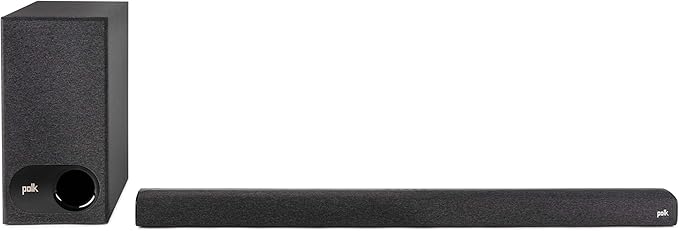
Polk Audio vs Roku: Overview
Comparing Polk Audio and Roku helps you determine which brand is best suited for your needs in Soundbars. Both brands offer strong choices depending on your budget and key feature requirements.
Key Features & Comparison
Evaluate factors such as build quality, warranty, customer satisfaction, and total value before making your final purchase choice between Polk Audio and Roku.
Product Selection
Polk Audio maintains a broad and deeply segmented catalog of soundbars designed to cater to audiophiles, casual listeners, and dedicated home theater enthusiasts alike. Their lineup spans entry-level compact stereo bars up to high-end, multi-channel Dolby Atmos systems equipped with wireless rear surrounds and powerful down-firing subwoofers, exemplified by series like the MagniFi, Signa, and React. Polk also develops specialized form factors, such as ultra-compact bars built specifically for tight spaces or gaming monitors, and ensures support for various hardware ecosystems through options featuring built-in Amazon Alexa or Google Assistant integration.
In stark contrast, Roku adopts an intentionally streamlined and specialized product strategy focused almost exclusively on the intersection of audio hardware and smart streaming software. Their soundbar portfolio consists of a few focused core models, such as the Roku Streambar and Streambar Pro, alongside modular ecosystem components like wireless surround speakers and a wireless subwoofer. While Roku lacks the tiered acoustic breadth and expansive driver configurations found across Polk's catalog, its strength lies in seamless software synergy, offering an all-in-one upgrade path that delivers 4K HDR streaming and television audio enhancement in a single package.
Design/Look
From an aesthetic and structural perspective, Polk Audio emphasizes traditional home audio engineering with contemporary lifestyle cues. Polk soundbars frequently feature curved, elongated enclosures wrapped in premium acoustic cloth, complemented by subtle brushed metal or matte polymer accents that blend seamlessly beneath modern televisions. Their industrial design prioritizes acoustic resonance, utilizing rigid, low-diffraction cabinetry to minimize internal distortion while maintaining a discrete profile. Even Polk's standalone subwoofers are engineered with sophisticated enclosures that avoid the cheap, boxy aesthetic typical of budget audio gear.
Roku takes a distinctly minimalist, functional approach dominated by utilitarian, compact footprints. The flagship Streambar, for instance, is exceptionally small—resembling a standalone smart speaker more than a traditional home theater soundbar—making it an ideal fit for smaller television stands, bedrooms, or secondary displays. The Streambar Pro stretches into a more conventional bar format, utilizing clean rounded edges and tightly woven dark grilles. While Roku's builds feel sturdy and intentionally unobtrusive, they lean into utilitarian plastic housings that emphasize consumer electronics practicality rather than the premium hi-fi pedigree found in Polk's craftsmanship.
Affordability
Roku commands a decisive advantage in the entry-level value category, offering an aggressive price-to-utility ratio that few traditional audio brands can match. By integrating a fully capable 4K streaming player directly into the audio enclosure, Roku effectively eliminates the need to purchase a secondary streaming dongle or set-top box. Their baseline pricing accommodates tight budgets without sacrificing core functionality, and consumers can expand their audio footprint progressively over time by purchasing Roku's reasonably priced wireless subwoofers and satellites as their budget permits.
Polk Audio operates across a considerably wider price continuum, ranging from competitive budget-friendly options to premium mid-tier systems that cost significantly more than Roku's flagship setup. While models in Polk's entry-level Signa line are priced accessibly, consumers are primarily paying for dedicated acoustic engineering, superior driver architecture, and bundled wireless subwoofers rather than bundled smart software. Consequently, Polk demands a higher initial capital investment, but it delivers greater long-term durability and dedicated audio performance that justifies the expenditure for users with dedicated streaming hardware already in place.
Sound Quality
When evaluated strictly on acoustic fidelity, Polk Audio decisively outperforms Roku due to its heritage of driver engineering and acoustic tuning. Polk employs multi-driver arrays featuring dedicated tweeters, robust midrange drivers, and patented technologies like VoiceAdjust, which allows users to elevate dialogue clarity independently of volume levels without crushing dynamic range. In higher-tier systems, Polk leverages dedicated height channels for native Dolby Atmos reproduction, expansive soundstaging, and deep, resonant bass response that brings high-energy movie scores and nuanced musical passages to life with convincing realism.
Roku provides a substantial audio upgrade over thin, muddy built-in television speakers, offering crisp dialogue intelligibility, dynamic volume leveling, and night listening modes that tame sudden loud spikes. However, its acoustic ceiling is inherently constrained by its compact enclosures and smaller physical drivers. Without the optional external subwoofer, Roku soundbars lack substantial low-end extension and can struggle with lower-midrange depth during complex audio mixes. While perfectly suited for everyday streaming, sitcoms, and casual viewing, Roku lacks the spatial dynamics, frequency separation, and acoustic weight that define Polk's home theater offerings.