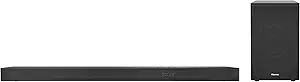
Hisense vs LG: Overview & Brand Philosophy
In the rapidly evolving home audio landscape, the contrast between LG and Hisense encapsulates the broader battle between aggressive price-to-performance disruption and established, heritage-tier engineering. Hisense, traditionally recognized for its value-driven display technologies, has expanded into the soundbar market with a straightforward, consumer-first philosophy: democratize modern audio formats like Dolby Atmos and DTS:X. By stripping away extraneous software ecosystems and licensing costs, Hisense focuses on delivering high acoustic output, robust physical subwoofers, and plug-and-play simplicity at price points that significantly undercut the legacy competition.
Conversely, LG approaches the soundbar market from the vantage point of an industry heavyweight with decades of audio-visual research and development. LG’s audio philosophy is deeply intertwined with its premium television ecosystem, emphasizing architectural elegance, computational acoustic calibration, and sophisticated spatial audio. Collaborations with high-end audio pioneers like Meridian Audio have historically shaped LG’s digital signal processing (DSP), and the brand consistently leads in implementing advanced standards such as high-resolution audio passthrough, wireless lossless transmission, and multi-channel upmixing. Where Hisense builds for maximum decibels per dollar, LG engineers for precision, integration, and acoustic refinement.
Key Differences & Technological Comparison
When evaluating the underlying hardware and digital processing pipelines, several technical divergences emerge between the two manufacturers:
- Acoustic Architecture and Spatial Processing: LG heavily invests in true discrete channels and specialized up-firing drivers, including proprietary center up-firing speakers designed to anchor dialogue directly to the center of the screen. LG’s DSP utilizes sophisticated psychoacoustic algorithms and AI Room Calibration to measure room boundaries and adjust phase and frequency response accordingly. Hisense, particularly in its entry and mid-tier tiers, leans more heavily on virtualized spatial processing to simulate overhead effects, utilizing fewer discrete physical drivers to keep unit footprints and costs down.
- Ecosystem and Connectivity Integration: LG offers unmatched synergy with its own TV lineup through proprietary features like WOW Orchestra (which combines TV speakers with the soundbar concurrently) and the WOWCAST module for wireless, lossless Dolby Atmos transmission. Their soundbars routinely feature advanced HDMI 2.1 passthrough capabilities with support for 4K 120Hz VRR and ALLM, critical for modern gaming consoles. Hisense relies on universal standards, utilizing standard eARC connections and its "Roku TV Ready" or "EzPlay" on-screen integrations, but generally restricts passthrough to standard 4K 60Hz across its catalog.
- Tuning and Audio Signatures: Hisense soundbars are factory-tuned with a consumer-oriented "V-shaped" sound signature, characterized by prominent bass response from relatively high-excursion subwoofers and crisp, elevated treble to ensure speech clarity. LG implements a more neutral, balanced reference curve across its mid-to-high tier products, prioritizing midrange linearity, lower harmonic distortion at elevated volumes, and seamless integration between the soundbar array and the wireless subwoofer crossover points.
Pros & Cons Comparison
Hisense Soundbars
- Pros:
- Exceptional price-to-performance ratio across entry and mid-range tiers.
- Out-of-the-box packages frequently include wireless subwoofers at rock-bottom prices.
- Simple, intuitive setup with broad compatibility across non-Hisense displays.
- Robust dialogue enhancement modes that cut through heavy bass.
- Cons:
- Limited companion app support and lack of advanced room calibration software.
- HDMI passthrough rarely supports high-bandwidth gaming formats (4K 120Hz/VRR).
- Higher total harmonic distortion (THD) when pushed near maximum volume.
LG Soundbars
- Pros:
- Industry-leading integration with LG OLED and QNED televisions via WOW Orchestra.
- Advanced AI Room Calibration that actively corrects for room acoustics.
- Cutting-edge connectivity options including HDMI 2.1 passthrough on flagship tiers.
- True discrete multi-channel configurations with dedicated up-firing spatial drivers.
- Cons:
- Significantly higher cost of entry, particularly for true Atmos-capable systems.
- Subwoofers in entry-level packages can sound underpowered relative to soundbar output.
- Full feature set requires ownership of a compatible, recent-generation LG television.
Performance, Durability & Value Analysis
From an acoustic performance standpoint, both brands achieve their design briefs, but cater to distinctly different environments. Hisense soundbars deliver immediate, visceral impact; their subwoofers are tuned to deliver punchy, cinematic low frequencies that make action movies and casual streaming instantly engaging for everyday living rooms. However, when pushed into high-SPL (Sound Pressure Level) scenarios, Hisense enclosures occasionally reveal mechanical resonances, and their digital signal processing lacks the nuance needed for critical music listening. In contrast, LG delivers a far more cohesive, balanced soundstage. LG’s midrange performance preserves vocal textures and subtle dynamic shifts that Hisense tends to compress, making LG the superior performer for multi-channel lossless audio, intricate film scores, and high-fidelity music streaming.
Regarding long-term durability and perceived value, LG justifies its premium tier with superior chassis materials, brushed finishes, robust acoustic fabrics, and long-term firmware support pipelines delivered via robust mobile apps. Hisense uses more utilitarian, plastic-forward builds, though its hardware reliability over typical 3-to-5-year lifecycles remains competitive. In pure economic terms, Hisense dominates the sub-$300 market, offering functional multi-channel Dolby Atmos configurations that are simply unavailable from premium legacy brands. LG dominates the premium segment ($500+), delivering an audio-visual integration suite, build quality, and spatial accuracy that Hisense's value-first manufacturing pipeline does not attempt to replicate.
Final Verdict: Which Brand Should You Choose?
Your choice between LG and Hisense hinges primarily on your budget, your existing display ecosystem, and your sensitivity to spatial audio fidelity. If your objective is to dramatically upgrade your television's tinny internal speakers on a strict budget—particularly under $250—Hisense is the undisputed champion. It provides the deep bass, elevated volume, and clear dialogue necessary to transform everyday viewing without demanding an audiophile-grade financial investment.
If you are an enthusiast seeking genuine cinematic immersion, a gamer demanding uncompromised 4K 120Hz passthrough, or the owner of a mid-to-high-end LG OLED television, LG is the definitive recommendation. The acoustic sophistication of LG's true up-firing hardware, combined with automated room calibration and seamless TV-audio convergence via WOW Orchestra, yields an acoustically superior, future-proof home theater experience that easily justifies its higher price tag.
Product Selection
LG presents one of the most comprehensive and technologically advanced soundbar portfolios on the market, catering to everyone from casual viewers to dedicated home theater enthusiasts. Its catalog ranges from ultra-compact, standalone 2.0-channel bars designed for desktop setups and small bedrooms to flagship 9.1.5-channel powerhouse configurations featuring innovative up-firing center channels and dedicated wireless rear surround packages. LG's portfolio is characterized by tight synergy with premium television platforms, showcasing cutting-edge advancements such as Dolby Atmos, DTS:X, IMAX Enhanced, and proprietary WOW Orchestra technology. This breadth ensures that consumers with specific acoustic requirements or complex multi-speaker aspirations can find a finely tailored solution within LG's tiered offerings.
In contrast, Hisense focuses on a streamlined, high-utility selection that emphasizes the entry-level to mid-range home theater segments. While Hisense has steadily expanded its lineup to include multi-channel Dolby Atmos systems with dedicated wireless subwoofers and rear satellites, its overall breadth remains noticeably more constrained than LG's expansive catalog. Hisense targets the high-volume consumer sweet spot with capable 2.1, 3.1, and 5.1-channel configurations engineered primarily to replace and dramatically upgrade lacklustre internal TV speakers. While LG dominates the premium custom-integration and high-end immersive audio categories, Hisense successfully simplifies the buying journey for budget-conscious consumers seeking clear, predictable performance increments without navigating an overwhelming roster of model variants.
Design/Look
LG emphasizes sophisticated, industrial aesthetics that mirror the refined design language of its market-leading OLED and QNED televisions. The brand frequently employs premium materials, including brushed metallic accents, eco-conscious acoustic fabrics, and sleek low-profile enclosures engineered to tuck cleanly beneath modern low-clearance display stands. Higher-end models feature distinctive geometric contours and subtly integrated top-firing drivers that signal acoustic performance without cluttering visual space. LG also offers specialized lifestyle enclosures, such as the Éclair series, which adopt rounded, pebble-like forms wrapped in textured jersey cloth, demonstrating a deliberate commitment to harmonizing home cinema hardware with contemporary interior decor.
Hisense adopts a more utilitarian, minimalist design philosophy that focuses on functional practicality and unobtrusive placement. Its enclosures predominantly utilize dark matte plastics, stamped metal grilles, and straightforward rectangular profiles that blend neutrally into standard media consoles. While Hisense soundbars are structurally solid and resistant to fingerprints, they lack the tactile luxury, custom finishes, and seamless sculptural styling found in LG’s upper-tier systems. However, Hisense's understated approach ensures its soundbars pair organically with a wide variety of TV brands without visual clash, making them a sensible choice for viewers who prioritize a discreet, low-maintenance component over an eye-catching design centerpiece.
Affordability
Hisense has established its market identity primarily through aggressive price-to-performance disruption, frequently offering multi-channel hardware at fractions of the cost demanded by legacy audio manufacturers. Budget-focused shoppers can acquire Hisense systems featuring wireless subwoofers and basic Dolby Atmos decoding for the same investment that would typically yield only an entry-level, standalone 2.0 bar from tier-one competitors. By prioritizing essential features—such as solid amplification, simple HDMI eARC connectivity, and dedicated subwoofers—over premium companion apps or room-calibration algorithms, Hisense achieves exceptional value per watt, making genuine multi-channel separation accessible to entry-level budgets.
LG spans a dramatically wider pricing spectrum, maintaining offerings in the entry-level tier while commanding premium prices for its flagship soundbar packages. Although LG's budget models face stiff competition from Hisense in pure hardware-per-dollar metrics, LG justifies its higher price tags in the mid-to-high tiers through advanced acoustic engineering, Meridian Audio sound tuning partnerships, AI Room Calibration, and expansive wireless streaming ecosystems (including AirPlay 2, Chromecast, and Spotify Connect). While consumers on strict budgets will achieve more raw channel hardware per dollar with Hisense, LG provides superior long-term value for discerning buyers willing to invest in sophisticated DSP, wireless interoperability, and reference-grade immersive spatial decoding.
Sound Quality
LG delivers a refined, audiophile-adjacent acoustic experience, particularly across its mid-range and flagship models. Through partnerships with audio pioneers like Meridian and the implementation of sophisticated digital signal processing, LG soundbars offer expansive soundstages, crystal-clear dialogue intelligibility, and exceptional high-frequency detail. The inclusion of innovative up-firing center channels in higher-end models significantly stabilizes front-stage dialogue imaging, ensuring vocal clarity remains anchored directly to the on-screen action even amidst complex spatial effects. When combined with advanced room-correction software that neutralizes room modes, LG systems produce articulate, balanced bass response and precise, convincing height channels that convincingly bring Dolby Atmos and DTS:X soundtracks to life.
Hisense soundbars provide a bold, energetic, and highly dynamic sound signature that dramatically outperforms integrated television speakers, though with less acoustic neutrality than LG. Hisense systems generally emphasize strong low-end punch and prominent midrange presence, delivering the necessary rumble and vocal punch required for blockbuster action movies and mainstream television viewing. However, during critical listening, Hisense units can reveal limitations in tonal balance; upper frequencies may exhibit occasional harshness or compression at high volumes, and subwoofer integration can lean slightly boomy rather than tight and musical. While Hisense provides immense immediate gratification and powerful dynamics for everyday cinema, LG ultimately achieves greater harmonic accuracy, channel separation, and immersive micro-detail.
Compare current retail pricing, active promotions, and verified stock availability directly from authorized stores:
Compare current retail pricing, active promotions, and verified stock availability directly from authorized stores: