Yamaha vs Klipsch: Overview & Brand Philosophy
The soundbar market has evolved from simple television speaker replacements into sophisticated acoustic systems capable of delivering true home theater experiences. In this competitive landscape, Yamaha and Klipsch represent two fundamentally different engineering philosophies, each tracing its lineage back to decades of audio innovation. Yamaha approaches soundbars with a background deeply rooted in musical instrument manufacturing and cutting-edge digital signal processing (DSP). Renowned for pioneering the "Digital Sound Projector" technology, Yamaha focuses on spatial accuracy, computational beamforming, and seamless acoustic integration designed to simulate multi-channel surround sound from compact physical footprints.
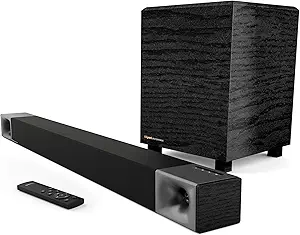
Conversely, Klipsch brings a distinctly American hi-fi heritage founded on high-efficiency acoustic engineering. Established by Paul W. Klipsch in 1946, the brand is synonymous with horn-loaded drivers, raw dynamic impact, and unrestrained output. In the soundbar category, Klipsch eschews heavy reliance on synthetic virtual processing in favor of superior physical components: tractrix horns, high-output woofers, real wood enclosures, and robust external subwoofers. Where Yamaha seeks to reconstruct an immersive soundfield through sophisticated acoustic algorithms, Klipsch aims to replicate the physical, visceral presence of a live cinema or concert performance.
Key Differences & Technological Comparison
Understanding the architectural divergence between Klipsch and Yamaha is crucial when selecting the right soundbar for your entertainment space:
- Acoustic Architecture and Driver Design: Klipsch relies heavily on proprietary Tractrix horn-loaded tweeters across its Cinema and Flexus series. This design maximizes acoustic efficiency, controls directivity to minimize room reflections, and delivers crisp, highly intelligible dialogue with virtually zero distortion at high volumes. Yamaha models (such as the SR and YAS series) employ balanced dome tweeters paired with proprietary cone woofers, often supplemented by built-in subwoofers utilizing acoustic bass reflex ports tuned via Yamaha's Twisted Flare Port technology.
- Surround Sound Processing vs. Pure Dynamics: Yamaha is an industry leader in virtual audio rendering, utilizing proprietary technologies like AIR SURROUND XTREME and integration of DTS Virtual:X and Dolby Atmos. Yamaha's DSP algorithms actively shape how sound reflects off walls and ceilings to create a three-dimensional sphere. Klipsch embraces native Dolby Atmos decoding but leans toward physical driver placement (up-firing physical speakers in higher-end models) rather than purely algorithmic virtualization, yielding greater dynamic headroom and immediate punch.
- Build Materials and Aesthetics: Klipsch distinguishes itself by using premium materials rarely seen in soundbars, such as engineered wood cabinets (MDF) rather than the standard molded plastic. This significantly reduces internal resonance and cabinet coloration. Yamaha opts for sleek, modern plastic enclosures wrapped in acoustic fabric, engineered for unobtrusive placement beneath low-clearance televisions or clean wall mounting.
- Dialogue Clarification: Both manufacturers excel in vocal clarity through different means. Yamaha utilizes "Clear Voice" technology, a DSP-driven feature that elevates human speech frequencies above ambient noise and explosions. Klipsch achieves dialogue clarity naturally through the directivity of its center-channel Tractrix horns, supported by multi-level digital dialog enhancement modes.
- Ecosystem and Connectivity: While both brands support HDMI eARC, optical inputs, and Bluetooth, Yamaha features deeper network integration on premium models via its MusicCast multi-room ecosystem. Klipsch, particularly in its newer Modular Flexus series (engineered with Onkyo), prioritizes modular expansion, allowing users to easily add wireless surrounds and dual wireless subwoofers with simple pairing protocols.
Pros & Cons Comparison
Yamaha Soundbars
- Pros:
- Industry-leading digital signal processing creates expansive virtual surround soundfields from single-unit bars.
- Compact, low-profile designs that easily fit beneath most modern TV panels without blocking IR sensors.
- Exceptional value in the entry-to-midrange tiers (e.g., SR-B20A, SR-C20A) with integrated subwoofers.
- Reliable HDMI-CEC and eARC implementation with wide television compatibility.
- Effective "Clear Voice" processing makes whispered dialogue legible without raising the overall volume.
- Cons:
- Plastic chassis construction lacks the premium resonance dampening found in wooden enclosures.
- Standalone units without external subwoofers struggle with ultra-low sub-bass frequencies below 50Hz.
- Higher-end models with physical height channels are limited compared to traditional AV receiver setups.
Klipsch Soundbars
- Pros:
- Class-leading dynamic range and volume output with negligible distortion, thanks to horn-loaded drivers.
- High-grade MDF wood enclosures reduce harmonic distortion and deliver warmer acoustic tonality.
- External subwoofers included with Klipsch systems are larger and more powerful than typical category competitors.
- Dedicated physical center channels deliver crisp, cinema-grade dialogue naturally.
- Modular expansion capabilities in modern lineups (Flexus series) allow effortless wireless multi-speaker pairing.
- Cons:
- Larger footprints, deeper chassis, and taller heights can obstruct the lower border of TVs on low stands.
- Early firmware iterations on select legacy models (Cinema series) experienced wireless subwoofer pairing quirks.
- Less reliance on synthetic virtualization means soundstage width is more dependent on physical room geometry.
Performance, Durability & Value Analysis
From an acoustic performance standpoint, the choice hinges on the intended use case. Yamaha soundbars excel in everyday living spaces, bedrooms, and apartments where deploying a massive external subwoofer is impractical. Yamaha's engineering extracts astonishingly balanced performance from modest enclosures, maintaining an even frequency response across quiet evening viewing and midday streaming. In terms of long-term durability, Yamaha benefits from its massive manufacturing scale and robust electronic quality control; hardware failures or HDMI handshake degradation over time are remarkably rare.
Klipsch dominates in dedicated home theater environments and larger media rooms where physical air movement and high SPL (Sound Pressure Level) are desired. The heavy-gauge MDF cabinets, paired with high-efficiency horn tweeters, ensure structural and acoustic longevity that outlasts standard plastic assemblies. While historical models occasionally faced firmware and wireless connectivity critiques, recent models co-engineered with Onkyo demonstrate marked improvements in software stability. In terms of value, Yamaha delivers unmatched cost-to-performance metrics in the under-$300 bracket, whereas Klipsch offers genuine audiophile-grade dynamic slam and premium materials in the mid-to-high price categories.
Final Verdict: Which Brand Should You Choose?
Choose Yamaha if: You have a standard-to-small living room, an apartment, or need a sleek, all-in-one soundbar that delivers clear TV dialogue, balanced sound, and convincing spatial virtualization without requiring a bulky separate subwoofer. Yamaha is the definitive choice for consumers seeking plug-and-play simplicity, proven electronic reliability, and a clean aesthetic on a modest-to-intermediate budget.
Choose Klipsch if: You prioritize raw cinematic dynamics, heavy bass impact, and high-volume musicality. If you have the floor space to accommodate a larger bar and an aggressive external subwoofer—and you want your movies to feel like an actual theater rather than a simulated one—Klipsch's horn-loaded engineering, real wood construction, and effortless output make it the superior performance-driven investment.
Product Selection
When evaluating product selection in the soundbar category, Yamaha and Klipsch demonstrate vastly different portfolio philosophies that cater to distinct consumer demographics. Yamaha leverages its extensive history in digital sound processing and audio engineering to offer a diverse, vertically integrated lineup that spans from entry-level single-unit enclosures to premium, multi-driver home theater replacements. Their catalog features budget-conscious solutions like the compact SR-C20A and mid-tier workhorses like the SR-B40A, scaling up to advanced systems equipped with proprietary Digital Sound Projector technology. Yamaha’s strength lies in this sheer breadth of choice, providing solutions for minimalist desktop setups, ultra-slim television stands, and expansive living rooms requiring calibrated, reflective multi-channel beam acoustics without external physical surround speakers.
Conversely, Klipsch adopts a more focused, performance-oriented lineup primarily anchored in its Cinema series (such as the Cinema 400, 600, 800, and 1200) alongside newer Flexus systems co-engineered with Onkyo. Rather than saturating every micro-tier of the budget market, Klipsch concentrates its selection on physical acoustic horsepower, utilizing real wood enclosures, horn-loaded Tractrix tweeters, and heavy-hitting independent subwoofers across nearly all tiers. While Klipsch provides fewer individual models overall and minimal presence in the ultra-compact segment, its product hierarchy is engineered for linear scalability, cleanly transitioning buyers from dynamic 2.1 systems up to full 5.1.4-channel Dolby Atmos packages with wireless subwoofers and discrete surround speakers.
The practical trade-offs between the two brands ultimately center on form factor versatility versus acoustic output. Consumers facing spatial constraints, tight budgets, or demanding specific smart-home interoperability—such as Yamaha’s MusicCast multi-room ecosystem—will find Yamaha’s extensive product selection superior and more adaptable. However, home theater traditionalists and cinephiles who prioritize natural mid-range timbre, high-output efficiency, and true tactile bass will appreciate Klipsch's curated approach. Yamaha wins on catalog variety, software features, and accessibility, whereas Klipsch wins for buyers seeking a distinct, audiophile-grade, wood-cabinet home cinema experience where every product tier prioritizes raw acoustic impact over ultra-compact convenience.
Design/Look
From an engineering and aesthetic standpoint, Yamaha and Klipsch approach soundbar design from radically divergent philosophies, reflecting their respective roots in consumer electronics and traditional acoustic high-fidelity. Yamaha embraces a sleek, low-profile Japanese industrial minimalism, prioritizing seamless living room integration. Constructed predominantly with premium acoustic-mesh fabric wraps, rounded pill-shaped edges, and matte-finish plastics, models in Yamaha’s SR and True X series are engineered to disappear beneath modern displays. The technical trade-off for this ultra-slim architecture is internal cabinet volume; Yamaha must rely on tightly packed, smaller cone drivers paired with built-in subwoofers and porting channels optimized for tight spaces. In contrast, Klipsch leans into bold, aggressive American hi-fi heritage. Soundbars such as the Cinema and Flexus series utilize real-wood veneer cabinets, heavy composite enclosures, and substantial metal grilles, yielding an authentic furniture-grade tactile presence that emphasizes acoustic resonance over physical concealment.
The core visual signatures of both brands heavily influence user experience and room compatibility. Klipsch’s hallmark design feature is the exposed, copper-spun woofers flanked by proprietary Tractrix horns. This open, high-end monitor aesthetic deliberately draws the eye, acting as an intentional design centerpiece rather than a discreet accessory, though it demands considerably more vertical and depth clearance below a television. Conversely, Yamaha prioritizes ergonomic functionality and visual unobtrusiveness. Yamaha units feature flush-mounted capacitive touch controls and stealthy, dimmable LED indicators hidden beneath the fabric weave, eliminating light distraction in dark viewing environments. While Yamaha excels in wall-mountable, shallow-depth versatility suited for tight spaces and modern minimalist decors, Klipsch wins on sheer structural rigidity and tactile craftsmanship, offering a robust physical authority that signals audiophile performance at the expense of footprint flexibility.
Affordability
When evaluating affordability in the soundbar category, Yamaha consistently positions itself as a market leader in accessible, high-utility engineering. Yamaha’s catalog is dominated by competitively priced, all-in-one standalone units, such as the acclaimed SR and YAS series, which frequently target the entry-level to mid-range consumer tiers. The brand achieves exceptional cost-to-performance ratios by focusing on proprietary digital signal processing, integrated dual subwoofers, and simulated surround technology like DTS Virtual:X, bypassing the need for expensive external hardware. While this engineering approach trades off the floor-shaking low-end extension found in separate, dedicated subwoofers, it dramatically lowers the barrier to entry for consumers seeking an immediate, low-footprint upgrade over native television speakers without breaking the four-hundred-dollar threshold.
Conversely, Klipsch approaches affordability with a distinctly premium, audiophile-adjacent mindset, generally commanding higher price tags across its Cinema and Flexus lineups. Rather than competing directly in the sub-two-hundred-dollar budget space, Klipsch redefines affordability by delivering high-end acoustic components—such as proprietary horn-loaded tweeters, wooden enclosures, and high-output wireless subwoofers—at costs substantially lower than boutique high-fidelity systems. A Klipsch soundbar package typically includes heavier, class-leading physical hardware engineered for dynamic output and vocal clarity, but this necessitates a higher initial investment. The trade-off for consumers is financial: while you get genuine cinema-grade acoustics and expansive low-frequency power, you pay a noticeable premium over Yamaha’s mass-market offerings.
Ultimately, the practical affordability equation between these two brands depends on the consumer's definition of value. Yamaha wins decisively on strict budget constraints and feature-per-dollar metrics, making it the superior choice for bedrooms, smaller living rooms, and cost-conscious buyers who want reliable HDMI eARC connectivity and clear dialogue processing under a strict budget. Klipsch, however, offers superior value for investment-minded consumers willing to spend mid-to-high tier money for high-efficiency acoustic engineering that mimics a multi-speaker traditional home theater. While Klipsch provides more acoustic power per dollar in the premium segment, Yamaha remains the undisputed champion of everyday affordability.
Sound Quality
When evaluating sound quality, Yamaha and Klipsch approach acoustic engineering from fundamentally distinct philosophies, resulting in vastly different sonic signatures. Yamaha relies heavily on its heritage in digital signal processing (DSP) and proprietary sound projection technologies. Utilizing precision beam drivers, acoustic wave guides, and processing suites like True X and Clear Voice, Yamaha soundbars excel at creating an expansive, highly articulated, and envelopment-focused soundstage. Their engineering prioritizes tonal balance, neutral midrange reproduction, and spatial immersion, making them exceptional for vocal-heavy television and dynamic movie mixes where dialogue clarity and 3D object placement (via Dolby Atmos and DTS:X) are critical. The bass profile on Yamaha systems is generally tight and well-integrated, though standalone models without dedicated subwoofers lean toward a more analytical and restrained low-end response.
Conversely, Klipsch builds its soundbars around traditional high-efficiency acoustic engineering, most notably through its legendary Tractrix horn-loaded tweeters and high-excursion woofers. This approach yields an energetic, live-sound presentation characterized by brilliant high-frequency detail, wide dynamic range, and minimal distortion even at room-filling volumes. Soundbars in the Klipsch Cinema and Flexus series deliver punchy, forward mid-range presence and are almost universally paired with class-leading, high-output subwoofers that produce authoritative, cinematic sub-bass rumble. While Klipsch provides an undeniably visceral experience that thrives on explosive action films and high-tempo music, its hyper-detailed treble can occasionally veer toward brightness or listener fatigue in acoustically untreated, reflective spaces—a contrast to Yamaha’s smoother, more forgiving top-end frequency tuning.
From an analytical perspective, the practical trade-off centers on spatial immersion versus dynamic impact. Yamaha is the superior choice for consumers seeking a seamless, balanced, and psychoacoustically widened sound field that optimizes dialogue comprehension without manual equalization. Its DSP-driven approach simulates multi-channel audio remarkably well from compact form factors. Klipsch, on the other hand, is the definitive winner for audiophiles and home theater purists who prioritize raw acoustic output, tactile low-end extension, and the unfiltered dynamics typical of high-fidelity stereo loudspeakers, even if its virtual surround processing is less sophisticated than Yamaha's beam-forming algorithms.