Samsung vs Klipsch: Overview & Brand Philosophy
The premium soundbar market features a fascinating clash of engineering philosophies, perfectly embodied by the rivalry between Klipsch and Samsung. Samsung approaches home audio through the lens of a modern consumer electronics giant, driven by algorithmic acoustic processing, seamless smart-home ecosystem integration, and relentless technological iteration. Leveraging the world-class acoustic engineering team at its California Audio Lab, Samsung aims to deliver complete, turnkey spatial audio solutions that decode complex multichannel formats like Dolby Atmos and DTS:X with surgical digital precision.
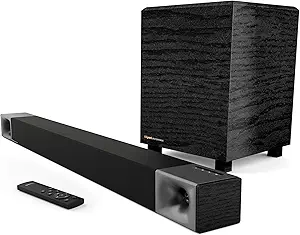
Conversely, Klipsch approaches the soundbar category with over seven decades of high-fidelity heritage rooted in classic American acoustic design. Founded by audio pioneer Paul W. Klipsch, the company prioritizes physical acoustic efficiency over purely digital manipulation. Klipsch soundbars are engineered around high-efficiency horn-loaded tweeters, traditional wooden cabinetry, and substantial custom-tuned woofers. Instead of trying to mimic an entire cinema array through micro-transducers and extreme beamforming, Klipsch focuses on raw dynamic impact, natural vocal clarity, and the effortless power delivery associated with traditional hi-fi speakers.
Ultimately, choosing between these two brands comes down to choosing between the cutting-edge digital spatialization of Samsung and the physical, high-output dynamic fidelity of Klipsch. Samsung designs soundbars as intelligent, automated extensions of the modern smart television, while Klipsch builds soundbars that serve as simplified, furniture-grade alternatives to dedicated component-based theater systems.
Key Differences & Technological Comparison
The technological divide between Klipsch and Samsung begins with their acoustic hardware. Klipsch universally equips its soundbars, such as the Cinema and Flexus series, with proprietary Tractrix horns. These horn-loaded tweeters dramatically improve acoustic efficiency, widening dispersion while lowering distortion at high volumes, which results in exceptionally crisp and lifelike dialogue. Furthermore, Klipsch favors high-density real-wood or composite enclosures, which reduce cabinet resonance compared to standard polymer shells. Samsung, by contrast, relies on complex arrays of smaller, highly optimized direct-radiating drivers, side-firing speakers, and physical up-firing transducers engineered to bounce sound waves off your walls and ceiling to simulate true 3D audio.
When it comes to surround sound processing and channel architecture, Samsung holds an undeniable lead. Flagship Samsung bars frequently feature true physical 11.1.4-channel setups, utilizing dedicated rear satellite speakers packed with both front- and up-firing drivers. Supported by Auto Room Calibration (SpaceFit Sound Pro), Samsung bars actively measure room acoustics and dynamically alter the equalization to compensate for architectural quirks. Klipsch systems tend to max out around 3.1 to 5.1.2 configurations, opting for a wider front soundstage and visceral bass response rather than wrapping the listener in complex, micro-detailed ambient overhead sound.
Software ecosystems and feature parity reveal further differentiation. Samsung soundbars excel at smart home utility, offering native integration with Apple AirPlay 2, Google Cast, Amazon Alexa, Spotify Connect, and SmartThings. Users with modern Samsung TVs benefit from proprietary integrations like Q-Symphony (which pairs the TV speakers with the soundbar for a richer soundstage) and wireless Dolby Atmos transmission. Klipsch keeps features leaner and focused on core performance, offering standard Bluetooth, HDMI eARC, optical connections, and minimalist companion apps, though recent collaborations with sister-brand Onkyo (in the Flexus lineup) have significantly improved their digital processing foundations and wireless modularity.
Pros & Cons Comparison
Samsung Soundbars
- Pros:
- Market-leading immersive surround performance with true physical up-firing and side-firing drivers.
- Advanced automated room correction (SpaceFit Sound Pro) tailors audio to distinct room shapes.
- Class-leading smart connectivity and seamless synergy with Samsung QLED/OLED televisions (Q-Symphony).
- Broad support for advanced spatial formats, including DTS:X, Dolby Atmos, and high-bitrate multichannel audio.
- Cons:
- Extensive use of plastic composite enclosures lacks the premium, furniture-grade feel of timber cabinets.
- Default sound profiles can lean sterile or overly digitalized, requiring EQ tweaks out of the box.
Klipsch Soundbars
- Pros:
- Tractrix horn technology produces class-leading vocal intelligibility and ultra-low distortion dynamics.
- Real-wood cabinets and premium materials offer superior aesthetic appeal and lower acoustic resonance.
- Exceptional subwoofers with massive dynamic range, producing deep, musical, cinematic low-end punch.
- Streamlined, no-nonsense setup and operation ideal for users who dislike complex calibration menus.
- Cons:
- Fewer discrete height channels, resulting in a less convincing fully spherical Dolby Atmos bubble.
- Historically inconsistent software and firmware stability, though recent Onkyo-engineered models have improved this.
Performance, Durability & Value Analysis
From an audio performance perspective, Klipsch takes the crown for two-channel music playback and raw dialogue delivery. The dynamic range afforded by its horn tweeters means that quiet whispers are as intelligible as explosive action sequences without dynamic range compression flattening the sound. Furthermore, Klipsch subwoofers are noticeably superior in output and control, utilizing larger downward- or front-firing cones housed in substantial wooden enclosures. However, for modern, blockbuster cinematic viewing, Samsung is virtually unmatched. In complex Dolby Atmos mixes, Samsung’s sophisticated beamforming and calibrated rear speakers track moving audio objects across the room with pinpoint localization that Klipsch’s wider, more traditional front-stage cannot replicate.
In terms of durability, build quality, and overall value, the brands trade blows depending on price tier. Klipsch soundbars feature superior physical builds with materials that resist wear and look high-end for years, but the brand has suffered past firmware glitches and power-supply hiccups in early generations of the Cinema series. Samsung offers industrial reliability, exceptionally stable wireless links between bars and subwoofers, and continuous software updates. From a pure value standpoint, Samsung delivers more channels, more microphones, and more decoding tech per dollar, whereas Klipsch offers higher acoustic grade materials and superior raw analog components.
Final Verdict: Which Brand Should You Choose?
The choice between Klipsch and Samsung rests on whether you value high-tech spatial immersion or classic acoustic dynamic range:
Choose Samsung if: You are building a modern, home-theater-first media room and want the most complete, fully enveloping Dolby Atmos and DTS:X experience without installing in-ceiling speakers. Samsung is the clear winner for tech-forward buyers, gamers looking for low latency and dedicated audio game modes, and anyone who already owns a compatible Samsung TV to take advantage of Q-Symphony and wireless Atmos connectivity.
Choose Klipsch if: You prioritize vocal clarity, stereo music listening, and high-impact cinematic dynamics without wanting an overly complicated digital system. If you value handsome, furniture-grade wood aesthetics, dislike the clinical feel of all-plastic tech products, and want a soundbar that projects clear dialogue effortlessly at any volume without distorting, Klipsch is the superior audiophile-grade option.
Product Selection
From an architectural and portfolio perspective, Samsung dominates the soundbar market by casting an exceptionally wide net that caters to every tier of consumer, from budget-conscious apartment dwellers to discerning home theater enthusiasts. Its catalog is systematically tiered across multiple distinct families: the entry-level B-Series, the mid-range all-in-one S-Series prioritizing lifestyle aesthetics, and the flagship Q-Series engineered specifically for spatial audio mastery. Samsung's portfolio leverages proprietary acoustic advancements such as acoustic beam technology, automated SpaceFit Sound calibration, and advanced physical driver arrays that scale up to an industry-leading 11.1.4 discrete channel configuration in models like the HW-Q990 series. This granular variety allows consumers to target precise feature sets, including uncompressed Dolby Atmos decoding via HDMI eARC, dedicated wireless rear up-firing surrounds, and Q-Symphony integration for synergistic operation with Samsung displays, offering unmatched breadth and plug-and-play architectural diversity.
Conversely, Klipsch approaches product selection with a focused, audiophile-centric philosophy, offering a more consolidated lineup anchored predominantly by its Reference and Cinema series, alongside the modern Flexus modular sound system developed in partnership with Onkyo. Rather than saturating the market with minor micro-variants, Klipsch concentrates on high-efficiency electroacoustic engineering. Their lineup emphasizes proprietary tractrix horn-loaded tweeters, high-output linear travel suspension (LTS) woofers, and heavy wood-composite cabinetry, contrasting sharply with Samsung's predominantly polymer builds. Klipsch structures its selection around modularity and acoustic dynamics; the Cinema and Flexus lines scale from streamlined 2.1-channel soundbars up to expanded 5.1.2 Atmos-enabled systems, purposefully designed with massive standalone, wireless down-firing subwoofers (often 8 to 12 inches) that deliver superior physical air displacement and lower subterranean frequency response than Samsung's more compact subwoofer enclosures.
The practical trade-off in product selection boils down to acoustic ideology versus immersive technological feature density. Samsung's catalog excels in delivering turnkey spatial computing and digital signal processing, providing consumers with all-inclusive multi-channel packages that feature high speaker-driver counts and seamless, app-driven digital ecosystems right out of the box. Klipsch sacrifices the pure sheer volume of model iterations to prioritize dynamic range, high acoustic sensitivity, and modular upgrade pathways. While a buyer looking at Samsung can pinpoint an exact price-to-performance ratio across dozens of discrete SKU configurations, a Klipsch buyer chooses from a curated selection that behaves more like traditional, high-fidelity two-channel component audio retrofitted for modern television applications, trading algorithmic processing bells and whistles for visceral, high-impact acoustic power.
Design/Look
From an industrial design perspective, Samsung and Klipsch approach the soundbar aesthetic from opposite ends of the consumer electronics spectrum. Samsung champions a sleek, hyper-modern, and minimalist design language engineered to visually harmonize with contemporary ultra-thin televisions. Their enclosures favor low-profile silhouettes, clean geometric angles, and unobtrusive form factors, utilizing materials such as tightly stretched acoustic fabric or micro-perforated dark metal grilles. Higher-end models, particularly in the Q-Series, introduce angled facets that serve a dual acoustic and aesthetic purpose—housing side-firing and up-firing drivers without ballooning the bar's physical volume. Samsung also caters directly to interior-conscious consumers with specialty options like the Ultra Slim series and "The Frame"-adjacent models, designed to sit virtually flush on a console or hug the wall cleanly with discreet, proprietary mounting systems. The engineering strength here lies in dimensional efficiency, ensuring high driver counts without dominating the living space.
In contrast, Klipsch embraces an unapologetically bold, heritage-driven aesthetic that treats the soundbar as a centerpiece of traditional audio furniture rather than an invisible television accessory. Known for their Cinema and Flexus series, Klipsch prioritizes premium materials uncommon in mass-market soundbars, such as real wood veneer finishes, exposed tactile corner accents, and heavy composite enclosures designed to eliminate cabinet resonance. Their visual signature is defined by visible, spun-copper Cerametallic woofers and proprietary, matte-black Tractrix horns, which can be showcased by removing the included magnetic cloth grilles. While Samsung’s design disappears into a dark home theater environment, Klipsch soundbars project a sense of artisanal, high-fidelity craftsmanship. However, this classic architectural approach results in noticeably taller and deeper enclosures, which can occasionally obstruct the lower bezel or IR sensors of low-profile TVs if not wall-mounted or paired with a raised television pedestal.
Ultimately, the choice in design and build quality reflects a fundamental trade-off between modern integration and classic audio prestige. Samsung excels at structural utility: their soundbars seamlessly fit underneath modern TV stands, provide streamlined single-cable or wireless TV pairing aesthetics, and feature well-concealed, front-facing LED information displays that dim to prevent visual distraction. Klipsch trades that slim, seamless visual integration for substantial, tactile presence and furniture-grade durability. While Klipsch soundbars appeal to audiophiles who appreciate raw material quality, visible engineering, and a timeless mechanical appearance, Samsung remains the superior choice for buyers seeking an unobtrusive, futuristic profile that complements the ultra-clean lines of modern home decor.
Affordability
When evaluating affordability in the soundbar category, Samsung demonstrates a masterclass in market segmentation and feature density per dollar. Samsung’s product catalog spans from entry-level sub-$150 stereo bars to premium, multi-channel Dolby Atmos flagships, ensuring a viable option for virtually every budget tier. From an engineering and product-design standpoint, Samsung leverages its massive economies of scale to pack advanced acoustic technologies—such as wireless Dolby Atmos, SpaceFit room calibration, and Q-Symphony TV integration—into aggressively priced mid-range packages like the Q-Series. Budget-conscious consumers receive tremendous value through cohesive multi-driver arrays, dedicated wireless subwoofers, and extensive wireless connectivity (Wi-Fi, AirPlay 2, and Bluetooth) without needing to step up to bespoke audio pricing. The trade-off is often aesthetic and material longevity; lower-tier Samsung units rely heavily on lightweight plastics and fabric wraps that prioritize cost containment over premium physical craftsmanship.
Conversely, Klipsch approaches affordability through the lens of traditional hi-fi acoustic engineering, which yields a higher barrier to entry and a narrower entry-level selection. While Klipsch does offer competitive entry-to-mid segments through lines like the Cinema and Flexus series, their baseline prices generally sit higher than Samsung’s entry-tier offerings. However, Klipsch redefines value not through mass-market DSP processing or software ecosystems, but through premium acoustic hardware and material durability. By engineering their soundbars with proprietary Tractrix horns, wood enclosures, and oversized, high-output subwoofers, Klipsch delivers superior natural dynamics, ultra-low distortion, and room-filling analog performance that outclasses similarly priced competitors in raw sonic power. The financial trade-off is that Klipsch often foregoes complex smart features, extensive virtual surround channels, and wide-ranging connectivity at price points where Samsung includes them as standard.
Ultimately, determining which brand offers superior affordability depends on how a consumer defines long-term value versus immediate feature accessibility. Samsung is the definitive winner for buyers seeking maximum functional utility, modern smart home integration, and immersive multichannel spatial audio at accessible price points. Klipsch, by contrast, appeals to audiophiles on a budget who prioritize component-grade materials, superior musicality, and high-efficiency transducer design over software-driven gimmicks. While Samsung offers better upfront affordability across a broader spectrum of budgets, Klipsch delivers exceptional durability and acoustic fidelity that justifies its higher mid-range investment for users focused strictly on high-performance cinema sound.
Sound Quality
When evaluating sound quality, Samsung and Klipsch approach acoustic engineering from fundamentally distinct philosophies. Samsung excels in computational audio, leveraging sophisticated digital signal processing (DSP) calibrated by its California Audio Lab. Flagship models, such as those in the Q-Series, are engineered to deliver an impeccably balanced, expansive soundstage utilizing high driver counts and proprietary SpaceFit Sound room calibration. Samsung’s implementation of spatial audio—specifically Dolby Atmos and DTS:X—is among the best in the industry, utilizing discrete up-firing, side-firing, and rear physical drivers to steer precise acoustic objects around the listener. Highs are clean and controlled, while mid-range vocal clarity is bolstered by the Active Voice Amplifier (AVA) feature, ensuring dialogue remains intelligible even in chaotic action scenes. The resulting profile is polished, analytical, and highly immersive, excelling particularly in complex multi-channel movie reproduction.
Conversely, Klipsch leans into traditional, heritage-driven hi-fi engineering characterized by mechanical efficiency and dynamic impact. Renowned for its proprietary Tractrix horn-loaded technology, Klipsch soundbars—such as the Cinema and Flexus series—deliver class-leading sensitivity, transient response, and pristine high-frequency detail without the digital artifacts that can occasionally plague heavy DSP processing. Where Klipsch truly dominates is in physical presence and low-end authority; its soundbars are often paired with larger, more powerful, high-excursion wireless subwoofers housed in real wood cabinets, producing rich, cinematic bass with genuine tactile punch rather than boomy resonance. Klipsch systems offer a lively, energetic V-shaped or warm-leaning sonic profile that feels distinctly analog and visceral, making them phenomenal not only for blockbuster films but also for stereo and multi-channel music playback.
The practical trade-offs in sound quality ultimately center on cinematic spatial precision versus dynamic acoustic horsepower. Samsung's reliance on psychoacoustics, beamforming arrays, and software optimization makes its soundbars vastly superior for enveloping 3D surround sound in varied room layouts, though they can sometimes lack the organic warmth and raw dynamic headroom found in dedicated speaker setups. Klipsch sacrifices some of this pinpoint multi-dimensional spatial immersion—often offering fewer physical up-firing channels and less aggressive algorithmic steering—in favor of superior mechanical headroom, effortless volume capabilities, and uncompressed dialogue dynamics. Consumers seeking an all-encompassing, high-tech surround sound bubble will find Samsung’s sound quality unmatched, while audiophiles who prioritize natural dynamics, deep mechanical bass, and high-fidelity punch will prefer the horn-loaded acoustic prowess of Klipsch.