Klipsch vs Roku: Overview
Comparing Klipsch and Roku helps you determine which brand is best suited for your needs in Soundbars. Both brands offer strong choices depending on your budget and key feature requirements.
Key Features & Comparison
Evaluate factors such as build quality, warranty, customer satisfaction, and total value before making your final purchase choice between Klipsch and Roku.
Product Selection
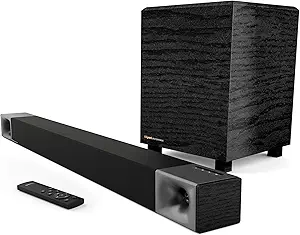
Klipsch focuses its soundbar portfolio on mid-to-high-end home theater setups, organizing its primary offerings under the Cinema series and the heritage-inspired Flexus series (developed in collaboration with Onkyo). Their catalog ranges from high-output standalone soundbars with horn-loaded drivers to complete multi-channel configurations bundled with massive wireless subwoofers and dedicated surround speakers. Klipsch targets discerning home theater enthusiasts, offering modular upgrade paths where consumers can independently add wireless subwoofers and satellite surround units to expand a baseline 3.1 bar into a fully immersive 5.1.2 Dolby Atmos ecosystem.
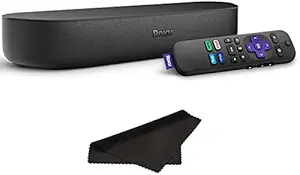
In contrast, Roku adopts a streamlined, mass-market product selection centered on accessible streaming integration. Its hardware lineup is deliberately narrow, dominated by the Streambar and Streambar Pro, alongside the Roku Wireless Soundbar engineered primarily for Roku TVs. Roku does not attempt to compete in the ultra-premium architectural audio space; instead, it provides a cohesive, plug-and-play smart entertainment hub where the soundbar acts as both audio renderer and 4K HDR streaming player. While users can augment their setup with proprietary Roku wireless subwoofers and satellite speakers, the selection is strictly tailored to smart home convenience rather than bespoke high-fidelity acoustics.
Design/Look
Klipsch soundbars showcase an unmistakable, high-end industrial design deeply rooted in the brand's classic American hi-fi heritage. The enclosures frequently incorporate premium materials such as real wood finishes, heavy-gauge acoustic grilles, and exposed architectural accents. The visual highlight of Klipsch hardware is its signature Tractrix horn assemblies, often flanked by copper-spun Cerametallic woofers or sleek metallic trims that command attention beneath a television. This bold, assertive aesthetic makes Klipsch units an intentional focal point in a living room, appealing directly to users who view home theater equipment as fine furniture rather than invisible utility.
Roku pursues a contrasting design philosophy driven by minimalism, compact footprints, and unobtrusive placement. Devices like the standard Roku Streambar are remarkably petite, easily fitting underneath smaller computer monitors or compact bedroom TVs without blocking sightlines or IR sensors. The aesthetic consists of simple, rounded-edge chassis wrapped in acoustic fabric with discreet matte black plastic accents. Roku soundbars are built to blend seamlessly into modern living spaces without drawing the eye, prioritizing clean cable management and utilitarian durability over the luxury textures and statement-piece appeal of Klipsch.
Affordability
From an initial financial investment standpoint, Roku is the undisputed leader in low-barrier audio upgrades. By integrating an ultra-high-definition 4K streaming media player directly into the soundbar, Roku eliminates the financial need for separate streaming sticks or set-top boxes, delivering exceptional value per dollar. Even when consumers choose to bundle the Streambar Pro with Roku's wireless bass and satellite modules, the total package cost remains significantly lower than a mid-tier standalone bar from premium audiophile competitors, making high-utility multi-channel sound accessible on modest household budgets.
Klipsch operates within a substantially higher price tier, reflective of its acoustical componentry, internal amplification power, and luxury cabinet materials. Even entry-level Klipsch soundbars carry a price premium over Roku's flagship models, with top-tier Dolby Atmos bundles requiring a significant financial commitment. The trade-off is one of lifespan and sonic caliber: buyers are paying for advanced digital signal processing, higher-efficiency horn drivers capable of high SPL without distortion, and modular longevity. While Klipsch presents a far heavier upfront expense, audio purists view the investment as justified by true home-cinema performance.
Sound Quality
Klipsch delivers a dynamic, high-impact acoustic profile characterized by crisp transients, exceptional vocal clarity, and immense dynamic range. Leveraging proprietary 90x90 Tractrix horn technology coupled with linear travel suspension tweeters, Klipsch soundbars excel at directional soundstage projection and precise dialogue intelligibility without artificial treble harshness. When paired with their down-firing or ported subwoofers, these systems produce deep, visceral sub-bass that easily fills expansive living spaces, convincingly rendering the thunderous low-end and immersive spatial imaging of Dolby Atmos film soundtracks.
Roku soundbars produce a balanced, surprisingly articulate sound signature given their diminutive physical dimensions, but they operate within definitive physical limits. Engineered primarily to resolve the chronic muddiness and weak projection of built-in TV speakers, Roku utilizes smart DSP modes such as Speech Clarity and Night Listening to keep dialogue upfront and prevent sudden volume spikes. However, due to small internal drivers and modest enclosure volumes, standalone Roku bars lack sub-bass impact, high-volume headroom, and the broad, three-dimensional acoustic dispersion required to recreate a genuine cinematic experience in larger rooms.