Klipsch vs JBL: Overview
Comparing Klipsch and JBL helps you determine which brand is best suited for your needs in Soundbars. Both brands offer strong choices depending on your budget and key feature requirements.
Key Features & Comparison
Evaluate factors such as build quality, warranty, customer satisfaction, and total value before making your final purchase choice between Klipsch and JBL.
Product Selection
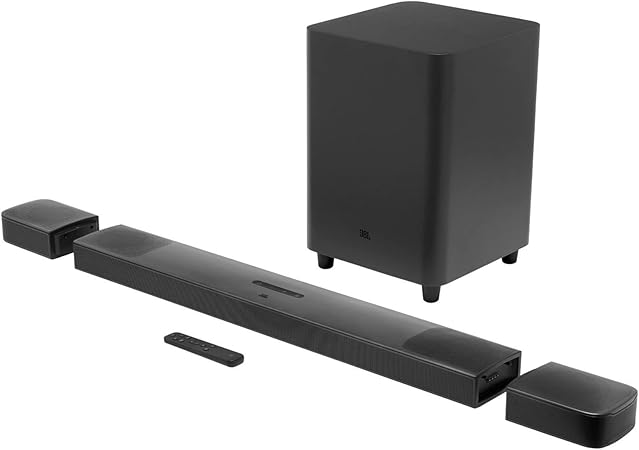
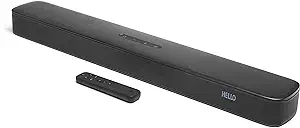
JBL approaches the soundbar market with a broad, lifestyle-oriented catalog engineered to capture every tier of home entertainment, from compact all-in-one models like the Bar 2.0 to modular, flagship systems like the Bar 1300X. A major engineering hallmark of JBL's ecosystem is its implementation of truly wireless, battery-powered detachable surround speakers, which eliminate the need for running power cables to the rear of the room while maintaining seamless channel sync. Their portfolio covers standard 2.0 configurations up to intricate 11.1.4-channel Dolby Atmos and DTS:X setups, providing consumers with highly adaptable options that bridge the gap between traditional plug-and-play simplicity and true surround separation.
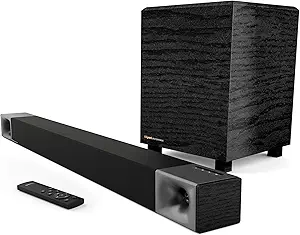
Klipsch focuses on a more curated, audiophile-centric lineup centered around its Cinema and newer Flexus series, developed in partnership with sister brand Onkyo. Rather than flooding the market with dozens of standalone variations, Klipsch concentrates on core performance architectures spanning 2.1 to 5.1.2 configurations with modular expansion capabilities, such as dedicated wireless surrounds and subwoofers with larger driver diameters. While Klipsch provides fewer micro-tier variations compared to JBL, their modular Flexus ecosystem allows consumers to step into a high-performance foundation and systematically upgrade amplification and channel distribution over time, prioritizing raw acoustic power over broad lifestyle variations.
Design/Look
JBL designs its soundbars with a contemporary, utilitarian aesthetic defined by curved contours, seamless metal grilles, and understated matte finishes that integrate cleanly with modern flat-panel displays. The physical integration of their detachable satellite speakers is a notable industrial design feat, utilizing magnetic docking mechanisms and discreet charging pins that snap flush against the main unit when not deployed. Hidden LED matrix displays shine through the front grilles to deliver status updates without creating harsh visual glare during low-light cinema viewing, maintaining a streamlined, consumer-friendly profile that avoids drawing excessive attention to the hardware.
Klipsch diverges sharply by embracing traditional mid-century modern hi-fi heritage, utilizing genuine wood materials, textured fabric grilles, and exposed architectural accents. Signature acoustic elements, such as their proprietary Tractrix horns, are proudly integrated into the visual identity, lending the bars an authoritative, heirloom-furniture aesthetic. The physical construction often feels denser and more substantial than JBL's lighter composite builds, appealing directly to interior designs that favor rich acoustic furniture over minimalist consumer electronics, though the larger enclosures and distinct horn geometry require significantly more visual and physical clearance beneath a television.
Affordability
JBL maintains an aggressive pricing ladder that excels at entry-level accessibility while offering strong feature-per-dollar value in its high-end segments. Consumers shopping on strict budgets can readily secure entry-level 2.0 and 2.1 units featuring standard digital inputs and reliable Bluetooth connectivity at entry-tier price points. At the premium tier, while flagship models command four-figure prices, JBL justifies the investment by bundling subwoofers with massive 10-inch or 12-inch transducers alongside multi-channel detachable satellites, sparing buyers the secondary expense of purchasing standalone amplification, surround units, or running specialized in-wall wiring.
Klipsch positions itself at a higher baseline price, with entry points rarely dipping as low as JBL’s budget tiers. Even their entry-level offerings require an investment aligned with mid-tier equipment, reflecting the cost of real wood cabinetry, proprietary acoustic waveguide engineering, and high-efficiency transducer materials. While their modular platforms like the Flexus series present reasonable initial acquisition costs, fully equipping a room with paired subwoofers and surround speakers pushes the cumulative cost toward premium territory, representing a significant acoustic investment geared toward listeners who view a soundbar as a multi-stage component system rather than a disposable home-theater accessory.
Sound Quality
JBL’s acoustic signature is engineered around punchy dynamics, authoritative low-end impact, and expansive spatial processing. The brand frequently leverages high-excursion down-firing and front-firing subwoofers that generate visceral sub-bass frequencies, making them exceptionally well-suited for explosive movie mixes and modern bass-heavy music. Incorporating proprietary MultiBeam calibration technology along with physical up-firing transducers, JBL creates a remarkably wide and coherent Dolby Atmos soundstage, bouncing acoustic energy off walls and ceilings to achieve convincing height and side immersion, though purists may occasionally find the upper midrange slightly smoothed over to avoid harshness at loud playback volumes.
Klipsch delivers an acoustically distinctive presentation characterized by ultra-high efficiency, micro-detail resolution, and class-leading dialogue clarity driven by their 90x90 Tractrix horn-loaded tweeters. This waveguide design controls directivity with pinpoint accuracy, directing high frequencies straight to the listening position while minimizing reflections off nearby surfaces, resulting in crystalline vocal intelligibility even at lower volumes. The bass response from Klipsch systems tends to be tight, musical, and fast rather than overwhelmingly boomy, offering audiophile precision across complex orchestral scores and acoustic tracks, though bright source material can occasionally push the upper treble boundaries toward clinical sharpness.