JBL vs TaoTronics: Overview
Comparing JBL and TaoTronics helps you determine which brand is best suited for your needs in Soundbars. Both brands offer strong choices depending on your budget and key feature requirements.
Key Features & Comparison
Evaluate factors such as build quality, warranty, customer satisfaction, and total value before making your final purchase choice between JBL and TaoTronics.
Product Selection
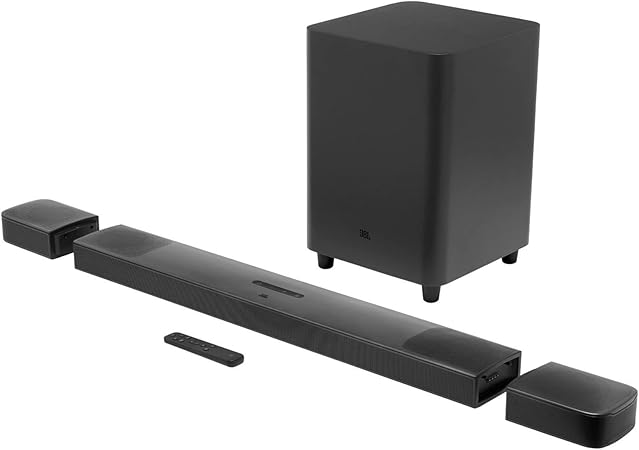
JBL offers a remarkably diverse and expansive catalog of soundbars designed to accommodate everything from compact apartment setups to high-end dedicated home theaters. Under the renowned JBL Bar series, the brand provides standalone compact bars like the Bar 2.0 All-in-One, mid-range configurations with wireless subwoofers such as the Bar 500, and flagship multi-channel offerings like the Bar 1000 and Bar 1300X. These higher-tier systems distinguish themselves with truly innovative engineering, featuring truly wireless, battery-powered detachable rear surround speakers, advanced acoustic beamforming, and dedicated up-firing drivers for native Dolby Atmos and DTS:X processing. This tiered approach allows consumers to select a soundbar precisely scaled to their room dimensions, acoustic preferences, and integration needs, backed by reliable smart platform support including Apple AirPlay 2, Google Cast, and HDMI eARC connectivity.
In stark contrast, TaoTronics operates with a much leaner, utilitarian portfolio that targets entry-level users seeking immediate upgrades over built-in television speakers. The brand's lineup primarily consists of budget-friendly 2.0-channel stereo bars and compact desktop soundbars, occasionally offering models with small wired or wireless subwoofers. TaoTronics focuses strictly on basic form factors—typically ranging from 16-inch PC-friendly bars to standard 32-to-40-inch television units. The trade-off is a distinct lack of advanced multi-channel formats, premium immersive audio options, or modular expandability; consumers will not find true Dolby Atmos decoding, Wi-Fi streaming architectures, or dedicated surround units within the TaoTronics catalog. While this constrained selection simplifies decision-making for casual shoppers, it leaves the brand unable to compete with JBL across mid-range and premium home cinema categories.
Design/Look
JBL soundbars exhibit a modern, refined industrial aesthetic characterized by clean lines, premium materials, and meticulous acoustic design. Most models in the lineup feature robust matte black or dark graphite finishes with full-coverage metal wraparound grilles that conceal the driver arrays while protecting them from dust and impact. A signature element of JBL's design philosophy is the seamless mechanical integration of their detachable satellite speakers, which lock onto the main soundbar via magnetic docking terminals to charge and create a unified single-bar profile when not in surround mode. Discreet LED displays tucked behind the front grilles provide clear visual feedback without distracting from the television screen in dark viewing environments, reflecting a thoughtful balance between functional utility and contemporary living room decor.
TaoTronics models adopt a far more pragmatic and cost-effective approach to design, leaning heavily into lightweight plastics and basic glossy or semi-matte surfaces. While units like the TT-SK023 provide a low-profile footprint that slips easily beneath computer monitors or modest television screens, the physical build quality lacks the heft and structural resonance damping found in JBL's hardware. TaoTronics frequently incorporates basic cloth fabric grilles or stamped plastic mesh, which are more susceptible to snagging, wear, and dust accumulation over time. Control layouts tend to be rudimentary, often consisting of side-mounted rubberized buttons or capacitive touch strips, and visual indicators are limited to simple multi-colored LEDs rather than full text readouts. While unobtrusive and functional for dorm rooms or compact bedrooms, TaoTronics soundbars do not exude the premium, cohesive aesthetic that defines JBL's living-room-centric hardware.
Affordability
Affordability represents the most dramatic divergence between these two audio brands, largely defining their respective market niches. JBL positions itself across the mid-to-high-end consumer tier, where entry-level units typically start around the hundred-dollar threshold, while flagship surround ecosystems easily climb into premium four-figure territory. This pricing model directly reflects JBL's investment in proprietary transducer engineering, licensing fees for high-bitrate surround codecs (Dolby Atmos, DTS:X), wireless transmitter technology, and sophisticated multi-room streaming integrations. While buyers pay a substantial premium for the JBL badge, the investment is offset by durable build materials, comprehensive firmware support, advanced HDMI connectivity, and genuine surround performance that minimizes the need for separate AV receiver setups.
TaoTronics, conversely, builds its entire market proposition around aggressive price accessibility, delivering functional audio reinforcement at fractions of the cost of mainstream audio brands. Often priced within an accessible budget spectrum under fifty to one hundred dollars, TaoTronics soundbars provide an appealing solution for cost-conscious consumers, college students, or secondary room installations where spending hundreds of dollars is impractical. However, this entry-level pricing necessitates notable engineering trade-offs, including the omission of HDMI-eARC support, absence of lossless audio codecs, rudimentary remote controls, and cheaper internal amplification. For consumers prioritizing strict upfront cost efficiency and basic volume amplification over acoustic precision or future-proof connectivity, TaoTronics delivers exceptional value, whereas JBL caters to buyers willing to invest in long-term acoustic fidelity.
Sound Quality
JBL’s sonic identity is rooted in decades of professional transducer engineering, resulting in soundbars that deliver high dynamic range, punchy bass response, and exceptionally articulate dialogue. Through dedicated center channels, specialized wave-guides, and proprietary PureVoice processing, JBL bars maintain pristine vocal clarity even amidst dense cinematic explosions or complex musical arrangements. The subwoofers bundled with mid- and high-tier models—often housing large 8-inch to 10-inch downward-firing drivers—produce deep, tactile low-end frequencies that extend effortlessly into the sub-bass realm without introducing muddy resonance into the midrange. Furthermore, JBL's automated multi-beam calibration and height-channel virtualization ensure that spatial audio tracks project genuine width and overhead dimension, creating a convincing three-dimensional acoustic envelope in the listening environment.
TaoTronics soundbars, by comparison, are engineered primarily to solve the problem of thin, muffled audio typical of standard flat-panel television speakers, but they do not possess the dynamic capabilities required for true cinematic performance. Equipped primarily with modest full-range drivers and passive bass radiators, TaoTronics units excel at boosting the upper-midrange frequencies, which effectively elevates spoken dialogue and improves vocal intelligibility for news broadcasts, podcasts, and casual sitcom viewing. However, the absence of high-grade dedicated tweeters and substantial woofer displacement means high frequencies can lean harsh or sibilant at elevated volumes, while the low-end performance rolls off sharply above true sub-bass thresholds. Without multi-channel processing or advanced room-correction DSP, the soundstage remains strictly localized to the physical width of the bar, offering limited immersion compared to JBL's acoustically refined systems.