JBL vs Samsung: Overview
Comparing JBL and Samsung helps you determine which brand is best suited for your needs in Soundbars. Both brands offer strong choices depending on your budget and key feature requirements.
Key Features & Comparison
Evaluate factors such as build quality, warranty, customer satisfaction, and total value before making your final purchase choice between JBL and Samsung.
Product Selection
Samsung commands one of the most expansive and finely tiered soundbar lineups in consumer audio, structured across distinct series to target every market segment. Its flagship Q-Series soundbars, engineered at the Samsung Audio Lab in California, deliver high-channel-count configurations such as 11.1.4 setups with dedicated wireless rear surrounds, targeted acoustic beam technology, and proprietary Q-Symphony integration for Samsung displays. Beyond high-end home theater systems, Samsung maintains the ultra-slim S-Series for minimalist aesthetics and the accessible B-Series for straightforward optical and HDMI ARC connectivity. This tiered methodology ensures that whether a buyer is outfitting a compact bedroom television or engineering a reference-level spatial audio living room, Samsung has an exact, highly targeted SKU available.
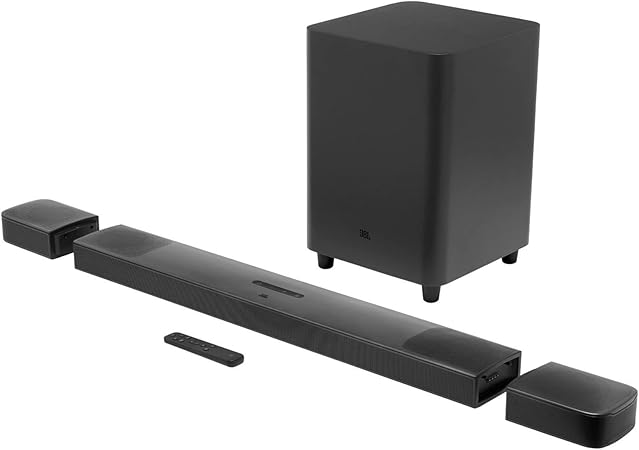
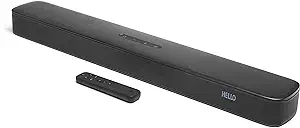
JBL approaches product selection through a more concentrated, utility-focused portfolio primarily anchored by its modernized Bar series, spanning from all-in-one 2.0-channel bars to multi-channel configurations like the Bar 1300X. While JBL offers fewer total SKUs than Samsung, its individual offerings feature distinctive architectural engineering, most notably its patented battery-powered detachable wireless surround speakers. This modular innovation provides a unique solution that Samsung’s standard plug-in satellite speakers do not address, appealing directly to users who demand true surround sound without routing permanent power cables. However, JBL lacks the hyper-specialized design tiers—such as ultra-thin lifestyle bars—found in Samsung's extensive catalog, prioritizing functional versatility over sheer breadth of selection.
Design/Look
Samsung’s industrial design philosophy prioritizes seamless aesthetic integration with modern television panels and contemporary interior decor. The brand favors clean architectural lines, premium metal mesh grilles, and low-profile enclosures engineered to tuck cleanly beneath television bezels without obstructing infrared receivers or bottom display borders. With specialized lines like the S-Series, Samsung emphasizes Scandinavian minimalism, utilizing tailored acoustic fabrics from Kvadrat and ultra-slim chassis profiles that can be wall-mounted virtually flush. The overall design language across the Samsung ecosystem is disciplined, understated, and built to blend into high-end living spaces rather than draw visual attention to the audio hardware itself.
JBL, by contrast, adopts a more utilitarian, tech-forward aesthetic defined by matte graphite finishes, rounded acoustic grilles, and visible engineering seams necessitated by its modular hardware. The visual identity of upper-tier JBL soundbars is heavily shaped by their detachable end-caps; when connected, the soundbars present a wide, singular silhouette, but when detached, the main bar exposes docks that require rubberized side caps to maintain a finished appearance. While JBL’s plastics and acoustic metal grilles are exceptionally durable and resilient against everyday wear, they lean toward an aggressive, consumer-electronics aesthetic that feels more utilitarian than luxurious. Users seeking a stealthy, lifestyle-oriented piece of audio furniture often prefer Samsung, whereas JBL appeals to those who prioritize functional, modular physical engineering.
Affordability
When analyzing pricing structures and economic value, Samsung demonstrates an aggressive cost-to-feature ratio across its entire catalog, frequently leveraging its massive manufacturing scale to undercut rivals during promotional cycles. In the entry-to-midrange tiers, Samsung provides advanced audio processing such as DTS Virtual:X, discrete wireless subwoofers, and multi-channel soundstages at remarkably accessible price points. Even at the ultra-premium end, models like the HW-Q990 series regularly bundle high-performance subwoofers and four-channel wireless up-firing rear satellites straight out of the box, offering a complete, turnkey Dolby Atmos system at an all-inclusive price that often undercuts competing multi-component ecosystems.
JBL positions its pricing to reflect the complex mechanical engineering and internal components required by its modular systems, which generally yields a higher starting price floor for comparable channel counts. The integration of rechargeable lithium-ion battery arrays, docking contacts, and dual-band transmitter chips in the detachable speakers inherently raises JBL’s bill of materials. While entry-level JBL soundbars remain competitive with standard optical and Bluetooth alternatives, step-up models require a larger financial commitment than equivalent Samsung packages. However, for consumers who value eliminating the cost and labor of electrical work or extension cords for rear surrounds, JBL’s pricing represents a justifiable premium for unique logistical convenience.
Sound Quality
In terms of acoustic performance, Samsung leans heavily on psychoacoustic research and balanced, linear tuning cultivated by its California Audio Lab. Flagship Samsung soundbars excel at wide, precise spatial imaging, leveraging discrete side-firing and up-firing drivers alongside automated room calibration (SpaceFit Sound Pro) to deliver highly accurate Dolby Atmos and DTS:X reproduction. Midrange clarity is exceptionally transparent, ensuring dialogue remains intelligible even against complex, high-dynamic-range movie scores. The bass response from Samsung’s subwoofers is tightly controlled and optimized for theatrical dynamics, providing low-frequency extension that integrates seamlessly with the soundbar’s crossover frequencies rather than overpowering them.
JBL approaches sound quality with its legendary, high-energy signature, emphasizing impactful dynamic punch, high SPL capability, and robust low-frequency dominance. Utilizing substantially larger subwoofer drivers—often 10 to 12 inches compared to the 8-inch units common to Samsung packages—JBL delivers visceral, room-shaking bass that appeals strongly to action movie enthusiasts and bass-heavy music genres. While JBL’s MultiBeam technology and discrete detachable surrounds generate a convincing, authentic 360-degree soundfield, the sound signature exhibits a slight V-shaped character, prioritizing punch and treble sparkle over reference-grade midrange neutrality. Consequently, Samsung offers superior vocal precision and spatial cohesion, while JBL provides superior raw cinematic power and chest-thumping bass performance.