JBL vs Roku: Overview
Comparing JBL and Roku helps you determine which brand is best suited for your needs in Soundbars. Both brands offer strong choices depending on your budget and key feature requirements.
Key Features & Comparison
Evaluate factors such as build quality, warranty, customer satisfaction, and total value before making your final purchase choice between JBL and Roku.
Product Selection
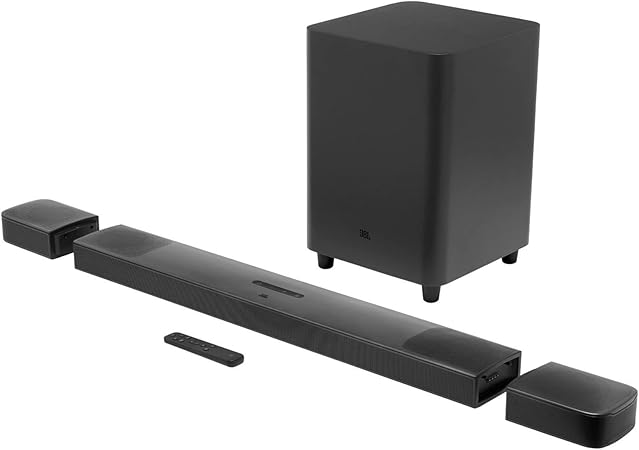
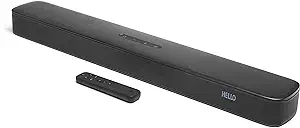
JBL offers an expansive and multifaceted product catalog in the soundbar category, catering to everyone from casual listeners to demanding home theater enthusiasts. Their lineup spans compact, all-in-one enclosures like the Bar 2.0 Noir up to high-end flagship systems such as the JBL Bar 1300X, which features detachable, battery-powered wireless rear surround speakers and discrete upward-firing drivers. This tiered portfolio embraces modern acoustic technologies, giving consumers choices that include Dolby Atmos, DTS:X, multi-channel subwoofers, and broad wireless casting standards across entry-level, mid-range, and premium price brackets.
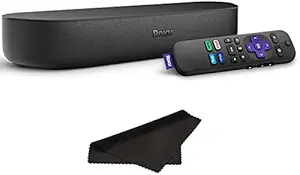
In contrast, Roku maintains a deliberately streamlined and utility-focused product portfolio. Rather than attempting to compete in the ultra-premium home theater tier, Roku centers its selection on a few specialized hardware variants, notably the Roku Streambar and Streambar Pro, alongside modular add-on accessories like the Roku Wireless Subwoofer and Wireless Speakers. While JBL’s catalog is designed around scaling acoustic performance and physical format options, Roku’s product strategy focuses on dual-function utility—combining an audio upgrade with an integrated 4K streaming media player to simplify the home entertainment setup.
Design/Look
JBL soundbars exhibit a sleek, modern aesthetic characterized by industrial metal speaker grilles, rounded edge profiles, and a refined matte-black or graphite finish. The overall design language communicates durability and high-end audio performance, fitting seamlessly beneath both minimalist and elaborate AV furniture setups. A defining engineering achievement in JBL's higher-tier designs is the modular magnetic docking mechanism, which allows the ends of the soundbar to detach effortlessly and function as completely wireless, battery-operated rear satellites without introducing visual clutter or trailing cables into the living space.
Roku takes a softer, more compact approach to industrial design, featuring rounded, pill-like shapes cloaked in tightly woven acoustic fabric grilles and textured matte plastic housings. The diminutive footprint of the base Streambar is intentionally non-intrusive, engineered to sit comfortably between TV legs or fit onto smaller bedroom credenzas where space is at a premium. However, Roku’s reliance on dark fabric coverings makes them more susceptible to dust accumulation over time compared to JBL’s perforated metallic grilles, and their utilitarian styling prioritizes practical living room neutrality rather than making a bold design statement.
Affordability
When evaluated strictly through the lens of initial cost-of-entry and budget-friendly integration, Roku holds an undeniable advantage. By unifying a 4K HDR streaming player and an acoustic sound system into a single enclosure, Roku eliminates the financial need to purchase separate streaming hardware, delivering exceptional value for budget-conscious consumers. Even when purchasing the complete ecosystem—pairing a Streambar Pro with the dedicated wireless subwoofer and satellite speakers—the total investment remains well below the mid-range offerings of traditional audio manufacturers.
JBL operates across a vastly broader pricing spectrum, resulting in lower perceived affordability at the top end, but offering better long-term acoustic return on investment for serious listeners. While their basic entry-level soundbars are competitively priced against standalone audio solutions, their advanced units demand a substantial monetary investment. For this higher price tag, JBL provides high-wattage amplification, expansive physical driver arrays, eARC lossless bandwidth, and specialized decoding hardware, shifting the value proposition from simple budget economy to sophisticated audio engineering.
Sound Quality
Acoustic performance is where the divergent engineering philosophies between the two brands become most starkly apparent. JBL leverages its rich professional audio heritage to deliver a powerful, highly dynamic sound signature characterized by deep, punchy low-end extension, wide dispersion patterns, and crystal-clear dialogue intelligibility. Through dedicated center channels, high-excursion subwoofers, and sophisticated MultiBeam and up-firing Dolby Atmos implementations, JBL soundbars construct an immersive, three-dimensional soundstage with precise object placement that handles explosive cinematic dynamics and complex musical passages with equal authority.
Roku soundbars focus on speech enhancement, vocal clarity, and controlled frequency response rather than expansive cinematic impact. With proprietary software features like Speech Clarity and Night Mode, Roku successfully fixes the muddiness and poor intelligibility inherent in standard built-in television speakers. However, due to smaller physical acoustic chambers and lower driver displacement, standalone Roku soundbars struggle to produce genuine sub-bass and can exhibit dynamic compression at elevated volume levels, making them better suited for everyday television programming, podcasts, and casual listening rather than reference-grade home theater reproduction.