JBL vs Bose: Overview
Comparing JBL and Bose helps you determine which brand is best suited for your needs in Soundbars. Both brands offer strong choices depending on your budget and key feature requirements.
Key Features & Comparison
Evaluate factors such as build quality, warranty, customer satisfaction, and total value before making your final purchase choice between JBL and Bose.
Product Selection
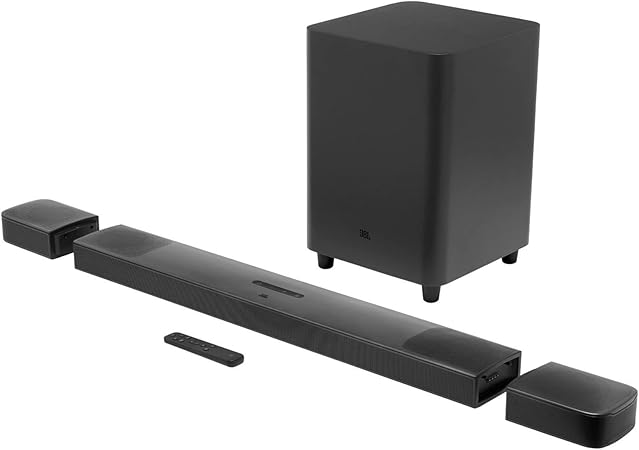
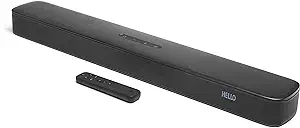
JBL approaches the soundbar market with an extensive, highly tiered catalog designed to meet consumers at virtually any budget or room configuration. Anchored by its popular 'Bar' series—ranging from compact 2.0 all-in-one models like the Bar 2.0 Noir to feature-packed behemoths like the Bar 1300X—the brand emphasizes physical versatility and clear technological escalation. A defining innovation across JBL’s mid-to-high-tier selection is its use of truly wireless, detachable rear surround speakers that run on rechargeable internal batteries. This unique engineering solution eliminates the need for trailing cables or separate satellite power outlets, giving JBL a competitive edge for consumers seeking a true multi-channel Dolby Atmos environment without structural rewiring or dedicated speaker stands.
In contrast, Bose curates a more streamlined, modular ecosystem focused heavily on premium smart audio. Rather than offering dozens of disparate configurations, Bose centers its portfolio on key core models, principally within the Smart Soundbar series (including the Smart Soundbar 300, 600, and Ultra Soundbar, the successor to the 900). Instead of bundling monolithic kits, Bose favors an a la carte, modular engineering philosophy, allowing users to start with a standalone bar and expand over time with optional wireless Bass Modules and Surround Speakers. While this results in fewer ready-to-go all-in-one bundles compared to JBL, it ensures seamless integration within Bose's proprietary multi-room audio architecture and SimpleSync ecosystem, appealing directly to users invested in expanding an interconnected home audio network.
Design/Look
JBL’s industrial design is fundamentally utilitarian, rugged, and performance-oriented, reflecting the brand’s professional live-sound heritage. The soundbars feature sturdy matte-black or graphite plastic enclosures wrapped in durable, finely perforated metallic front grilles. Subtle, low-profile branding and utilitarian LED text displays—hidden neatly behind the grille mesh—offer functional status readouts without creating distracting visual clutter during dark home theater viewings. While modern iterations such as the Bar 1000 and 1300X have refined their seams to integrate the dockable rear speakers cleanly, the overall visual language remains distinctly functional, prioritizing acoustic output, robust heat dissipation, and physical resilience over high-fashion aesthetics.
Bose establishes a starkly different design standard, prioritizing high-end minimalist luxury and seamless living room integration. Flagship models like the Smart Ultra Soundbar incorporate premium tempered glass top plates, seamlessly rounded corners, and wrap-around metal grilles with near-invisible tolerances. Even the more compact units, such as the Smart Soundbar 600, feature an exceptionally low physical profile designed to slide beneath low-clearance television stands without obstructing infrared sensors or screen borders. Bose eliminates bulky segment displays in favor of discrete, microscopic status LEDs. The result is a visually sophisticated, design-forward aesthetic that doubles as upscale modern home decor, contrasting with JBL's more machine-like, theater-first appearance.
Affordability
JBL maintains a commanding position when evaluated through the lens of absolute affordability and value per channel. By leveraging the vast manufacturing infrastructure of Harman International and parent company Samsung, JBL can produce high-wattage sound systems with included subwoofers at accessible, entry-level to mid-range price points. For example, a mid-tier JBL system often includes a high-output 10-inch down-firing wireless subwoofer and physical height channels for a price comparable to a standalone entry-level soundbar from luxury competitors. Consumers shopping on a strict budget can acquire competent 2.1 or 5.1 systems from JBL without financial strain, making the brand an industry benchmark for value-engineered multichannel performance.
Bose operates firmly within the premium audio bracket, where the barrier to entry is notably higher and complete systems require a substantial financial investment. While a standalone Bose smart soundbar carries an initial price comparable to JBL's upper-mid-range packages, it typically delivers only self-contained bass through internal transducers or phase-guide ports. Once a consumer adds a dedicated Bose Bass Module 500 or 700 and the matching rear surround satellites, the total expenditure routinely doubles or triples the cost of an equivalent turnkey JBL setup. Consequently, Bose demands a luxury premium that is justified not by sheer volume of hardware in the box, but through superior software support, digital signal processing refinement, and brand prestige.
Sound Quality
Acoustically, JBL soundbars are voiced for impactful, cinematic immersion, high dynamic range, and energetic bass delivery. Utilizing multi-driver arrays paired with generously sized, high-wattage external subwoofers, JBL units deliver a tactile low-frequency punch that excels with blockbuster film scores, explosive action sequences, and modern, bass-heavy musical genres. High frequencies are crisp and forward, driven by carefully angled tweeters and side-firing transducers that maximize the perceived soundstage width. While this aggressive tuning creates a thrilling 'movie-theater' atmosphere at home, audiophile listeners may occasionally notice a slightly recessed mid-range, where complex acoustic instrumentation or nuanced dialogue can be shadowed during intensely layered, bass-heavy scenes.
Bose counters with a sound profile engineered for forensic clarity, broad spatial coherence, and natural vocal intelligibility. Utilizing proprietary technologies like the ADAPTiQ audio room calibration system and TrueSpace processing, Bose soundbars dynamically analyze room geometry and optimize phase cancellation to project height and surround cues even from smaller footprints. The mid-range performance of Bose speakers is exceptionally articulate, ensuring that whispered film dialogue and vocal-centric tracks remain pristine and central without requiring artificial volume boosting. While standalone Bose bars cannot match the chest-thumping sub-bass rumble of JBL’s 10-inch subwoofers out of the box, Bose delivers a more balanced, tonally neutral, and refined acoustic spectrum that holds up impeccably across both cinematic media and critical music listening.