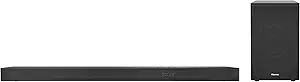
Hisense vs Denon: Overview & Brand Philosophy
In the home theater audio landscape, Hisense and Denon represent two fundamentally different approaches to acoustic engineering and consumer positioning. Hisense, historically recognized as a disruptor in display technology, has leveraged its massive manufacturing infrastructure to capture market share in the soundbar category. The brand’s philosophy centers on democratization: delivering contemporary features such as Dolby Atmos, wireless subwoofers, and high driver counts at prices that make spatial audio accessible to mainstream consumers. Rather than pursuing acoustic perfection, Hisense prioritizes feature density and visual pairing with its television lineup, creating plug-and-play solutions optimized for immediate value.
Conversely, Denon operates with the legacy and prestige of a heritage Japanese audio brand with over a century of acoustic engineering experience. Originating in professional audio recording and high-end AV receivers, Denon’s philosophy in the soundbar space is dictated by acoustic fidelity, low distortion, and mid-range transparency. While Denon models occasionally eschew flashier digital processing gimmicks at equivalent price points, they emphasize component-grade drivers, refined crossover networks, and proprietary technologies like the HEOS high-resolution multi-room streaming architecture. For Denon, a soundbar is not merely a TV speaker replacement; it is a compact, high-performance audio component.
Key Differences & Technological Comparison
The core distinction between Denon and Hisense lies in their acoustic tuning and processing priorities. Hisense relies heavily on digital sound processing (DSP) to create broad, artificial soundstages. Many of its mid-range units include dedicated up-firing and side-firing drivers to bounce audio off walls and ceilings for Dolby Atmos and DTS:X reproduction. While this yields an expansive, cinematic experience on paper, the physical drivers often feature lightweight composite materials that can lead to distortion at higher volumes or a thin mid-range where dialogue lives. However, Hisense soundbars excel in ecosystem integration via features like "Roku TV Ready" or "EzPlay," which allow seamless control through TV on-screen display menus.
Denon places a premium on pure analog-to-digital translation, cabinet rigidity, and pure vocal clarity. Instead of overloading entry-to-mid-tier bars with physical surround drivers of questionable quality, Denon typically utilizes superior 2-way designs with dedicated tweeters and racetrack mid-woofers. Denon's proprietary Dialogue Enhancer utilizes sophisticated frequency-isolation algorithms rather than blunt decibel boosts, resulting in human speech that sounds natural rather than harsh. Furthermore, Denon’s integration of the HEOS ecosystem allows select soundbars to stream uncompressed 24-bit audio, integrate with standalone Hi-Fi setups, and pair wirelessly with dedicated Denon surround speakers with zero latency issues.
Pros & Cons Comparison
Hisense Soundbars
- Pros:
- Exceptional price-to-performance ratio with aggressive entry-level pricing.
- High driver counts often include physical upward-firing Atmos speakers at low price tiers.
- Convenient HDMI eARC implementation and proprietary TV sync options (EzPlay).
- Wireless subwoofers are frequently bundled standard, even in budget setups.
- Cons:
- Plastic-heavy build quality and lighter acoustic dampening inside enclosures.
- Tuning tends toward a "V-shaped" sound profile (heavy bass, sharp highs) that can muddy subtle mid-range dialogue.
- Companion mobile applications and firmware upgrade support can be inconsistent.
Denon Soundbars
- Pros:
- Superb musicality, balanced frequency response, and authentic low-distortion output.
- Class-leading vocal clarity powered by sophisticated acoustic tuning and Dialogue Enhancer tech.
- HEOS multi-room ecosystem allows high-resolution network streaming and seamless expansion.
- Robust chassis construction with premium fabrics and acoustically inert dampening materials.
- Cons:
- Significantly higher price tag for true spatial audio (Dolby Atmos) configurations.
- Entry-level models often omit dedicated subwoofers, relying on internal passive radiators.
- Fewer aggressive equalizer presets for consumers who prefer heavily boosted, theatrical bass.
Performance, Durability & Value Analysis
When assessing real-world performance, Denon consistently outperforms Hisense in musicality, dynamic range, and vocal coherence. In tests involving complex orchestral scores or action sequences with overlapping dialogue and explosions, Denon's discrete amplification modules maintain instrument separation without clipping or compressing the signal. Hisense, while undeniably capable of high volume and rumbling bass, can exhibit cabinet resonance and high-frequency sibilance when pushed beyond 75% volume. For home cinema enthusiasts who want cinematic impact without acoustic nuances, Hisense provides a thunderous experience; for audiophiles or critical listeners, Denon is decidedly superior.
From a durability and lifecycle perspective, Denon commands higher structural integrity. Its enclosures utilize dense polymers, reinforced internal bracing, and premium acoustic grilles designed to prevent rattle over extended years of operation. Hisense uses lighter plastics that, while modern in aesthetic, are more prone to wear, port degradation, and internal heat buildup. In terms of sheer financial value, Hisense is practically unbeatable for buyers working with hard budget constraints under $300. Yet, Denon’s long-term value manifests through system longevity, high-resolution network streaming, and software reliability via HEOS.
Final Verdict: Which Brand Should You Choose?
The choice between Denon and Hisense ultimately depends on whether you value feature democratization or acoustic refinement.
Choose Hisense if: You are seeking the highest possible technical specification for the lowest possible cost. If you want a full 5.1 or 5.1.2 channel Dolby Atmos experience with a wireless subwoofer and discrete rear channels for the cost of an entry-level standalone unit, Hisense is the undisputed champion of budget cinematic immersion. It is also the ideal companion for Hisense television owners who want single-remote synergy without complex setup procedures.
Choose Denon if: Your priorities are audio purity, articulate movie dialogue, and dual-purpose utility as a high-fidelity music streaming system. If you prefer a refined 2.1 or 3.1 setup engineered with audiophile components over an inexpensive, simulated surround system, Denon’s higher upfront investment pays dividends in daily listening enjoyment, build durability, and overall acoustic accuracy.
Product Selection
Hisense focuses its soundbar catalog primarily on the budget to lower-midrange television companion segment, providing straightforward solutions designed to pair directly with modern smart TVs. Their product catalog predominantly spans entry-level 2.0 and 2.1 channel setups, extending into accessible 3.1.2 and 5.1.2 channel Dolby Atmos and DTS:X systems such as the popular AX and U-series soundbars. Hisense categorizes its lineup to solve everyday consumer hurdles, bundling wireless subwoofers and occasionally rear surround speakers into convenient, all-in-one retail packages. While their lineup lacks high-end flagship separates or ultra-premium multi-channel architectures, it covers virtually every standard configuration an average consumer requires for TV audio enhancement.
Denon, backed by a century-long legacy in professional and home theater audio engineering, approaches product selection from an audiophile and custom-integration perspective. Denon’s catalog encompasses everything from compact standalone soundbars like the DHT-S216 to advanced, modular smart soundbars such as the Denon Home Sound Bar 550, which integrates into the robust HEOS whole-home audio ecosystem. Unlike Hisense, Denon allows users to scale their systems modularly, offering standalone subwoofers and dedicated HEOS wireless satellites for true discrete surround sound. Denon offers fewer rapid seasonal refresh models than Hisense, but its selection provides deeper functionality, network streaming integration, and multi-room audio capabilities that appeal to discerning AV enthusiasts.
Design/Look
Hisense soundbars adopt a functional, utilitarian aesthetic built to complement mainstream flat-panel televisions. Constructed primarily from matte black plastics, perforated metal or stamped-steel speaker grilles, and minimal geometric accents, Hisense bars blend into modern entertainment centers without drawing unnecessary attention. While recent upper-tier models have introduced brushed textures and subtle angled edges, the overall build reflects cost-conscious industrial design, where lightweight plastics dominate the enclosures and wireless subwoofers often rely on vinyl-wrapped MDF cabinetry with front-facing ABS ports.
Denon crafts its soundbars with a distinctly premium, understated design language rooted in traditional European and Japanese Hi-Fi sensibilities. Models like the Denon Home 550 utilize acoustic wraparound fabric, rounded corner radiuses, and tempered-glass top panels featuring proximity-sensing capacitive touch controls that illuminate upon approach. Denon's physical enclosures are acoustically inert and noticeably denser, utilizing reinforced internal bracing that reduces unwanted cabinet resonance. In side-by-side aesthetic evaluations, Denon consistently presents a more sophisticated, furniture-grade presence, whereas Hisense remains functional, modern, but distinctly mass-market.
Affordability
Affordability is Hisense’s principal market differentiator, delivering an aggressive price-to-performance ratio that few legacy audio brands can match. Hisense frequently offers fully packaged spatial audio systems—often featuring dedicated upward-firing drivers, wireless subwoofers, and physical satellite surrounds—at price points where competitors only sell basic 2.0-channel bars. For cost-conscious consumers seeking multichannel immersion, eARC connectivity, and modern codec support on a strict budget, Hisense represents one of the most accessible entry gates into home theater audio without requiring an expensive AV receiver.
Denon operates in a higher tier of the pricing spectrum, positioning its hardware as a long-term investment in acoustic fidelity and system interoperability. While Denon does manufacture entry-level options under its DHT series, these models generally command a premium over feature-equivalent Hisense models while omitting bundled rear surrounds or dedicated up-firing Atmos drivers. The higher cost of Denon products is justified through refined DAC (Digital-to-Analog Converter) stages, custom-tuned internal drivers, superior internal amplification, HEOS high-resolution streaming platform licensing, and extended firmware support lifecycles, making it less budget-friendly upfront but more durable over time.
Sound Quality
Hisense soundbars are tuned primarily for cinematic impact, dialog clarity, and broad dynamic punch. Midrange frequencies are generally optimized around vocal intelligibility, utilizing dedicated center channels and voice enhancement algorithms to prevent dialogue from getting lost during complex action scenes. However, Hisense’s acoustic performance reveals structural trade-offs when subjected to critical music listening: cross-over points between the soundbar and the bundled subwoofers can occasionally sound disjointed, high frequencies may lean bright or sibilant at elevated volumes, and the low-end often favors boomy presence over tight, musical bass control.
Denon distinguishes itself with superior acoustic tuning, driver balance, and natural tonal accuracy, leveraging decades of acoustic engineering experience. The sonic signature of Denon soundbars is characterized by a linear frequency response, rich and uncolored midrange reproduction, and delicate, transparent high-frequency extension driven by custom soft-dome tweeters and passive bass radiators. Even without a separate subwoofer, models like the Denon Home 550 reproduce remarkably controlled low-end impact. For multi-channel decoding, Denon's sophisticated DSP achieves expansive sound staging without artificial digital harshness, making their soundbars equally adept at reproducing high-resolution music and dynamic Hollywood film scores.
Compare current retail pricing, active promotions, and verified stock availability directly from authorized stores:
Compare current retail pricing, active promotions, and verified stock availability directly from authorized stores: