





Xiaomi vs Polar: Overview
Comparing Xiaomi and Polar helps you determine which brand is best suited for your needs in Smart Watch. Both brands offer strong choices depending on your budget and key feature requirements.
Key Features & Comparison
Evaluate factors such as build quality, warranty, customer satisfaction, and total value before making your final purchase choice between Xiaomi and Polar.
Battery Life
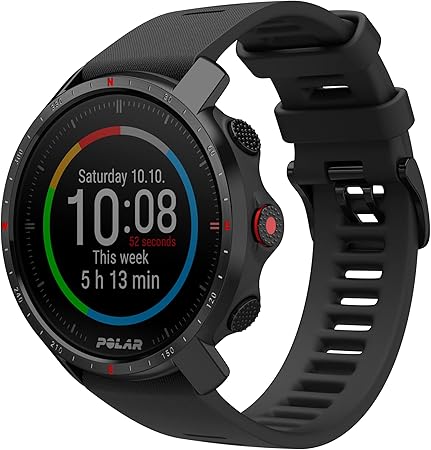
Polar engineers its wearables primarily for endurance athletes, which translates to a battery strategy heavily centered on sustained, power-intensive GPS tracking. Devices like the Polar Grit X and Vantage series feature aggressive power-management modes, allowing users to tweak satellite ping rates, disable optical sensors, or activate screen savers to stretch continuous GPS tracking from 30 to over 100 hours. In standard smartwatch mode, however, Polar's memory-in-pixel (MIP) or efficiently tuned AMOLED displays typically yield between 5 to 7 days of uptime. This performance is geared directly toward rigorous training schedules and multiday backcountry excursions, ensuring users never lose data mid-session due to high sensor drain.
Xiaomi approaches battery architecture from a consumer lifestyle perspective, leveraging ultra-efficient lightweight operating systems and aggressive background task management to deliver extraordinary longevity. Many Xiaomi smartwatches, such as the Watch S series or high-end Smart Band Pro models, easily achieve between 12 to 24 days on a single charge under typical usage conditions. Even with continuous vitals monitoring and bright AMOLED displays, Xiaomi's low-power proprietary chipsets consume minimal idle energy. The trade-off lies in active workout tracking: while Xiaomi comfortably outlasts Polar in passive daily wear, its satellite tracking modes drain battery reserves significantly faster and offer fewer granular power-saving adjustments for prolonged athletic events.
Build Quality & Durability
Polar prioritizes rugged functional design, engineering watches that withstand harsh outdoor environments and high-impact sporting use. Flagship Polar models are frequently certified to military durability standards (MIL-STD-810G/H), featuring materials such as aerospace-grade titanium, reinforced polymer cases, and scratch-resistant sapphire crystal glass. Bezel designs are purposefully engineered with raised protective lips to shield displays against direct impacts during trail running, climbing, or cycling. Additionally, Polar employs textured physical buttons that provide distinct tactile feedback, ensuring seamless operation in sub-zero temperatures, torrential rain, or while wearing heavy athletic gloves.
Xiaomi focuses on contemporary, polished aesthetics that mirror traditional dress watches while maintaining cost-effective manufacturing standards. Their upper-tier models feature refined materials such as 316L stainless steel bezels, ceramic backings, and flat sapphire glass, delivering an undeniably premium wrist feel suited for urban and office environments. However, while Xiaomi devices usually offer 5 ATM water resistance suitable for swimming, they generally lack extreme ruggedization or comprehensive drop protection. The interaction model relies heavily on responsive touchscreens and digital crowns, which offer an intuitive lifestyle experience but are far more difficult to operate during high-intensity training with wet or sweaty hands.
Health & Fitness Tracking
Polar is an industry pioneer in biometric science, making its health and performance tracking among the most clinically sophisticated available to consumers. Utilizing advanced multi-sensor arrays—such as the Elixir biosensing platform—Polar watches excel in measuring precision metrics including running power from the wrist, skin temperature, electrocardiograms (ECG), and blood oxygen. Beyond raw data, Polar's true competitive edge lies in its algorithmic recovery ecosystem, highlighted by Nightly Recharge, Training Load Pro, and FitSpark. These tools analyze autonomic nervous system (ANS) recovery and continuous cardio load, transforming raw heart rate variability (HRV) into actionable athletic training guidance that actively prevents overtraining.
Xiaomi delivers a robust, accessible health suite optimized for general wellness rather than elite athletic conditioning. Covering standard metrics such as continuous heart rate monitoring, all-day SpO2 tracking, stress scores, and sleep stage analysis, Xiaomi presents health data in a visually digestible format via the Mi Fitness app. While their optical PPG sensors are reliable for steady-state exercise and passive daily monitoring, they struggle with high latency and accuracy drift during sudden high-intensity interval training (HIIT) compared to Polar's lab-validated processing. Xiaomi lacks the deep athletic load modeling and physiological recovery depth that Polar provides, positioning it primarily for general lifestyle fitness rather than periodized athletic training.
Smart Features & Connectivity
Polar deliberately limits its smart ecosystem to keep user interaction focused entirely on performance analytics and to conserve system resources. Most Polar wearables provide fundamental smart capabilities—such as mirrored phone notifications, basic music controls, and weather forecasts—without deep interactivity. Users cannot reply to messages directly, store standalone music locally on most models, or download third-party applications from an app repository. Where Polar compensates is in its peripheral connectivity; it supports extensive dual-channel Bluetooth Low Energy (BLE) pairing with external heart rate chest straps, cycling power meters, and cadence sensors, ensuring seamless data export to platforms like Strava, TrainingPeaks, and Komoot.
Xiaomi excels in everyday connectivity and consumer-centric conveniences, designing its smartwatches as functional extensions of modern smartphones. Models operating on Xiaomi's HyperOS or Wear OS variants frequently feature integrated microphones and speakers for Bluetooth calls, voice assistant support, and comprehensive notification management with quick replies. Depending on the model, Xiaomi also includes local onboard music storage, NFC for contactless payments, and a growing ecosystem of downloadable mini-apps. While Xiaomi’s connection to specialized third-party athletic hardware is more restricted than Polar's broad sensor support, it offers a vastly superior connected experience for users managing daily smart life from their wrists.