Xiaomi vs Google: Overview
Comparing Xiaomi and Google helps you determine which brand is best suited for your needs in Smart Watch. Both brands offer strong choices depending on your budget and key feature requirements.
Key Features & Comparison
Evaluate factors such as build quality, warranty, customer satisfaction, and total value before making your final purchase choice between Xiaomi and Google.
Battery Life
When evaluating endurance, Xiaomi and Google represent polar opposites in smart wearable engineering. Xiaomi builds its ecosystem around high-efficiency proprietary operating systems and aggressive power management, yielding battery performance that routinely spans days or even weeks on a single charge. Devices like the Xiaomi Watch S series can comfortably achieve anywhere from 7 to 14 days of typical operation, allowing users to engage continuous heart rate monitoring, sleep tracking, and frequent outdoor GPS workouts without experiencing range anxiety. Even under heavy usage with always-on displays enabled, Xiaomi watches easily survive four to five days, making them ideal companions for multi-day excursions, business travel, and users who dislike the friction of nightly charging docks.
Conversely, Google’s Pixel Watch family prioritizes full-scale computational capability powered by Wear OS, which directly impacts longevity. With power-hungry silicon managing fluid interactive animations, background cloud syncing, and ambient sensing, Google smartwatches are engineered strictly around a single-day lifecycle, delivering roughly 24 hours of uptime with the always-on display engaged. While Google has iteratively improved charging speeds and background idle efficiency through coprocessor architectures, daily charging remains an unavoidable requirement. The trade-off is clear: Xiaomi provides unmatched stamina by curtailing continuous foreground processing, whereas Google trades endurance for an uncompromising, connected smartwatch experience that demands disciplined nightly or morning replenishment.
Build Quality & Durability
Xiaomi approaches build quality with an emphasis on balancing premium aesthetics, pragmatic materials, and aggressive pricing. Many of its flagship wearables feature stainless steel or lightweight aluminum alloy chassis paired with flat or subtly beveled sapphire crystal glass displays. This classic mechanical timepiece design language makes Xiaomi devices structurally resilient against accidental impacts and surface scratches during daily wear. Furthermore, standard 5 ATM water resistance ratings across the portfolio ensure structural integrity during surface swimming and water-based workouts, while standardized watch lugs give users the freedom to swap out utilitarian fluoroelastomer bands for formal leather straps seamlessly.
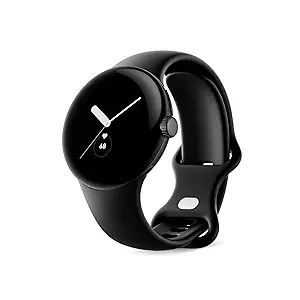
Google takes a distinctly bespoke, modernist approach centered around industrial minimalism and seamless organic curves. The Pixel Watch series utilizes custom three-dimensional domed Corning Gorilla Glass that gracefully flows into a recycled stainless steel core. While this pebble-like contour delivers exceptional ergonomics and sleek visual appeal, the fully exposed, curved perimeter makes the crystal glass inherently more vulnerable to edge impacts compared to recessed or flat-bezel alternatives. However, Google matches the 5 ATM water resistance and incorporates precision-engineered haptic feedback and a finely calibrated tactile crown that outclasses Xiaomi in mechanical refinement. Ultimately, Xiaomi delivers better passive protective engineering, while Google provides a higher level of tactile craftsmanship and cohesive design integration.
Health & Fitness Tracking
Google holds a formidable technical advantage in health intelligence through its direct integration of Fitbit’s enterprise-grade biometric algorithms. The Pixel Watch portfolio leverages high-precision multi-path optical heart rate sensors, an electrical sensor for on-demand ECG generation, and continuous skin temperature and cEDA (continuous electrodermal activity) sensors for stress detection. The resulting data stream is processed through Google’s sophisticated machine learning models, offering industry-leading accuracy in heart rate recovery, sleep staging analysis, and automated workout detection. For data-conscious athletes and wellness-focused individuals, Google delivers granular, clinically oriented insights that transform raw biological telemetry into actionable recovery and readiness metrics.
Xiaomi approaches fitness tracking from a broad, functional perspective that excels in exercise variety and outdoor capability. Equipped with dual-band multi-constellation GNSS (GPS, GLONASS, Galileo, BDS, QZSS), Xiaomi smartwatches offer fast satellite acquisition and reliable positional mapping for runners and cyclists, frequently rivaling specialized sports watches. While Xiaomi covers the essential metrics—such as continuous SpO2, heart rate variability, sleep stages, and VO2 max estimation—its analytical algorithms lean heavily on basic thresholds rather than deep predictive health modeling. Users receive capable, real-time telemetry for over a hundred sports modes, but Xiaomi lacks the proprietary clinical pedigree, advanced arrhythmia detection, and holistic health coaching ecosystem that Google provides via Fitbit.
Smart Features & Connectivity
In the realm of true smartwatch capability, Google establishes an undeniable standard powered by Wear OS. With deep native integration into the broader Android ecosystem, the Pixel Watch serves as a full-fledged wrist computer, featuring direct access to the Google Play Store, Google Assistant, Google Maps with turn-by-turn navigation, Google Wallet, and seamless YouTube Music streaming. The presence of robust voice-to-text messaging, interactive notification replies, and optional 4G LTE standalone connectivity ensures that users can completely untether from their smartphones while maintaining full digital reach. Google’s platform delivers a mature, cohesive application ecosystem that effortlessly bridges smart home control and personal productivity.
Xiaomi, in contrast, prioritizes speed and basic utility over open app flexibility. Operating predominantly on HyperOS (or lightweight proprietary software depending on regional variations), Xiaomi watches deliver instant notification mirroring, preset text responses, local Bluetooth call handling, and offline voice assistants. However, they lack dynamic third-party app stores, advanced voice-driven interactions, and interactive notification architectures found on Wear OS. While Xiaomi integrates seamlessly into its own proprietary smart home ecosystem via the Mi Fitness app, its standalone intelligence is inherently restricted. For consumers seeking an autonomous, app-rich digital assistant, Google is virtually unrivaled, whereas Xiaomi delivers a polished, extended-notification platform built for streamlined convenience.