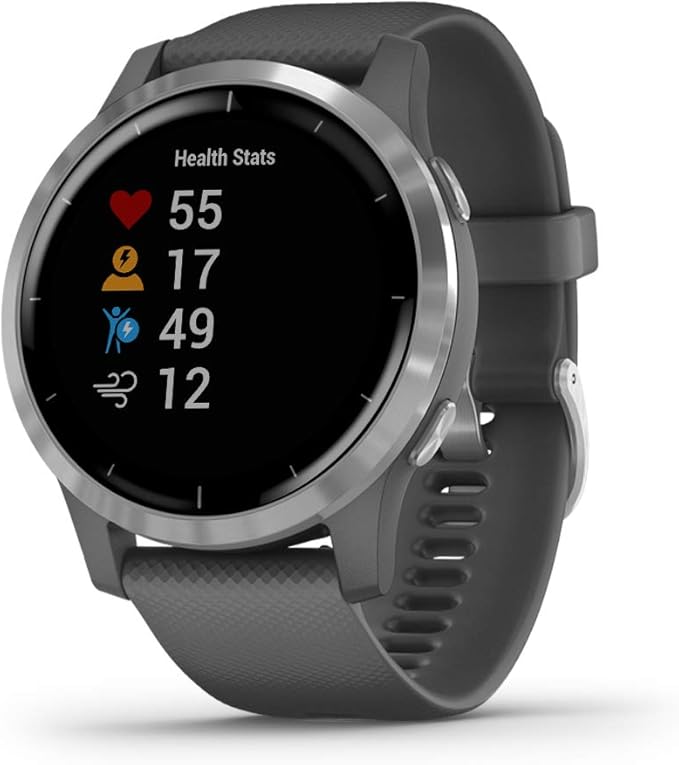
Xiaomi vs Garmin: Overview
Comparing Xiaomi and Garmin helps you determine which brand is best suited for your needs in Smart Watch. Both brands offer strong choices depending on your budget and key feature requirements.
Key Features & Comparison
Evaluate factors such as build quality, warranty, customer satisfaction, and total value before making your final purchase choice between Xiaomi and Garmin.
Battery Life
When evaluating battery life in the smartwatch domain, Xiaomi and Garmin represent two fundamentally different engineering philosophies, each tailored to distinct user priorities. Xiaomi achieves its impressive endurance—frequently ranging from 12 to 21 days on mid-range models like the Watch S series—through aggressive power management, optimized lightweight operating systems (HyperOS), and low-power hardware configurations. Xiaomi relies heavily on high-resolution AMOLED displays paired with ambient light sensors and clever display-sleep algorithms. While this delivers extraordinary standby times and reliable week-plus longevity with light-to-moderate continuous health tracking, the longevity degrades steeply when demanding features like high-accuracy GPS or Always-On Display (AOD) are continuously engaged, exposing the trade-off of relying on consumer-grade power delivery under sustained computational load.
Conversely, Garmin approaches battery performance through an athletics-first, utility-driven lens, engineering its devices with specialized components designed for relentless active tracking. Flagship outdoor models in the Fenix and Enduro series ditch high-drain displays in favor of ultra-efficient Memory-in-Pixel (MIP) technology, often augmented by proprietary Power Glass solar charging arrays. This allows Garmin watches to operate anywhere from two weeks to over a month in standard smartwatch modes, but their true technical superiority emerges during heavy GPS usage. While a Xiaomi watch may deplete its cell in 15 to 30 hours of continuous satellite tracking, specialized Garmin hardware can sustain multi-band GNSS tracking for 40 to 120+ hours, bolstered by granular power manager tools that allow users to disable specific sensors on the fly to conserve milliamp-hours during multi-day expeditions.
Ultimately, the practical trade-off between the two brands hinges on intended application and screen aesthetic versus functional durability. Xiaomi provides exceptional, cost-effective endurance for everyday lifestyle users who want a rich, colorful visual experience and only wish to visit a charger two or three times a month under standard usage conditions. Garmin targets endurance athletes, outdoor adventurers, and power users who prioritize continuous, non-negotiable metric tracking in the field over bright smartwatch animations. While Xiaomi wins on energy efficiency relative to consumer display fidelity and price-to-battery ratio, Garmin remains the gold standard for sheer engineering quality, offering mission-critical battery resilience that simply refuses to die under grueling performance demands.
Build Quality & Durability
When evaluating build quality and durability, Xiaomi and Garmin represent fundamentally different engineering philosophies tailored to distinct market segments. Xiaomi approaches smartwatch construction with an emphasis on modern consumer aesthetics and cost-to-performance efficiency. Lower-to-mid tier devices in Xiaomi's lineup, such as the Redmi Watch series, rely heavily on lightweight polycarbonate bodies and tempered glass, which suffice for casual daily wear but are prone to scuffs and stress fractures over time. However, Xiaomi's flagship tier, notably the Watch S-series, elevates this standard by incorporating premium lifestyle materials such as refined stainless-steel cases, sapphire crystal displays, and fluororubber straps. While these flagship materials resist everyday scratches and impart a luxury watch feel, Xiaomi’s internal architecture and casing are optimized for urban life, office environments, and standard gym routines rather than severe environmental abuse.
In contrast, Garmin dominates the rugged durability sector, engineering its hardware specifically for extreme conditions, tactical operations, and prolonged outdoor endurance. While Garmin offers sleek, lifestyle-oriented models like the Venu series that feature aluminum bezels and Gorilla Glass, its true technical strength lies in the outdoor-centric Instinct, Fenix, and Epix lines. Garmin utilizes high-grade materials such as fiber-reinforced polymer chassis, diamond-like carbon (DLC) coated titanium bezels, and scratch-resistant Power Sapphire lenses. Furthermore, many Garmin devices are rigorously tested to United States military standards (MIL-STD-810) for thermal, shock, and water resistance, often boasting water-ingress ratings of 10 ATM (100 meters) compared to the standard 5 ATM (50 meters) typical of Xiaomi's portfolio. The tactile, raised-bezel designs and textured physical buttons on Garmin watches are deliberately engineered to protect the display from lateral impacts and permit seamless operation while wearing thick gloves or submerged in water.
The practical trade-off between the two brands centers on intended utility versus investment value. Xiaomi delivers exceptional aesthetic value and sufficient durability for everyday wearers at an accessible price point, but its watches are more susceptible to aesthetic wear and tear under severe physical strain, lacking the structural reinforcement needed for backcountry or tactical use. Garmin commands a significant price premium, yet it provides virtually unmatched survivability, structural resilience, and long-term hardware reliability in the harshest outdoor and athletic environments. Consumers prioritizing refined, lightweight urban hardware will find Xiaomi’s build quality more than adequate, whereas demanding athletes, outdoor enthusiasts, and professionals requiring a field-ready, impact-resistant tool will view Garmin's uncompromising ruggedization as an essential standard.
Health & Fitness Tracking
When evaluating the health and fitness tracking capabilities of smartwatches, Garmin stands as the gold standard of athletic telemetry, whereas Xiaomi positions itself as an accessible, wellness-oriented platform for the casual user. Garmin’s engineering leverages decades of navigational and physiological expertise, underpinned by its Elevate optical sensor suite and Firstbeat Analytics engine. This allows Garmin devices to deliver peerless metric depth, calculating advanced variables such as heart rate variability (HRV) stress, VO2 max, training load focus, and real-time stamina. Furthermore, Garmin’s multi-band/dual-frequency GNSS systems provide industry-leading satellite positioning, ensuring that pace, elevation, and distance are tracked with clinical precision even in dense urban canyons or deep tree cover. In contrast, Xiaomi implements capable PPG sensors and basic multi-system GPS that adequately capture broad-stroke data—such as daily step counts, continuous SpO2, and baseline sleep cycles—but lacks the algorithmic rigor and sensor fidelity required for high-stakes, performance-driven training.
The operational software ecosystems of both brands further underscore their divergent target demographics. Garmin Connect is a data-dense, highly analytical dashboard favored by endurance athletes, offering extensive third-party integration (e.g., Strava, TrainingPeaks), customizable data fields on-wrist, and native support for external telemetry hardware like ANT+ power meters and chest-strap heart rate monitors. Xiaomi’s companion app (Mi Fitness) leans toward gamified daily lifestyle tracking, offering accessible visualizations of stress, energy scores, and sleep architecture, but it struggles with granular post-workout analytics and lacks seamless integration with specialized sports platforms. While Xiaomi watches provide dozens of preset workout modes, they often serve as passive timers with pulse-logging, failing to interpret how that exertion impacts long-term recovery or injury risk, unlike Garmin’s Body Battery and Training Readiness features which synthesize multiple biometric data streams into actionable athletic guidance.
Ultimately, the choice between Xiaomi and Garmin represents a pragmatic trade-off between price-to-performance accessibility and specialized technical mastery. Xiaomi presents extraordinary value for everyday consumers who desire an intuitive lifestyle wearable to monitor passive health metrics and general movement without a steep learning curve or premium price tag. Conversely, Garmin demands a higher financial investment but justifies it through rugged hardware reliability, uncompromised sensor accuracy, and an ecosystem engineered specifically to optimize human athletic performance. For serious runners, cyclists, and fitness enthusiasts whose training relies heavily on accurate biometric feedback and data integrity, Garmin remains the definitive, uncompromising choice.
Smart Features & Connectivity
When evaluating smart features and connectivity, Xiaomi and Garmin reflect two fundamentally divergent engineering philosophies tailored to distinct user archetypes. Xiaomi adopts an ecosystem-centric, lifestyle-driven approach, outfitting devices like the Watch S series with rich, interactive smartwatch functionalities. Engineering highlights include crisp AMOLED panels with high refresh rates running HyperOS, enabling seamless cross-device notifications, synced calendar integration, comprehensive voice assistant support, and reliable Bluetooth calling powered by robust dual-microphone noise-reduction arrays. In contrast, Garmin views smart capabilities primarily as supplementary utilities to an ultra-specialized biometric and athletic platform. Running its proprietary lightweight operating system, Garmin devices feature utilitarian notification handling—allowing basic read-outs and canned, pre-set SMS replies strictly on Android—with only select flagship models (such as the Venu 3 series) integrating physical speakers and microphones for voice assistants and on-wrist calling.
Technical connectivity profiles further accentuate the operational trade-offs between the two brands. Xiaomi prioritizes urban, digital-first convenience, incorporating multi-constellation GNSS alongside agile Wi-Fi and Bluetooth 5.2/5.3 for rapid data transfer, local app syncs, and regional NFC implementations for contactless transit and payment solutions. Garmin, however, engineers connectivity for mission-critical reliability, remote environments, and athletic telemetry. Its connectivity architecture excels in deep hardware interoperability via dual-band Bluetooth and ANT+ protocols, seamlessly coupling with external speed sensors, cadence meters, heart rate chest straps, and cycling computers. Additionally, Garmin Pay offers expansive global banking coverage, offline music storage integration with major providers like Spotify and Deezer is standard across many mid-to-high tiers, and select models leverage integrated LTE strictly for emergency safety tracking and real-time LiveTrack functionality rather than standalone cellular voice communications.
The practical choice between Xiaomi and Garmin hinges on whether an end-user prioritizes daily digital fluidness or rugged, field-ready functional autonomy. Xiaomi provides superior value for modern smartphone companion capabilities, delivering intuitive touch interfaces, responsive third-party mini-apps, and effortless wrist telephony at an accessible price point. Conversely, Garmin deliberately limits resource-heavy interactive smart features in favor of power efficiency and mission-critical stability, ensuring that active GPS pings, offline navigation maps, and data broadcasts persist uninterrupted for days or weeks. Ultimately, consumers seeking a true smartwatch that mirrors phone-side daily conveniences will find Xiaomi far more dynamic, whereas data-focused athletes and outdoor enthusiasts will prefer Garmin's focused, sensor-dense, and highly stable connectivity suite.