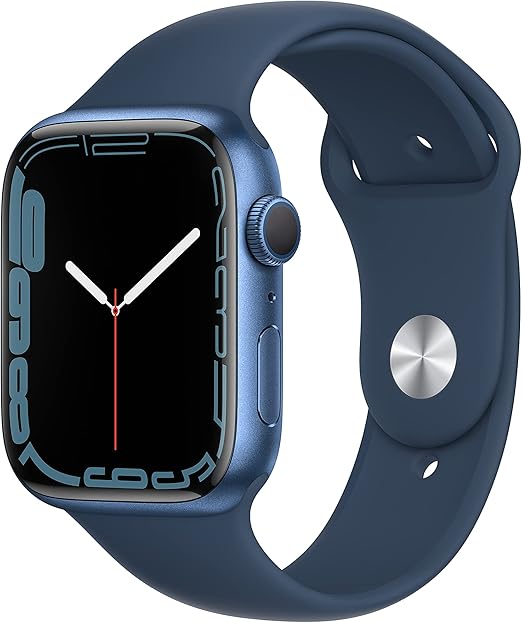
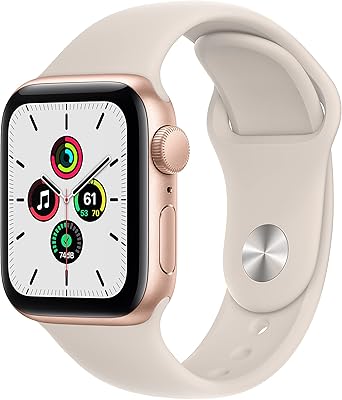
Apple vs Xiaomi: Overview & Brand Philosophy
The smartwatch market represents one of the most dynamic battlegrounds in consumer electronics, led by two distinct design and business philosophies: Apple and Xiaomi. Apple pioneered the modern premium smartwatch experience with the launch of the Apple Watch in 2015. Positioned as an extension of the iPhone ecosystem, Apple's philosophy centers on seamless integration, high-precision health monitoring, luxury-tier industrial design, and an uncompromising focus on a feature-rich user experience. For Apple, the smartwatch is not merely an accessory; it is a dedicated personal health guardian and a powerful computing device worn on the wrist.
Conversely, Xiaomi approaches the wearable category through the lens of democratized technology and exceptional value. Originating as a disruptor offering accessible fitness bands, Xiaomi has aggressively expanded into full-fledged smartwatches with its Xiaomi Watch series. The brand's philosophy is rooted in utilitarian efficiency: delivering the core features consumers demand—such as expansive battery life, comprehensive fitness tracking, and modern aesthetics—at a fraction of the cost of legacy competitors. Xiaomi aims to eliminate the friction of high price tags and frequent charging, making connected wristwear universally accessible across various operating systems.
While Apple operates with a walled-garden approach prioritizing proprietary cohesion and advanced medical certifications, Xiaomi plays the role of the universal utility player. Understanding this fundamental contrast in brand trajectory is essential for prospective buyers navigating between flagship luxury and budget-conscious capability.
Key Differences & Technological Comparison
When dissecting the hardware and software architecture of both brands, several distinct technological divides emerge across operating systems, health monitoring capabilities, build materials, and battery life.
Operating System and Ecosystem Integration: Apple Watches run on watchOS, widely regarded as the most mature and responsive smartwatch operating system available. It offers rich app support via a native App Store, seamless interaction with Apple Fitness+, Siri voice processing, and two-way notification management. However, watchOS is strictly exclusive to iPhone users; Android users cannot use an Apple Watch. Xiaomi smartwatches generally run on HyperOS (or previously proprietary RTOS), which delivers clean, lightweight interfaces with cross-platform compatibility across both Android and iOS devices. While Xiaomi excels at pushing notifications and basic controls, its third-party app ecosystem and interactive capabilities pale in comparison to watchOS.
Health & Sensor Technology: Apple sets the benchmark for medical-grade consumer sensors. Equipped with FDA-cleared ECG technology, irregular heart rhythm notifications, blood oxygen tracking (subject to regional regulatory availability), temperature sensing for ovulation retrospective estimates, and advanced fall and crash detection, Apple focuses on actionable, highly accurate diagnostic data. Xiaomi features competent biometric sensors—including PPG heart rate monitors, SpO2 tracking, and sleep phase analysis—that are reliable for general wellness and fitness tracking. However, Xiaomi generally lacks the deep medical clearances and algorithmic refinement found in Apple’s diagnostic framework.
Display and Battery Efficiency: Both brands utilize vibrant AMOLED panels with high peak brightness levels for outdoor readability. However, their power management could not be more divergent. Apple's feature-heavy OS, full cellular independence (on LTE models), and high-refresh animations require substantial power, resulting in roughly 18 to 36 hours of battery life on standard models (and up to 72 hours on the Apple Watch Ultra). Xiaomi, utilizing energy-efficient, lightweight operating systems, easily achieves between 7 and 14 days of battery life on a single charge under standard usage conditions, fundamentally altering how users engage with sleep tracking and travel without a charger.
Pros & Cons Comparison
Apple Smartwatches
- Pros:
- Market-leading watchOS ecosystem with extensive third-party app support.
- Clinically validated health sensors and life-saving features like Car Crash Detection and ECG.
- Flawless integration with iOS, Apple Health, and Apple Pay.
- Premium build options, including aerospace-grade aluminum, stainless steel, and titanium.
- Cons:
- Strictly locked to the Apple ecosystem (zero Android compatibility).
- Disappointing battery life requiring daily or alternate-day charging.
- Significantly higher upfront investment and repair costs.
Xiaomi Smartwatches
- Pros:
- Unbeatable price-to-performance ratio across entry-level and mid-tier price points.
- Exceptional battery longevity, frequently offering 1 to 2 weeks of uptime.
- Broad compatibility with both Android and iOS smartphones.
- Sleek, lightweight designs with attractive AMOLED displays.
- Cons:
- Limited interactive notifications (fewer direct reply capabilities).
- Rudimentary third-party app ecosystem compared to watchOS.
- Biometric tracking algorithms are less clinically accurate during intense variable workouts.
Performance, Durability & Value Analysis
From an absolute performance and durability standpoint, Apple commands the high ground. Custom S-series dual-core processors ensure fluid UI navigation, voice dictation, and rapid app loading with zero perceptible latency. For physical durability, standard Apple Watches utilize Ion-X or Sapphire crystal displays paired with robust water resistance ratings up to 50 meters, while the rugged Apple Watch Ultra takes this further with 100-meter water resistance and MIL-STD 810H certifications. These watches are engineered to endure heavy athletic abuse and receive major software updates for 4 to 5 years, preserving their functionality over extended ownership cycles.
Xiaomi delivers an entirely different value proposition centered on hardware pragmatism. Powered by efficient microcontrollers rather than heavy application processors, Xiaomi watches navigate menus swiftly, though without the hyper-fluid physics of watchOS. Build quality has improved markedly, with recent models featuring aluminum alloy cases, stainless steel bezels, and 5 ATM water resistance that handle gym sessions, swimming, and daily scuffs admirably. In terms of sheer financial value, Xiaomi is virtually unrivaled: an everyday consumer gets a premium-looking watch with a crisp display, weeks of battery life, and core fitness tracking for a fraction of what Apple charges for a baseline model.
Final Verdict: Which Brand Should You Choose?
The decision between Xiaomi and Apple ultimately hinges on your smartphone operating system, budget, and expectations of what a smartwatch should do.
Choose Apple if: You are already embedded in the Apple ecosystem with an iPhone, prioritize cutting-edge medical diagnostics and safety features, and desire a true wrist-bound computer capable of seamless communication, app execution, and contactless payments—provided you do not mind charging your device every one to two days.
Choose Xiaomi if: You use an Android smartphone (or want multi-platform freedom), demand week-long battery life, and want an affordable, stylish wearable primarily focused on notifications, daily activity metrics, and reliable sleep tracking without paying a massive brand premium.
Battery Life
When evaluating battery life in the smartwatch category, Xiaomi and Apple embody two fundamentally divergent engineering philosophies. Xiaomi prioritizes endurance through ultra-efficient hardware architectures and lightweight proprietary operating systems, such as HyperOS. By utilizing low-power dual-chipsets—pairing a primary application processor with a dedicated low-power co-processor—Xiaomi smartwatches, like the Watch S series, intelligently offload background tasks and continuous biometric monitoring. Consequently, users routinely experience between 7 to 14 days of typical usage on a single charge. In stark contrast, Apple approaches the smartwatch as a miniaturized computing platform. Powered by the sophisticated, high-performance S-series SiP (System in Package), watchOS offers deep multitasking, seamless graphical animations, and uncompromised cellular processing, but at a massive cost to energy efficiency. Standard Apple Watches (Series 9, Series 10) yield an industry-baseline 18 to 36 hours of battery life, while the rugged Apple Watch Ultra extends this to roughly 36 to 72 hours under moderate use.
The technical trade-offs between these battery profiles directly impact the daily user experience. Apple’s high-drain architecture supports true application ecosystem depth, rich micro-interactions, third-party complication updates, and continuous background sensor fusion. However, this necessitates a rigid daily charging routine, which frequently disrupts long-term sleep-tracking consistency and causes battery anxiety during multi-day excursions. While Apple has mitigated this slightly via magnetic fast-charging (reaching 80% in about 45 minutes), it remains a tethered experience. Conversely, Xiaomi achieves its market-leading multi-week longevity by tightly constraining the operating environment: background app refresh is aggressively managed, display refresh rates scale down aggressively, and third-party app support is either non-existent or heavily restricted. This makes Xiaomi vastly superior for users who view their smartwatch as an untethered, persistent health tracker and notification mirror rather than a stand-alone wrist-worn computer.
Ultimately, the winner in this aspect depends entirely on the consumer's tolerance for regular charging versus their demand for platform sophistication. Xiaomi claims a definitive victory in pure battery longevity, power management efficiency, and uninterrupted utility, liberating consumers from the tyranny of daily charging cradles. Apple, while technologically advanced in peak computational throughput, accepts poor power endurance as a compromise for feature density, fluid visuals, and ecosystem cohesion. For consumers who prioritize set-and-forget reliability, off-grid adventure capability, and persistent biometric data collection without maintenance friction, Xiaomi is the unequivocally superior engineering choice in battery life.
Build Quality & Durability
When evaluating build quality and physical resilience in the smartwatch sector, Apple operates as an industry benchmark, employing uncompromising engineering standards and luxury-tier materials. The standard Apple Watch lines utilize high-grade aerospace aluminum or polished stainless steel, paired with Ion-X strengthened glass or scratch-resistant sapphire crystal. For extreme durability, the Apple Watch Ultra series takes this further with an aerospace-grade titanium enclosure, raised bezels to protect the flat sapphire front crystal, and rigorous testing against MIL-STD 810H standards. Apple watches consistently boast 50-meter water resistance (with the Ultra reaching 100 meters and EN13319 dive computer certification), alongside IP6X dust resistance. Every physical interface, from the ceramic-and-sapphire sensor back to the precision-milled haptic Digital Crown, reflects tight tolerances and meticulous industrial design built to withstand daily abrasions and intense environmental exposure.
Xiaomi takes a dual-pronged approach, delivering competitive durability that is fundamentally shaped by value-driven engineering. In its budget-friendly segments (such as the Redmi Watch series), Xiaomi heavily incorporates polycarbonate frames and standard tempered glass, which, while lightweight and resilient against minor impacts, are more vulnerable to cosmetic scuffs and screen scratches over time. However, in its flagship offerings, like the Xiaomi Watch S-series, the brand dramatically closes the premium gap by integrating surgical-grade stainless steel cases, sapphire glass displays, and fluororubber or leather straps. Most mainstream Xiaomi smartwatches match Apple’s standard 5 ATM (50-meter) water resistance, ensuring suitability for swimming and harsh weather. While Xiaomi’s physical tolerances and micro-finishing rarely equal Apple’s seamless unibody craftsmanship, their higher-tier models punch significantly above their price class in daily wear-and-tear resistance.
The practical trade-offs between the two brands center on the cost of durability versus long-term material resilience. Apple provides an uncompromising, ruggedized ecosystem where even base models exhibit superior structural integrity, albeit at a steep financial premium and with higher repair costs if the glass or casing is damaged. Xiaomi, conversely, offers functional, pragmatic toughness—delivering premium materials like sapphire and steel at a fraction of Apple’s price point, while strategically reserving lower-grade polymers for its entry-level units. For consumers seeking peak material refinement, extreme-sport certification, and proven structural longevity, Apple remains the superior engineer; for buyers wanting dependable day-to-day durability and splash resistance without paying a luxury tax, Xiaomi represents a highly capable, cost-effective alternative.
Health & Fitness Tracking
When evaluating health and fitness tracking, Apple and Xiaomi occupy fundamentally different tiers of technical sophistication and engineering philosophy. Apple reigns as the gold standard for medical-grade consumer health monitoring. The Apple Watch utilizes advanced electrical heart sensors, high-precision third-generation optical sensors, and proprietary algorithms to deliver features backed by clinical certifications, such as FDA-cleared ECG readings, AFib detection, and cycle tracking with retrospective ovulation estimates via dual temperature sensors. Its fitness architecture, powered by watchOS, provides exhaustive real-time metrics including running dynamics (ground contact time, stride length, vertical oscillation), heart rate zones, and multisport transitions. In contrast, Xiaomi takes an accessible, endurance-focused engineering approach. Devices like the Xiaomi Watch series employ competent multi-channel PPG optical sensors for continuous heart rate and SpO2 monitoring, paired with dual-band GNSS for accurate outdoor route tracking. While Xiaomi matches basic lifestyle logging—such as daily steps, sleep phases, and PAI (Personal Activity Intelligence) vitality scores—it generally lacks the deep regulatory clearances and precision calibration found in Apple's biometric suite.
The practical trade-offs between the two platforms center on data accuracy versus operational autonomy. Apple’s ecosystem leverages high-frequency sensor polling and deep integration with Apple Health, offering rich longitudinal data analysis that seamlessly interfaces with medical providers. However, this heavy computational load severely limits battery life, requiring daily charging that directly compromises the consistency of passive health tracking, particularly sleep monitoring. Xiaomi circumvents this with remarkably power-efficient architectures, providing continuous, uninterrupted biometrics for up to two weeks on a single charge. The compromise comes in algorithmic maturity and third-party data interoperability: Xiaomi's Mi Fitness companion app offers less granular post-workout analytics, and its sensors are more prone to motion artifacts during high-intensity interval training (HIIT). Ultimately, Apple is the premier choice for serious athletes and users demanding clinical-level metric fidelity, whereas Xiaomi delivers an exceptional value proposition for mainstream users seeking holistic, set-and-forget daily activity and wellness tracking.
Smart Features & Connectivity
When evaluating smart features and connectivity, Apple stands as the industry benchmark, engineered with a level of system-level integration that transforms the Apple Watch into a true standalone micro-computer. Powered by watchOS, Apple devices feature cutting-edge wireless architectures, including dual-band Wi-Fi, Bluetooth 5.3, Ultra Wideband (UWB) chips for precision finding, and robust standalone LTE/UMTS connectivity. This hardware prowess enables complex, low-latency tasks such as seamless on-wrist voice calls, rich interactive notifications with full QWERTY keyboard support, voice-dictated replies, and independent music streaming. Furthermore, Apple’s developer ecosystem is unmatched, providing native access to a vast catalog of third-party apps, offline map rendering, and sophisticated home automation via HomeKit. Features like Family Setup and Apple Pay elevate the watch from a simple accessory to an indispensable communication and financial node, provided the user is entirely embedded within the iOS environment.
Xiaomi takes a divergent, utility-driven approach characterized by hybrid architectures, operating primarily on lightweight platforms like HyperOS or proprietary RTOS, with select premium models leveraging Google's Wear OS. In terms of pure connectivity, standard Xiaomi watches utilize energy-efficient Bluetooth 5.2 or 5.3, dual-frequency GNSS, and localized NFC for contactless transit and payments, though third-party ecosystem support (like global banking platforms) remains markedly more restricted than Apple’s. Smart features prioritize everyday functional convenience: users receive basic mirror notifications, canned quick-replies (predominantly on Android), audio controls, and an integrated voice assistant (typically Xiao AI in domestic markets or Amazon Alexa globally). While Xiaomi's high-tier models occasionally offer independent eSIM connectivity, the background multitasking capability and the breadth of interactive, native third-party applications are notably constrained by design to preserve performance and reduce processing overhead.
The practical trade-offs between the two brands represent a fundamental divide between deep functional autonomy and frictionless cross-platform utility. Apple delivers an unparalleled, highly responsive computing experience with frictionless Apple-device handoff and rich data interactions, but this technical superiority enforces strict ecosystem lock-in—it is completely non-viable for Android smartphone users—and requires frequent, daily charging cycles. Xiaomi compromises on third-party application depth, rich interactivity, and advanced standalone intelligence in exchange for universal operating system compatibility (working reliably across both Android and iOS) and exceptional power efficiency. Ultimately, consumers seeking a genuine, fully featured digital extension of their smartphone will find Apple’s connected engineering far superior, whereas users prioritizing essential alerts, basic remote functions, and multi-day battery reliability will appreciate Xiaomi’s balanced, pragmatic smart feature deployment.