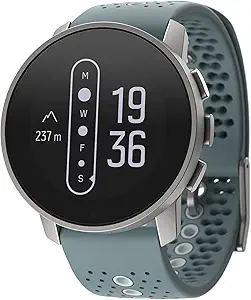









SUUNTO vs Coros: Overview & Brand Philosophy
In the specialized endurance and outdoor navigation segment of the smartwatch market, SUUNTO and Coros represent two fundamentally different philosophies. SUUNTO, hailing from Finland with a heritage dating back to 1936, cut its teeth on high-precision liquid-filled compasses and dive computers. This Scandinavian legacy is directly reflected in their modern smartwatches: robust, minimalist tools designed with an emphasis on extreme environmental survivability, heritage design, and deep topography mapping. For decades, SUUNTO has positioned itself as the instrument maker for the high-altitude mountaineer, backcountry explorer, and deep-sea diver.
Conversely, Coros is a modern, software-driven disruptor that exploded onto the endurance sports scene in 2016. While headquartered in the United States with manufacturing roots in China, Coros bypassed the broader lifestyle smartwatch race to focus with surgical precision on running, ultrarunning, and multi-sport training metrics. Their ethos is centered around maximum hardware efficiency, groundbreaking battery longevity, lightweight ergonomics, and an agile software ecosystem that consistently delivers backward-compatible feature updates. Where SUUNTO channels analog heritage into modern survival instruments, Coros approaches the wearable space as an athletic data engine.
Key Differences & Technological Comparison
The primary battleground between SUUNTO and Coros involves satellite tracking, interface mechanics, display engineering, and software analytics. In recent years, both brands have embraced dual-frequency (L1/L5) GNSS systems to combat multi-path interference in deep canyons and dense tree canopy. However, their implementation and user experience diverge sharply:
- Build Quality and Industrial Design: SUUNTO maintains a significant edge in chassis craftsmanship. Devices like the SUUNTO Vertical and Race utilize premium materials, including titanium bezels, sapphire glass, and high-strength polyamide casings tested to strict military standards (MIL-STD-810H). They are undeniably premium on the wrist, though heavier. Coros opts for featherlight, high-density polymer bodies (as seen in the Pace series) designed specifically to disappear on an athlete's wrist during marathons, saving titanium and sapphire for their higher-end Apex and Vertix lines.
- Display Technology: Both brands offer split strategies between traditional Memory-in-Pixel (MIP) displays and high-brightness AMOLED panels (such as the Coros Pace Pro and SUUNTO Race). SUUNTO's AMOLED execution feels akin to a luxury instrument, balancing deep blacks and clean typography, while Coros optimizes its screens strictly for high-contrast legibility while moving at threshold paces.
- Operating Interface: Coros revolutionized sport-watch navigation with its trademark "Digital Dial"—a rotating physical crown that allows effortless zoom, scroll, and configuration while wearing thick gloves or sweating mid-stride. SUUNTO relies primarily on a traditional three-button layout combined with responsive touchscreens, which offers exceptional tactile redundancy in cold climates but slightly slower menu traversal than the Coros dial.
- Software Ecosystem & Training Metrics: Coros is widely regarded for its EvoLab data suite and modern companion smartphone application. The Coros platform excels in training load calculations, marathon level predictions, and structured workout builders without charging subscription fees. SUUNTO's app ecosystem has matured significantly, offering industry-leading 3D mapping, heatmaps, and customizable sport modes, yet its physiological recovery metrics and training load tools remain somewhat less prescriptive for track and road runners compared to Coros.
Pros & Cons Comparison
SUUNTO
- Pros:
- Unmatched Scandinavian build quality, materials, and repairability.
- Superior offline vector maps and route planning with proprietary heatmaps.
- Extremely accurate barometric altimeter integration and weather trend alerts.
- Class-leading solar charging efficiency on select flagship models (e.g., SUUNTO Vertical).
- Cons:
- User interface animations can occasionally feel slower or more deliberate than competitors.
- Higher base weight across comparable model sizes.
- Companion app third-party ecosystem, while improving, lags slightly in sheer sports lab integration.
Coros
- Pros:
- Exceptional battery efficiency-to-weight ratio across the entire lineup.
- Intuitive single-finger navigation via the signature Digital Dial.
- Aggressive, continuous firmware rollouts that back-port new features to older hardware.
- EvoLab training system delivers elite-level analytics for road and trail runners out of the box.
- Cons:
- Entry-level polymer casings can feel utilitarian and plasticky compared to SUUNTO.
- Native map styling and cartographic detail are more basic than SUUNTO’s rich topological visuals.
- Occasional software updates release in public beta states with minor initial bugs.
Performance, Durability & Value Analysis
From an endurance perspective, battery management is an area where both brands lead the wider wearables industry, far outpacing general smartwatches like the Apple Watch or Samsung Galaxy Watch. Coros established the gold standard for low-draw tracking; an athlete can run an entire 100-mile ultra on high-accuracy GPS modes without reaching for a power bank. However, SUUNTO closed this gap with the introduction of their ultra-long-lasting Vertical series, which pairs intelligent power modes with expansive solar capture. In terms of sheer durability, SUUNTO watches are inherently tank-like, engineered specifically to withstand heavy lateral impacts, abrasive granite, and severe thermal shocks. Coros watches are undeniably durable, but their lighter weight can lead users to equate them with standard consumer electronics rather than lifelong mountaineering gear.
When assessing value, Coros fundamentally redefines what an entry-level investment can deliver. Their entry-tier offerings (such as the Pace series) pack nearly the exact same performance analytics, GNSS accuracy, and battery benchmarks as competitors charging three times as much, making them arguably the highest-value dedicated running watches on the market. SUUNTO commands a higher price ceiling, but justifies that expense through artisanal European manufacturing, zero-carbon production methods, and industrial-grade materials that retain their integrity over many years of heavy outdoor abuse.
Final Verdict: Which Brand Should You Choose?
The choice between SUUNTO and Coros comes down to your primary sport, your aesthetic priorities, and where your adventures take place:
Choose SUUNTO if: You prioritize backcountry exploration, mountaineering, or trail navigation over structured track intervals. If you demand premium titanium and sapphire craftsmanship, value comprehensive offline topological mapping, and want a rugged, sustainable device built in Europe that feels like an authentic survival tool, SUUNTO remains the quintessential choice.
Choose Coros if: You are a performance-driven road runner, triathlete, or ultrarunner who lives and dies by training metrics, pace pacing splits, and maximum battery efficiency per ounce. If you prefer a featherlight watch that disappears on your wrist during long workouts, intuitive digital-dial navigation, and an aggressive software roadmap that continually upgrades your device for years to come, Coros is the modern athlete's benchmark.
Battery Life
When evaluating battery life in the endurance smart watch category, Coros has established itself as the industry benchmark for ultra-efficient power architecture. Coros engineers its devices from the silicon up to prioritize longevity, utilizing an ultra-lean proprietary operating system paired with highly optimized low-power chipset management. Flagship models like the Coros Vertix 2S deliver an astounding 118 hours of continuous standard GPS tracking and over 40 days in daily smartwatch mode, while their lightweight Pace series regularly outlasts competitors in its weight class by offering up to 38 hours of continuous tracking. This efficiency is achieved not by aggressive sensor throttling, but through technical strengths like memory-in-pixel (MIP) display optimization, low-latency background processing, and a relentless focus on minimizing software bloat. For multi-day stage races, 100-mile ultramarathons, and extended backcountry expeditions where charging opportunities are nonexistent, Coros offers an almost unbeatable power-to-weight ratio.
SUUNTO approaches battery longevity with a design philosophy centered on intelligent power management and rugged, sustained reliability. While historically lagging behind Coros in pure, unassisted tracking hours, modern SUUNTO devices like the Suunto Vertical and Race have significantly closed the technical gap by incorporating dual-frequency GNSS alongside innovative hardware integrations, notably high-efficiency solar charging cells. The Suunto Vertical can achieve up to 85 hours of tracking in its most accurate dual-band mode, which extends up to an extraordinary 500 hours in tour mode, amplified by solar harvesting. Where SUUNTO truly excels from an engineering perspective is its 'FusedTrack' algorithm—which intelligently combines motion sensor data with intermittent GPS pings to extend battery life without severely compromising track accuracy—and its proactive smart battery modes, which calculate remaining hours before an activity starts and prompt the user to switch profiles dynamically if energy reserves are low.
The practical trade-off between Coros and SUUNTO ultimately hinges on software philosophy versus hardware utility. Coros provides a set-it-and-forget-it experience with unmatched baseline battery retention, maintaining predictable, linear battery drain across all profiles, though its display rendering can feel somewhat utilitarian compared to richer interfaces. Conversely, SUUNTO offers a more nuanced battery toolkit; devices like the Suunto Race achieve excellent endurance even while driving a power-hungry AMOLED display, though achieving maximum longevity often requires active user intervention and engagement with customized power profiles. Athletes seeking the purest, low-maintenance endurance without the need to calculate ambient sunlight or toggle power-saving modes will find Coros superior, whereas expeditioners and outdoor enthusiasts who value solar-augmented recovery, sophisticated battery prediction algorithms, and premium materials will appreciate the adaptable stamina of SUUNTO.
Build Quality & Durability
When assessing engineering architecture and resilience, SUUNTO commands a historically grounded, premium advantage deeply tied to its Scandinavian heritage and manufacturing standards. Flagship devices like the SUUNTO Vertical and 9 Peak Pro are engineered in Finland utilizing 100% renewable energy and adhere strictly to military-grade testing standards (MIL-STD-810H). SUUNTO’s structural identity relies heavily on high-end metallurgy, combining grade 5 titanium or high-grade stainless steel bezels with glass-fiber reinforced polyamide cases and scratch-resistant sapphire crystal lenses across a wider breadth of its product line. Furthermore, SUUNTO excels in aquatic durability, typically outfitting its performance models with a true 100-meter (10 ATM) water resistance rating and fully functional underwater inductive pushers that can be safely operated at depth, appealing directly to rugged mountaineers, freedivers, and extreme outdoor athletes.
Coros takes a modern, functional approach to durability that prioritizes lightweight efficiency without completely sacrificing structural integrity. While budget-oriented and featherlight models like the Pace series rely heavily on fiber-reinforced polymer casings and scratch-prone mineral glass to shave off weight for road runners, premium alternatives like the Vertix 2S step aggressively into expedition territory. The Vertix lineup employs dual-PVD-coated grade 5 titanium bezels, diamond-like carbon (DLC) coatings, and sapphire glass to resist abrasive trail wear, alongside an impressive 100-meter water resistance rating. However, the core difference lies in the mechanical interface: Coros’ signature engineering hallmark—the high-precision digital crown—provides exceptional tactile control with gloves on, yet inherently introduces a moving mechanical part that is marginally more vulnerable to fine grit, sand, or heavy impact ingress compared to SUUNTO’s sealed, low-profile physical buttons.
Ultimately, the practical trade-off between the two brands centers on weight-optimized resilience versus tank-like structural longevity. Coros delivers exceptional strength-to-weight ratios, giving athletes access to ruggedized materials in packages that do not weigh heavily on the wrist during high-cadence activities, though its entry-level units clearly compromise on material luxury. In contrast, SUUNTO delivers superior consistency in material density, torsional rigidity, and impact survival across its portfolio, producing wearables that feel practically indestructible in harsh backcountry environments. For users who prioritize pure, zero-compromise environmental shielding and bombproof construction, SUUNTO edges out the victory, whereas Coros remains the superior pick for those seeking maximum durability per gram of wrist weight.
Health & Fitness Tracking
When evaluating the health and fitness tracking capabilities of Coros and SUUNTO, the architectural divide centers on endurance training optimization versus holistic lifestyle and mountain navigation tracking. Coros positions itself as a data-dense, performance-first ecosystem driven by its EvoLab metrics suite. Utilizing advanced photoplethysmography (PPG) sensors and dual-frequency GNSS across modern iterations like the Pace 3 and Vertix 2, Coros calculates granular physiological data, including training load, fatigue tracking, threshold pace, and running fitness indices. While standard daily metrics like heart rate variability (HRV) and basic sleep stages are tracked, Coros primarily treats daily health as recovery telemetry meant to inform the next workout. The brand excels in zero-subscription training software and native execution of structured workouts, offering an engineer’s approach to aerobic threshold and capacity monitoring with minimal UI friction.
SUUNTO, in contrast, balances rugged sports tracking with a more integrated approach to holistic recovery through its partnership with physiological analytics specialist Firstbeat. Newer models like the Suunto Race incorporate high-precision optical heart rate sensors paired with dedicated wrist-based recovery tests, continuously mapping resources and stress levels throughout the day rather than just during exertion. SUUNTO’s platform measures Training Stress Score (TSS) alongside chronic training load (CTL) and acute training load (ATL), but it frames this data through intuitive visual widgets on the watch and mobile app that emphasize systemic balance over raw mathematical output. Additionally, SUUNTO offers superior sleep tracking depth—capturing ambient disturbances and restorative sleep phases more consistently than Coros—and includes dedicated outdoor health markers like blood oxygenation (SpO2) acclimation algorithms designed specifically for high-altitude mountaineering.
The practical trade-offs between the two ecosystems dictate their ideal user profiles. Coros presents a clear technical strength for road runners, track athletes, and ultra-marathoners who prioritize actionable training adaptation modeling and automated workout builders over non-active metrics; however, its passive health monitoring and sleep stage algorithms can feel somewhat rudimentary compared to top-tier wellness trackers. SUUNTO excels in providing ambient, day-long physiological awareness alongside robust mountain and trail-sport metrics, making it the superior choice for adventurers seeking a complete picture of autonomic nervous system stress and sleep debt. While Coros delivers a sharper, more efficient platform for maximizing athletic output, SUUNTO offers a richer, more nuanced view of biological readiness and overall systemic health.
Smart Features & Connectivity
When evaluating smart features and connectivity, both Coros and SUUNTO intentionally prioritize performance telemetry and battery preservation over the mini-smartphone experience found in watchOS or Wear OS. However, their execution reveals distinct engineering philosophies. Coros approaches connected features through a lens of streamlined, high-speed data transmission and hardware-integrated control. Across its lineup—including the Pace 3 and Vertix 2S—Coros utilizes robust dual-band Bluetooth 5.0 alongside Wi-Fi syncing, ensuring lightning-fast uploads to the Coros companion app and third-party platforms like Strava and TrainingPeaks. Additionally, Coros differentiates itself by acting as an action camera control hub, offering native wrist-based operation for GoPro and Insta360 cameras. However, it completely lacks NFC mobile payments and third-party app stores, and its onboard music capability is strictly limited to offline MP3 playback via manual file transfer, skipping integration with streaming services like Spotify. Smart notifications are snappy and reliable, but strictly read-only with no option to send canned responses from iOS or Android.
SUUNTO, while historically traditional, has modernized its smart architecture in recent flagship models like the Suunto Race and Vertical. SUUNTO devices lean on low-energy Bluetooth (BLE 5.1/5.2) without ANT+ legacy support, focusing instead on seamless sensor pairing and background app synchronization. While SUUNTO matches Coros with reliable read-only notifications, it takes an edge for Android users by supporting quick canned replies directly from the wrist. Furthermore, SUUNTO offers basic media controls to manage playback streaming from your smartphone, eliminating the tedious task of manually loading local audio files onto the watch (though it lacks internal standalone music storage entirely). SUUNTO’s standout architectural advantage in this category is the SuuntoPlus Store—a platform that allows users to deploy micro-apps and specific connected sport-tracking algorithms to the watch face, offering a higher degree of functional modularity than Coros's locked-down firmware approach.
From a practical consumer perspective, the trade-offs come down to local hardware utilities versus software-driven ecosystem tools. Coros represents the superior standalone tool for endurance multimedia and action-sport creators due to its built-in MP3 storage, high-speed Wi-Fi synchronization pipelines, and native camera controls. In contrast, SUUNTO provides a marginally better daily smartwatch experience through connected smartphone media control, Android reply functionality, and the customizable logic of SuuntoPlus apps. Both brands lag behind mainstream smartwatches by omitting voice assistants, cellular LTE, and contactless payments, yet both succeed in maintaining stable, low-latency sensor networks and dependable Bluetooth tethering designed to withstand rigorous training environments.