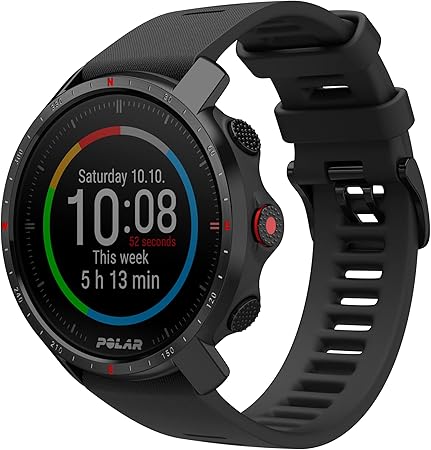







Samsung vs Polar: Overview
Comparing Samsung and Polar helps you determine which brand is best suited for your needs in Smart Watch. Both brands offer strong choices depending on your budget and key feature requirements.
Key Features & Comparison
Evaluate factors such as build quality, warranty, customer satisfaction, and total value before making your final purchase choice between Samsung and Polar.
Battery Life
When comparing battery life between Samsung and Polar, the two brands occupy fundamentally different engineering paradigms based on their operating systems and display technologies. Samsung's Galaxy Watch series utilizes power-hungry platforms like Wear OS, paired with ultra-bright, dynamic Super AMOLED screens. As a consequence, Samsung devices typically deliver between 24 and 40 hours of runtime on standard models, with endurance-focused variants like the Galaxy Watch Ultra stretching toward 60 to 80 hours under light usage or power-saving modes. Daily or alternate-day charging is a standard requirement for Samsung users, particularly if continuous sensor tracking, LTE connectivity, and always-on display features are kept active.
Conversely, Polar approaches power management with an athlete-first mindset, prioritizing multi-day operational readiness over interactive graphical flair. Many Polar models utilize energy-efficient memory-in-pixel (MIP) displays or rigorously optimized AMOLED implementations that draw minimal idle current. Polar devices routinely deliver between 5 and 7 days of continuous smartwatch use with full optical heart-rate tracking, while dedicated GPS training modes can sustain anywhere from 30 to over 100 hours using configurable power-saving intervals. For consumers embarking on ultramarathons, multi-day wilderness expeditions, or those who simply detest daily charging routines, Polar provides vastly superior autonomy compared to Samsung's frequent charging demands.
Build Quality & Durability
Samsung approaches structural design from the perspective of modern consumer tech and urban lifestyle aesthetics, incorporating robust materials into sleek, fashionable form factors. The brand predominantly employs Armor Aluminum or premium titanium for its chassis, complemented by front crystals forged from scratch-resistant sapphire glass. Recent models achieve a 5ATM or 10ATM water resistance alongside IP68 ratings and MIL-STD-810H certifications, ensuring they withstand everyday bumps, pool swimming, and moderate environmental stress. The industrial finishing is exceptionally refined, offering rotating digital or physical bezels that integrate seamlessly into both office attire and gym sessions, though the polished aesthetics can show scratches during rugged outdoor adventures.
Polar designs its hardware around brutal athletic conditions and outdoor resilience, prioritizing functional toughness over sleek minimalism. Models like the Polar Grit X series utilize heavy-duty aerospace-grade titanium or stainless steel bezels coupled with glass-fiber reinforced polymer casings that absorb shocks and impacts remarkably well. Polar devices are extensively tested against MIL-STD-810G/H standards, excelling in operational temperature extremes (-20°C to +50°C), thermal shock, and salt-fog exposure. While Polar’s utilitarian, rugged aesthetics lack the smooth, jewelry-grade elegance found on Samsung watches, their tactile, textured physical buttons and reinforced case construction provide superior reliability and glove-friendly operation in harsh trail, marine, and mountain environments.
Health & Fitness Tracking
Samsung excels in offering broad, daily health metrics and preventative biometric screening powered by its sophisticated BioActive Sensor. This unified hardware suite combines optical heart rate, electrical heart signal (ECG), and bioelectrical impedance analysis (BIA) to provide body composition metrics such as skeletal muscle mass, body fat percentage, and basal metabolic rate. Furthermore, Samsung incorporates sleep coaching, blood oxygen monitoring, and blood pressure estimation (in supported regions). While Samsung's ecosystem provides a versatile snapshot of general cardiovascular and metabolic wellness for the average lifestyle user, its workout analytics and athletic recovery metrics lean toward high-level summaries rather than granular physiological feedback.
Polar, by contrast, is a gold standard in sports science, delivering deep, actionable physiological analytics honed through decades of clinical and athletic research. Featuring Precision Prime sensor fusion technology, Polar devices provide industry-leading optical heart rate accuracy that resists motion artifacts during high-intensity training. Beyond basic tracking, Polar’s ecosystem offers unmatched recovery and performance assessments, including Training Load Pro, Recovery Pro, Running/Cycling Performance Tests, and Nightly Recharge (measuring autonomic nervous system recovery via HRV). For dedicated runners, triathletes, and endurance competitors seeking structured training periodization and deep physiological insights, Polar easily outperforms Samsung’s broader, consumer-tier health suite.
Smart Features & Connectivity
In the domain of smart features and modern digital connectivity, Samsung establishes an overwhelming lead by leveraging Google's Wear OS platform and deep ecosystem synergy with Android smartphones. Galaxy Watches provide access to the extensive Google Play Store, enabling native downloads of applications like Spotify, Strava, Google Maps, and messaging tools. Users can interact via full on-screen QWERTY keyboards, dictate voice replies through Google Assistant or Bixby, store local media, make contactless payments via Google Wallet or Samsung Pay, and even place untethered cellular phone calls on LTE models. The seamless integration with smartphones creates a comprehensive wrist-worn extension of the user's digital life.
Polar intentionally keeps its smart connectivity minimal, treating the watch primarily as a specialized training computer rather than an interactive digital hub. Polar devices handle basic smart notifications, incoming call alerts, basic music playback controls, and rudimentary weather widgets, but they lack third-party app stores, voice assistants, mobile payment capabilities, and cellular independence. The display interfaces are functional rather than dynamic, prioritizing real-time metric legibility over interactive notifications. Consequently, while Polar connects reliably via Bluetooth to external power meters, heart-rate chest straps, and cycling cadence sensors, users seeking an all-in-one lifestyle communication tool will find Polar's smart capabilities sparse compared to Samsung's connected experience.