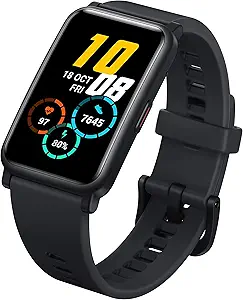
Samsung vs Honor: Overview
Comparing Samsung and Honor helps you determine which brand is best suited for your needs in Smart Watch. Both brands offer strong choices depending on your budget and key feature requirements.
Key Features & Comparison
Evaluate factors such as build quality, warranty, customer satisfaction, and total value before making your final purchase choice between Samsung and Honor.
Battery Life
Battery life represents the most profound operational contrast between Samsung and Honor smartwatches, driven by fundamentally different hardware architectures and operating system choices. Samsung's Galaxy Watch series is powered by Google's Wear OS, a feature-rich, high-overhead platform that demands continuous processing and high-frequency background synchronization. Consequently, standard Samsung watches yield between 30 to 40 hours of typical usage on a single charge, requiring users to adopt a daily or alternate-day charging regimen. Even the ruggedized Galaxy Watch Ultra, equipped with a substantially larger battery pack, generally tops out at two to three days under mixed usage. While Samsung mitigates this through fast wireless charging and power-saving algorithms, the fundamental constraint of full-fledged smartwatch processing limits its longevity.
Conversely, Honor prioritizes endurance by utilizing lightweight, proprietary operating systems such as MagicOS on low-power dual-chip architectures. Models like the Honor Watch GS and Honor Watch 4 routinely achieve between 10 to 14 days of typical operation, and can sustain up to three weeks in optimized battery-saver states without sacrificing continuous optical heart rate and sleep tracking. This extraordinary stamina makes Honor an exceptional choice for extended travel, multi-day outdoor expeditions, and seamless long-term health tracking without battery anxiety. The trade-off is clear: Samsung demands frequent charging in exchange for unmatched software capabilities, whereas Honor sacrifices third-party application execution to provide benchmark-setting operational endurance.
Build Quality & Durability
When analyzing structural integrity and materials science, Samsung positions its portfolio firmly in the premium tier, engineering its devices to withstand severe environmental stress while maintaining refined aesthetics. The Galaxy Watch lineup employs aerospace-grade Armor Aluminum on its standard models and upgrades to forged Grade 4 Titanium and sapphire crystal glass on its Pro and Ultra variants. Samsung devices consistently secure 5ATM and IP68 water and dust ingress ratings alongside MIL-STD-810H military certifications, ensuring exceptional resilience against thermal shock, drops, and salt fog. Additionally, Samsung's iconic physical or virtual rotating bezel provides functional tactile control while naturally shielding the display edge from direct surface impacts.
Honor competes admirably in the mid-range to premium-value segments, often integrating high-end materials like 316L stainless steel, lightweight aluminum alloy casings, and ceramic backplates at competitive price points. While their standard sport models use fiber-reinforced polymers, premium iterations like the Watch GS series boast robust bezels and military-grade certifications intended for outdoor enthusiasts. However, Honor frequently utilizes tempered glass rather than scratch-impervious sapphire crystal on its mainstream models, leaving them slightly more susceptible to abrasive wear over time. While Honor delivers solid, dependable construction that punches well above its retail price, Samsung maintains an advantage in sheer engineering precision, advanced metallurgy, and ruggedized glass solutions.
Health & Fitness Tracking
Samsung’s health monitoring platform is anchored by its proprietary 3-in-1 BioActive Sensor, which integrates optical heart rate, electrical heart signal (ECG), and bioelectrical impedance analysis (BIA) into a single compact module. This sophisticated hardware array allows Galaxy Watches to measure body composition metrics—such as skeletal muscle mass, body fat percentage, and basal metabolic rate—directly from the wrist, an uncommon capability in the wearable space. Furthermore, Samsung provides regulatory-cleared features including ECG readings, blood pressure monitoring (in supported jurisdictions), and sleep apnea detection, tightly integrated into the Samsung Health ecosystem with advanced sleep coaching and vascular health insights.
Honor adopts a pragmatic, performance-oriented approach to fitness tracking, leveraging advanced multi-channel PPG optical arrays and algorithms to track continuous SpO2, resting heart rate, stress levels, and TruSleep-driven sleep staging. For athletes, Honor delivers precise workout metrics, including aerobic/anaerobic training effects, VO2 Max estimates, and recovery time assessments tailored to running, cycling, and outdoor recreation. However, Honor lacks the medical-grade diagnostic certifications found on Samsung devices, such as functioning ECG and direct blood pressure calibration. While Honor offers an exceptionally accurate and intuitive tracking suite for daily fitness, athletic training, and general wellness, Samsung leads in comprehensive biometric diagnostics and advanced preventive health analysis.
Smart Features & Connectivity
In the domain of smart capabilities and connected ecosystem utility, Samsung stands as an industry benchmark. Powered by Wear OS powered by Samsung, the Galaxy Watch ecosystem grants access to the Google Play Store, enabling users to download a vast library of standalone applications including Strava, Spotify with offline playback, Google Maps with turn-by-turn navigation, and WhatsApp. Seamless integration with Android, and particularly Samsung Galaxy smartphones, facilitates deep interoperability: users can conduct wrist-based calls, reply to messages using intelligent text prediction or a full QWERTY keyboard, initiate contactless payments via Samsung Wallet or Google Wallet, and execute complex home automation via SmartThings.
Honor's smart capabilities are intentionally streamlined to preserve efficiency and battery life. While recent devices incorporate eSIM capabilities for independent cellular connectivity and standalone voice calling, the broader application ecosystem is heavily restricted compared to Wear OS. Honor relies on a closed software architecture that lacks a robust third-party app repository, meaning users cannot install mainstream services or interact deeply with cross-platform tools. Notifications are primarily read-only with limited quick-reply mechanisms, and contactless payment support is geographically fragmented. Consequently, while Honor provides essential connectivity and basic utilities admirably, Samsung delivers a true wrist-worn computing platform with far superior interactive depth, application support, and ecosystem integration.