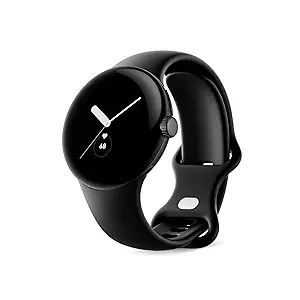
Samsung vs Google: Overview
Comparing Samsung and Google helps you determine which brand is best suited for your needs in Smart Watch. Both brands offer strong choices depending on your budget and key feature requirements.
Key Features & Comparison
Evaluate factors such as build quality, warranty, customer satisfaction, and total value before making your final purchase choice between Samsung and Google.
Battery Life
When examining battery endurance, Samsung's Galaxy Watch portfolio generally outpaces Google's Pixel Watch lineup through higher-capacity power cells and more aggressive hardware scaling. Samsung equips its mainstream models with larger milliamp-hour batteries and offers specialized variants like the Galaxy Watch Ultra and Pro series, which comfortably achieve two to three full days of operation on a single charge. In typical daily usage scenarios with the Always-On Display (AOD) active, continuous biometric tracking running, and intermittent GPS workouts logged, standard Galaxy Watches reliably yield 30 to 40 hours. Furthermore, Samsung leverages more mature power-saving states and intelligent CPU governor profiles on its bespoke Exynos W-series architecture, ensuring that background telemetry does not induce catastrophic standby drain.
Conversely, Google's Pixel Watch ecosystem remains firmly entrenched as a daily-charge device, engineered with a sleeker profile that inherently restricts internal battery capacity. While recent generations have introduced co-processor architectures designed to offload passive sensor polling and extend runtime up to a standard 24 hours with AOD engaged, real-world longevity degrades rapidly under continuous satellite positioning or active cellular streaming. Google does counter this limitation with optimized fast-charging protocols that replenish battery reserves swiftly, but the user experience still demands a disciplined charging routine. For consumers prioritizing multi-day expedition endurance and minimal power anxiety, Samsung provides a distinctly superior, more versatile hardware configuration.
Build Quality & Durability
Samsung demonstrates a clear engineering advantage in ruggedness, utilitarian protection, and material resilience. Standard Galaxy Watch models feature armored aluminum chassis paired with durable sapphire crystal glass lenses across all display sizes, significantly minimizing the risk of micro-abrasions and impact shattering. The industrial design deliberately introduces raised bezels, recessed glass, and in specific variants, grade 4 titanium framing capable of withstanding MIL-STD-810H environmental stress and 10 ATM atmospheric pressure ratings. This physical architecture creates an inherently protective barrier against incidental impacts during weightlifting, rock climbing, or abrasive outdoor activities, making the hardware exceptionally resilient over years of mechanical wear.
Google takes a radically different design approach with the Pixel Watch, prioritizing minimalist elegance, seamless ergonomics, and jewelry-grade aesthetic cohesion. The distinct domed glass surface blends seamlessly into a recycled stainless steel or matte aluminum frame, delivering an unmatched tactile feel and sleek silhouette. However, this aesthetic brilliance comes at the expense of structural vulnerability; the exposed, curved perimeter lacks bezel protection, leaving the display glass directly susceptible to edge strikes and shearing forces. While Google utilizes custom 3D Corning Gorilla Glass that resists superficial surface scratches, the overall architecture remains fundamentally urban-oriented, trading high-impact structural survivability for low-profile, sophisticated industrial design.
Health & Fitness Tracking
The health and fitness experience between these two titans hinges on differing philosophical approaches: algorithmic polish versus hardware sensor breadth. Google relies heavily on deep Fitbit integration, providing some of the most accurate continuous heart-rate monitoring, heart rate variability (HRV) analysis, and sleep staging in the wearable sector. The Pixel Watch shines through algorithmic refinement, leveraging low-latency sensor suites and machine learning models to detect subtle physiological deviations, stress levels via continuous electrodermal activity (cEDA), and irregular heart rhythms. The accompanying Fitbit companion application excels at synthesizing raw biometric telemetry into actionable, consumer-friendly metrics like the Daily Readiness Score and Sleep Profiles.
Samsung counters by delivering a more comprehensive, multi-purpose sensor package via its proprietary BioActive 3-in-1 Sensor. Beyond standard photoplethysmography (PPG) and electrocardiogram (ECG) tracking, Galaxy Watches integrate Bioelectrical Impedance Analysis (BIA) to calculate skeletal muscle, fat mass, and body water percentages directly from the wrist, as well as blood pressure monitoring in supported regions. While Samsung's running metrics and sleep tracking are feature-rich and include actionable sleep coaching, its optical heart rate precision can occasionally exhibit minor latency during rapid intervals compared to Google's Fitbit algorithms. Nevertheless, Samsung offers power users a deeper suite of self-contained diagnostic tools without requiring additional subscription tiers to unlock granular historical analytics.
Smart Features & Connectivity
Operating on Google's unified Wear OS platform, both manufacturers provide comprehensive smart experiences, yet they diverge noticeably in software execution and ecosystem synergy. Google delivers the purest iteration of Wear OS on the Pixel Watch, characterized by fluid Material You interface animations, seamless Google Assistant interactions, and natively integrated Google services such as Maps, Wallet, and Calendar. Deep system-level integration enables natural voice-dictated replies, responsive offline music caching via YouTube Music, and clean smart home management via Google Home. This cohesive environment provides a standardized, zero-friction smart experience that pairs uniformly well with any modern Android smartphone.
Samsung builds atop Wear OS with its customized One UI Watch overlay, delivering superior customization, denser informational complications, and extended peripheral connectivity. While maintaining access to the Google Play Store and broad Wear OS utilities, Samsung embeds powerful proprietary enhancements like smart switch capabilities, customized gesture controls, and dedicated integration with SmartThings ecosystems. However, full smart functionality—including native camera remote controls, synchronous Do Not Disturb modes, and blood pressure/ECG validation—is technically restricted or optimized solely when paired with a Samsung Galaxy smartphone. While Google offers a democratic, universally open Android smartwatch platform, Samsung constructs a tighter, feature-dense walled garden that rewards users deeply embedded in its own consumer hardware ecosystem.