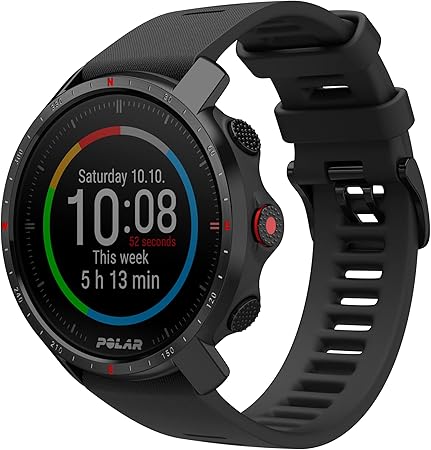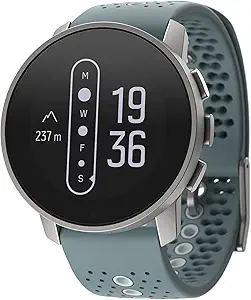







Polar vs SUUNTO: Overview
Comparing Polar and SUUNTO helps you determine which brand is best suited for your needs in Smart Watch. Both brands offer strong choices depending on your budget and key feature requirements.
Key Features & Comparison
Evaluate factors such as build quality, warranty, customer satisfaction, and total value before making your final purchase choice between Polar and SUUNTO.
Battery Life
When examining energy management, Suunto consistently outpaces Polar due to its architectural focus on ultra-endurance expedition performance. Suunto's flagship models, such as the Suunto Vertical and 9 Peak Pro, leverage high-efficiency Sony and Airoha GNSS chipsets paired with aggressive background process regulation, delivering upwards of 60 to 85 hours of continuous multi-frequency dual-band GPS tracking, with some models extending beyond 500 hours in lower-fidelity tour modes. The inclusion of solar charging variants further extends this runtime indefinitely under optimal outdoor conditions, making Suunto an industry benchmark for backcountry survivalists and multi-day trail racers who cannot afford mid-activity power disruptions.
Polar approaches power conservation with an emphasis on physiological telemetry rather than raw field longevity. Watches like the Vantage V3 and Grit X2 Pro offer commendable operational spans—typically providing between 40 to 60 hours in standard GPS training modes and up to 8 to 12 days in standard smartwatch configurations. However, Polar’s high sampling rates for optical heart rate, heart rate variability (HRV), and complex biosensing engines demand higher sustained energy throughput. While Polar provides granular power-save settings to adjust satellite ping rates and display refresh states, it lacks solar integration, rendering it slightly less suited for long-term off-grid excursions compared to Suunto's ultra-efficient hardware architectures.
Build Quality & Durability
Suunto's industrial heritage is rooted in precision maritime and diving instruments, which is immediately apparent in its military-grade approach to chassis engineering. Utilizing materials such as grade 5 titanium, aerospace-grade aluminum, sapphire crystal lenses, and glass fiber reinforced polyamide, Suunto devices are engineered to meet strict MIL-STD-810H standards. They feature exceptional water resistance ratings—often reaching 100 meters with dedicated underwater depth tracking up to 10 meters—and are designed with minimalist, raised bezels that protect the display against direct rock abrasion. The Nordic minimalist aesthetic yields a remarkably slim profile without sacrificing structural rigidity, creating an exceptionally tough wearable for extreme alpine environments.
Polar matches this ruggedness with an outdoor-centric engineering philosophy showcased in the Grit X and Vantage series, prioritizing impact resistance through robust stainless steel or lightweight titanium bezels. Polar's chassis designs feature textured tactile buttons optimized for operation with heavy winter gloves or wet hands, and they similarly pass stringent thermal, drop, and moisture tests under military protocols. While Polar displays utilize durable Gorilla Glass or sapphire crystal on top-tier models, Suunto retains a slight advantage in terms of pure torsional stiffness and industrial, tank-like finish. Nevertheless, Polar balances its structural toughness with ergonomic contouring that sits flush against the wrist, optimizing sensor-to-skin contact for better physical data acquisition during intense movement.
Health & Fitness Tracking
Polar has long been recognized as a gold standard in cardiovascular analytics, sports science algorithms, and physiological monitoring. Through proprietary frameworks such as Training Load Pro, Recovery Pro, and Nightly Recharge, Polar delivers unmatched clinical-grade depth regarding autonomic nervous system recovery, sleep stages, and cardio-muscular stress. Utilizing their multi-LED Precision Prime and newer Elixir biosensing suites, Polar watches accurately monitor optical ECG, blood oxygen saturation (SpO2), skin temperature, and advanced HRV parameters. The integration with Polar Flow provides structured coaching, running power without external sensors, and deeply customized training programs that are widely respected by endurance coaches and exercise physiologists globally.
Suunto takes a more holistic, adventure-oriented approach to performance tracking, focusing heavily on vertical sports metrics, altitude acclimation, and route-based athletic demands. While it offers dependable heart rate monitoring, sleep analysis, and stress metrics powered by partnerships with Firstbeat Technologies, it historically does not match the granular depth of Polar’s raw biometric algorithms and cardiology-driven insights. However, Suunto shines through its native integration of real-time climb guidance (SuuntoPlus features), structural descent/ascent tracking, and offline topo-mapping telemetry, which are engineered to keep athletes informed about their spatial environment alongside basic metabolic output rather than relying solely on intensive recovery science.
Smart Features & Connectivity
Neither Polar nor Suunto attempts to directly challenge traditional full-featured platforms like watchOS or Wear OS, yet their approaches to connected functionality reveal distinct philosophies. Polar prioritizes clean mobile ecosystem synchronicity via Bluetooth Low Energy (BLE), supporting multi-device pairing with power meters, chest straps, and smart bike trainers. Its on-wrist smart capabilities are intentionally understated, restricted to basic push notifications, weather forecasts, customizable display dashboards, and music control widgets for paired smartphones. Polar does not offer onboard app storage or payment mechanisms, deliberately keeping its operating system lean to preserve processing bandwidth for real-time biological processing.
Suunto matches Polar's smartphone integration with similar capabilities—such as app alerts, call notifications, and media controls—but sets itself apart through its expansive SuuntoPlus store ecosystem and rich map management. Suunto devices facilitate the downloading of extensive offline topographical vector maps stored directly on flash memory, permitting turn-by-turn breadcrumb navigation completely independent of a mobile connection. Furthermore, SuuntoPlus allows third-party developers to inject specialized tracking algorithms, weather feeds, and pacing tools directly into active sport modes. While neither brand supports contactless payments or cellular connectivity, Suunto’s open-API companion ecosystem and offline mapping offer superior utility for navigational self-sufficiency in remote regions.