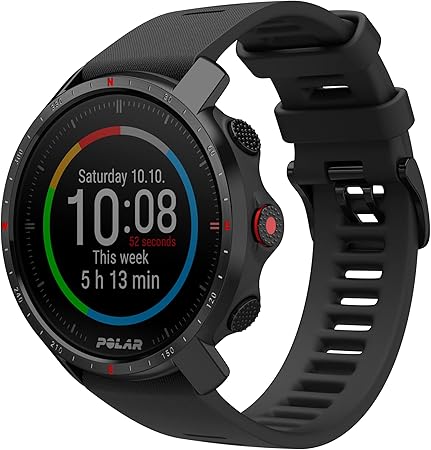








One Plus vs Polar: Overview
Comparing One Plus and Polar helps you determine which brand is best suited for your needs in Smart Watch. Both brands offer strong choices depending on your budget and key feature requirements.
Key Features & Comparison
Evaluate factors such as build quality, warranty, customer satisfaction, and total value before making your final purchase choice between One Plus and Polar.
Battery Life
When examining battery endurance, OnePlus and Polar approach the challenge through distinct architectural philosophies. OnePlus, exemplified by devices like the OnePlus Watch 2, relies on an innovative Dual-Engine Architecture pairing an energy-efficient RTOS coprocessor (BES2700) with a high-performance Qualcomm Snapdragon Wear chipset running Wear OS. This hybrid setup dynamically routes background tasks and essential tracking to the low-power processor, achieving an impressive 100 hours of standard smart use, or up to 12 days in power-saving mode. Furthermore, OnePlus integrates proprietary fast-charging protocols, such as VOOC 7.5W technology, which can replenish the watch from flat to full in under an hour, significantly minimizing user downtime in typical lifestyle environments.
Polar, by contrast, designs its battery systems strictly around athletic performance and extreme outdoor longevity rather than general smartwatch app execution. Utilizing customized, lightweight proprietary operating systems, Polar models like the Grit X and Vantage series deliver robust continuous GPS tracking durations ranging from 30 to over 100 hours depending on satellite ping intervals and power-management profiles. In general training and watch modes, a Polar device effortlessly provides five to seven days of comprehensive biosensing without requiring sophisticated multi-chip power shifting. While Polar models lack rapid-charging conveniences compared to OnePlus, their predictable, endurance-oriented power curves offer athletes superior reliability during multi-day excursions and ultramarathons where constant multi-band GNSS tracking is mandatory.
Build Quality & Durability
In terms of materials and structural engineering, OnePlus builds its smartwatches with a premium consumer-electronics aesthetic that balances style with everyday resilience. The chassis typically features polished stainless steel cases, paired with scratch-resistant 2.5D sapphire crystal glass displays. OnePlus adheres to modern durability standards, certifying its hardware for 5ATM water resistance, IP68 ingress protection, and compliance with the MIL-STD-810H specification for thermal and mechanical shock. This ensures that while the watch carries the visual profile of a sophisticated dress or casual watch, it can withstand routine immersion, rigorous gym workouts, and incidental knocks without degrading its finish or integrity.
Polar focuses heavily on rugged, utilitarian sports engineering where functional durability takes precedence over urban luxury. Devices in Polar's premium portfolio, such as the Grit X2 Pro, frequently incorporate aerospace-grade titanium or glass-fiber reinforced polymer bezels paired with deeply recessed sapphire lenses designed to deflect direct impacts. These watches are tested against rigorous MIL-STD-810H standards and often carry WR100 (100-meter) water resistance ratings, alongside operational temperature tolerances spanning from -20°C to +50°C. Polar’s textured hardware buttons are explicitly tuned for positive tactile feedback with thick gloves or wet hands, underscoring a design intended to survive brutal alpine environments, trail racing, and open-water swimming where urban smartwatch styling would fall short.
Health & Fitness Tracking
Health and fitness tracking represents the widest philosophical divergence between the two brands. OnePlus offers a capable suite of wellness metrics suited for the mainstream consumer, featuring continuous heart rate monitoring, pulse oximetry (SpO2), stress analysis, and sleep staging powered by high-resolution optical PPG sensors. With over a hundred preset workout modes and automatic activity detection, the platform covers common sports like running, cycling, and badminton reliably. However, the data interpretation on OnePlus is largely descriptive, emphasizing basic metrics, daily movement rings, and broad recovery indicators without deep biomechanical modeling or advanced athletic load prescription.
Polar, conversely, is an industry pioneer in sports science and athletic physiology, delivering an elite diagnostic ecosystem via Polar Flow. Polar’s multi-sensor arrays—such as the Polar Elixir platform—combine precision optical heart rate tracking with wrist-based ECG, skin temperature sensors, and SpO2 to derive scientifically validated algorithms. Metrics such as Training Load Pro, Cardio Load, Recovery Pro, and nightly autonomic nervous system (ANS) sleep evaluations provide users with actionable guidance on cardiovascular strain and overtraining risks. For serious athletes, Polar’s running power algorithms, cycling cadence optimizations, and granular heart rate zone training provide an analytical depth that far eclipses the casual fitness metrics provided by OnePlus.
Smart Features & Connectivity
Smart features and software ecosystem connectivity are where OnePlus establishes a decisive competitive advantage. Leveraging Google’s Wear OS, OnePlus devices grant seamless access to the Google Play Store, enabling users to download third-party applications like Spotify, Strava, and Google Maps. Users benefit from full notification interactivity, including voice dictation and on-screen keyboard replies, NFC mobile payments via Google Wallet, and hands-free assistance through Google Assistant. The presence of substantial internal storage (often up to 32GB) and native dual-band Wi-Fi connectivity transforms a OnePlus watch into an independent, powerful extension of an Android smartphone that handles productivity and media with ease.
Polar deliberately takes a minimalistic approach to smart connectivity, treating its watches primarily as dedicated training computers rather than digital communicators. Polar's smart capabilities are limited to mirrored phone notifications, basic music playback control for a connected smartphone, and real-time weather forecasts, with zero support for an on-wrist application store, standalone cellular connectivity, or voice-controlled virtual assistants. Connectivity on a Polar watch is engineered for performance telemetry, relying on low-energy Bluetooth (BLE) to pair seamlessly with external heart rate chest straps, cycling power meters, and running foot pods. Consequently, while Polar lacks the interactive convenience of Wear OS, it avoids the software bloat and distraction inherent to feature-rich consumer platforms.
Compare current retail pricing, active promotions, and verified stock availability directly from authorized stores: