







One Plus vs Fitbit: Overview
Comparing One Plus and Fitbit helps you determine which brand is best suited for your needs in Smart Watch. Both brands offer strong choices depending on your budget and key feature requirements.
Key Features & Comparison
Evaluate factors such as build quality, warranty, customer satisfaction, and total value before making your final purchase choice between One Plus and Fitbit.
Battery Life
When evaluating endurance, OnePlus and Fitbit employ distinctly different engineering methodologies to balance power consumption with performance. OnePlus, particularly showcased in the OnePlus Watch 2, relies on an innovative Dual-Engine Architecture pairing a high-performance Snapdragon W5 chip with an energy-efficient BES2700 co-processor. This hybrid hardware framework allows the device to execute Wear OS processes smoothly while offloading background operations to the RTOS layer, yielding an impressive 100-hour battery life under typical usage and up to 12 days in power-saver mode. Rapid replenishment is further bolstered by proprietary VOOC fast charging, which can deliver a full day of usage in just ten minutes, addressing the traditional battery anxiety associated with full-featured smartwatches.
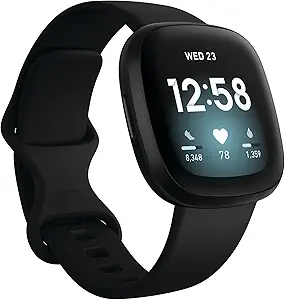
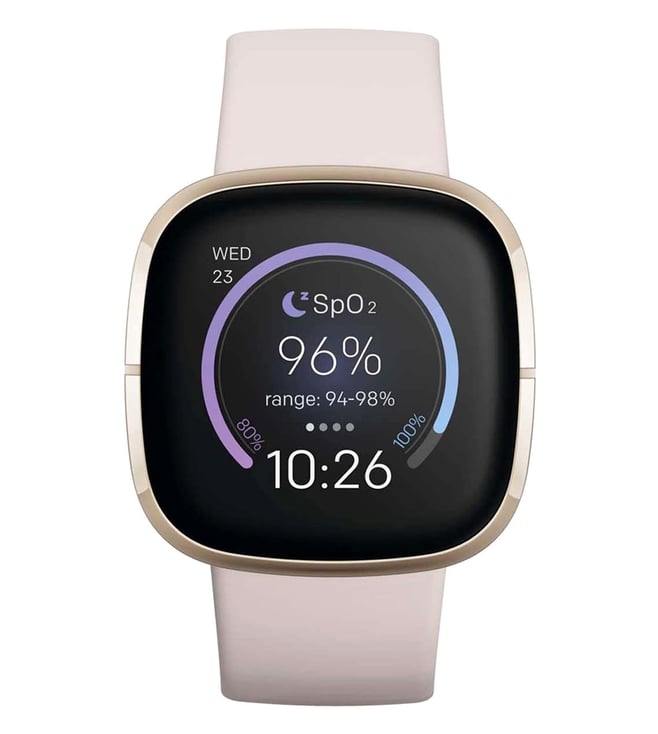
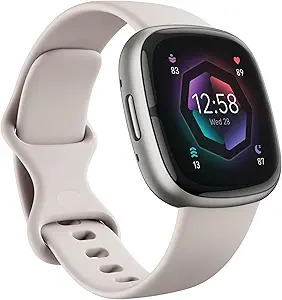
Conversely, Fitbit focuses on sustained, steady efficiency across its portfolio of dedicated health watches like the Versa 4 and Sense 2. Rather than toggling between dual processors, Fitbit devices run a streamlined, proprietary operating system optimized from the ground up for minimal energy draw, delivering an average of six or more days on a single charge with continuous biometric monitoring. However, Fitbit falls short in recharge velocity and flexibility compared to OnePlus, relying on standard magnetic puck chargers that take upwards of two hours to reach full capacity. Users prioritizing marathon longevity on a feature-heavy platform with ultra-fast charging will favor OnePlus, whereas Fitbit caters to those who prefer uninterrupted weekly tracking without relying on sophisticated dual-boot management.
Build Quality & Durability
OnePlus emphasizes premium craftsmanship and resilient industrial materials reminiscent of traditional luxury chronographs. Modern flagship offerings from OnePlus incorporate stainless steel chassis complemented by durable 2.5D sapphire crystal glass displays, providing exceptional scratch resistance that surpasses standard chemically strengthened glass. The structural integrity is validated by military-grade MIL-STD-810H certification alongside 5ATM and IP68 dust-and-water resistance ratings, ensuring the watch can endure thermal shock, intense impacts, and aquatic immersion. This heavier, polished construction conveys a refined aesthetic suitable for formal environments, though the added mass can feel slightly unwieldy during vigorous athletic training.
Fitbit takes a more utilitarian and ergonomically driven approach, utilizing lightweight anodized aluminum cases and Corning Gorilla Glass lenses across its flagship lines. While structurally robust and water-resistant up to 50 meters (5ATM), Fitbit watches generally lack the extreme scratch protection of sapphire crystal and the military-spec drop resistance engineered into OnePlus hardware. Nevertheless, Fitbit excels in ergonomic comfort; the pebble-style contours, low-profile case depth, and featherlight mass make devices like the Sense 2 and Versa 4 far more comfortable for 24/7 wear and uninterrupted sleep monitoring. The trade-off centers on aesthetic prestige and rugged exterior durability where OnePlus leads, versus unobtrusive, all-day ergonomic wearability where Fitbit maintains an edge.
Health & Fitness Tracking
In the domain of biometrics and athletic telemetry, Fitbit remains one of the gold standards in consumer wellness through more than a decade of proprietary algorithm refinement. Fitbit devices integrate sophisticated multi-path optical sensors alongside continuous electrodermal activity (cEDA) monitors for body-response stress tracking, ECG sensors for atrial fibrillation screening, and skin temperature variation monitors. The underlying software platform excels in holistic wellness analytics, synthesizing biometrics into actionable metrics such as the Daily Readiness Score, Sleep Stages breakdown, and Sleep Animals, although some advanced historical analytics remain paywalled behind the Fitbit Premium subscription tier.
OnePlus has made commendable technical strides in tracking fidelity, outfitting its wearables with dual-frequency GPS (L1+L5) that rivals dedicated sports watches for outdoor route precision. The device captures heart rate, SpO2, and running dynamics such as ground contact time, vertical oscillation, and balance through its companion OHealth app. However, OnePlus lacks the regulatory approvals for ECG functionality and lacks the specialized stress-detection hardware found on Fitbit's premium models. While OnePlus delivers highly accurate raw metrics for runners and cyclists without any ongoing subscription fees, Fitbit provides a more mature, clinically oriented ecosystem with richer contextual health insights that cater directly to wellness-focused individuals.
Smart Features & Connectivity
Smart features and software versatility represent a decisive divergence between the two brands. OnePlus capitalizes on Google's full Wear OS ecosystem, providing users with unfettered access to the Google Play Store for third-party applications like WhatsApp, Strava, and Spotify with offline playback caching. The software experience is fluid and responsive, supporting interactive notifications that allow for full keyboard or voice dictation replies, robust NFC payments via Google Wallet, and comprehensive Google Assistant integration. This turns the OnePlus watch into a genuine extension of the smartphone, delivering an interactive wrist-top computing experience that operates seamlessly within the broader Android ecosystem.
Fitbit, by contrast, has progressively streamlined its operating platform under Google ownership, resulting in a substantially more restricted smart experience. While modern Fitbit models support basic Google Wallet transactions and turn-by-turn Google Maps navigation, third-party application support has been largely deprecated in favor of native fitness widgets. Notification handling is limited primarily to read-only alerts with canned quick-replies exclusively available for Android users, and voice assistance is basic compared to full Wear OS implementations. Consequently, OnePlus easily outclasses Fitbit for consumers demanding deep productivity, extensive app variety, and fluid device-to-phone communication, whereas Fitbit remains intentionally constrained to preserve simplicity and power efficiency.
Compare current retail pricing, active promotions, and verified stock availability directly from authorized stores: