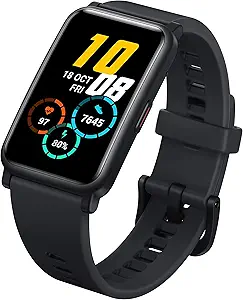
Honor vs Nothing: Overview & Brand Philosophy
The smartwatch market has expanded rapidly beyond simple step-counters into advanced wrist-worn computers. In this space, Honor and Nothing represent two distinct approaches to consumer wearables. Honor, formerly a subsidiary of Huawei and now an independent consumer tech giant, approaches the smartwatch market from a position of deep manufacturing legacy, robust sensor development, and athletic utility. Honor smartwatches leverage enterprise-grade supply chains, emphasizing medical-adjacent health tracking, endurance, and seamless enterprise-level software integration.
Conversely, Nothing, the London-based boutique tech venture led by Carl Pei, addresses the market through design-led innovation and digital minimalism. Through its sub-brand CMF by Nothing, the company aims to democratize design-first electronics by stripping away non-essential bloat and emphasizing expressive, industrial aesthetics. Nothing's philosophy rejects the typical utilitarian appearance of modern wearables, focusing on distinct hardware textures, custom widget-based operating interfaces, and accessible pricing that directly challenges industry norms.
While Honor targets the performance-minded consumer who requires multi-day battery endurance, precise dual-frequency GPS, and detailed physiological metrics, Nothing is tailored for the design-conscious user who values bold industrial styling, responsive clean software, and essential smart features without paying a high-end premium. Understanding these conflicting philosophies is crucial to determining which brand delivers the right balance for your everyday carry.
Key Differences & Technological Comparison
The technical divergence between Nothing and Honor is most apparent in sensor suites, display engineering, and software ecosystems.
Display and Industrial Design: Honor smartwatches typically feature curved AMOLED panels with ultra-thin bezels, high pixel densities, and peak brightness levels reaching up to 1,500 nits on flagship models such as the Honor Watch GS and Watch 4 series. Their chassis frequently utilize aerospace-grade aluminum, stainless steel, and refined polymeric cases. Nothing, particularly under the CMF Watch Pro lineup, utilizes broad, flat visual fields with oversized AMOLED displays encased in polished or matte aluminum alloy frames with striking, stark color profiles (such as industrial orange, dark grey, and ash white). Nothing focuses on geometric starkness, while Honor focuses on ergonomic, traditional watch silhouettes.
Health & Biometric Sensors: Honor has inherited deep biometric tracking algorithms, featuring multi-channel optical heart rate sensors, continuous SpO2 monitoring, stress tracking, scientific sleep analysis via sleep-stage algorithms, and built-in GNSS (frequently supporting multi-satellite positioning). Nothing provides reliable daily tracking—continuous heart rate, blood oxygen, and baseline sleep data—but relies on more standard sensor arrays that are sufficient for recreational users, though less suited for competitive athletes needing advanced metrics like VO2 Max or training recovery load.
Operating System and Smart Capabilities: Honor smartwatches run on a proprietary RTOS (Real-Time Operating System) or MagicOS for Solutions, which provides fluid animations, rich watch faces, and, in select models, independent eSIM connectivity for untethered calling and data. Nothing implements a stripped-down, ultra-fast custom micro-OS that mirrors the dot-matrix aesthetic of Nothing OS. While Nothing lacks third-party application stores and standalone cellular support, it delivers an uncluttered notifications pipeline, integrated AI voice assistant passthrough, and custom phone controls with virtually zero interface lag.
Pros & Cons Comparison
Honor Smartwatches
- Pros:
- Advanced health and biometric tracking powered by comprehensive wellness suites.
- Exceptional battery endurance, often yielding 10 to 14 days on a single charge.
- Superior outdoor positioning through multi-system integrated GPS.
- Select models support cellular eSIM functionality for true phone-free connectivity.
- High-end, refined build materials that mimic traditional luxury timepieces.
- Cons:
- Software ecosystem can feel siloed outside of the broader Honor smartphone network.
- Companion app (Honor Health) interface can feel dense and less minimalist.
- Third-party app ecosystem remains restricted compared to Wear OS or watchOS.
Nothing Smartwatches (CMF by Nothing)
- Pros:
- Striking, award-winning industrial design that stands out from generic smartwatches.
- Exceptional value-to-price ratio, offering large AMOLED screens at budget price points.
- Clean, bloat-free user interface matching Nothing's signature dot-matrix visual identity.
- Comfortable, lightweight construction ideal for all-day and all-night wear.
- Responsive companion mobile app with rapid setup and pairing.
- Cons:
- GPS acquisition speeds and satellite accuracy lag behind Honor's dedicated hardware.
- Advanced physiological data (e.g., HRV tracking, training readiness) is limited.
- No onboard cellular/eSIM options across current portfolio.
Performance, Durability & Value Analysis
From an engineering and long-term durability standpoint, Honor leads in pure structural resilience. Many Honor models feature 5 ATM water resistance certifications, making them fully viable for open-water and pool swimming, coupled with scratch-resistant glass and treated metal housings designed to endure outdoor athletic abuse. The internal hardware processing speeds handle complex data pipelines without dropping frames, and battery degradation curves remain minimal over multi-year cycles due to energy-efficient microcontrollers. You pay a higher initial price point for Honor devices, but that cost translates directly into ruggedness, extended sensor fidelity, and long-term hardware reliability.
Nothing targets a radically disruptive value bracket. Priced significantly lower than most established competitors, the CMF by Nothing watches maximize real estate and visual appeal per dollar spent. While water resistance is commonly rated at IP68 (making them resistant to splashes, rain, and shallow submersion, rather than continuous high-pressure water sports), they are durably built for daily metropolitan living. Nothing's value proposition is clear: if you need a reliable notification hub, standard activity metrics, and modern styling without spending hundreds of dollars, Nothing easily outperforms the majority of entry-level budget wearables.
Final Verdict: Which Brand Should You Choose?
Your choice between Nothing and Honor ultimately hinges on your functional priorities and lifestyle requirements.
Choose Honor if: You are an active individual, runner, or fitness enthusiast who requires exact GPS tracking, deep physiological metrics, comprehensive sleep monitoring, and multi-day battery life that handles demanding outdoor workouts. It is also the correct choice if you prefer the look of a traditional mechanical timepiece crafted from high-end metals and demand options like independent cellular connectivity.
Choose Nothing if: You prioritize modern industrial design, minimalist aesthetics, and daily smart conveniences at a very accessible price point. If your wearable needs center around checking alerts, monitoring basic daily workouts, controlling media, and making casual calls from your wrist without the burden of continuous health telemetry, Nothing offers one of the best style-per-dollar values on the market today.
Battery Life
When evaluating battery life, Honor and Nothing (via its CMF sub-brand) approach wearable endurance from distinct engineering philosophies, resulting in significantly different real-world longevity. Honor leverages its deep heritage in lightweight, proprietary operating systems—primarily MagicOS for Wear—paired with low-power, dual-chipset architectures. Devices like the Honor Watch GS 3 or Watch 4 systematically offload non-critical computational background tasks to an ultra-efficient co-processor while reserving the high-performance application processor for intensive sensor readouts and dynamic UI interactions. Conversely, Nothing’s CMF Watch Pro series achieves its longevity through a more minimalist RTOS (Real-Time Operating System). While Nothing succeeds in stripping away power-hungry bloatware to achieve competitive baseline numbers, its power-management algorithms lack the multi-generational maturity and granular hardware-software integration found in Honor's ecosystem.
In standard use-case scenarios, Honor demonstrates superior optimization and predictability under heavy loads. An Honor smartwatch typically yields between 10 to 14 days of typical use, maintaining impressive stamina even when continuous biometrics—such as 24/7 heart-rate monitoring, SpO2 tracking, and advanced sleep-stage analysis—are fully engaged. Nothing delivers a respectable 11 to 13 days of moderate use, but its endurance experiences a noticeably steeper drop-off when GPS tracking is sustained or the Always-On Display (AOD) is activated, often cutting operational time down to 3 to 5 days. Honor’s power profiles mitigate this through dynamic ambient light adaptations and intelligent GPS duty-cycling, which samples satellite positional data without persistently bleeding the battery at peak wattage during outdoor athletic tracking.
The practical trade-offs for consumers ultimately hinge on consistency versus price-to-performance expectations. Nothing provides remarkable battery longevity relative to its accessible price point, but users must accept compromises in continuous sensor accuracy and display drive efficiency if they wish to achieve the manufacturer's advertised figures. Honor smartwatches, though commanding a higher investment, present a more technologically refined package: charging is accelerated via robust proprietary fast-charging systems that inject a full day of battery life in under ten minutes, and the degradation curve over hundreds of charge cycles is better mitigated by mature battery-governance firmware. For power users who demand continuous tracking, bright outdoor displays, and infrequent visits to the charger, Honor secures the technical and practical advantage in long-term battery performance.
Build Quality & Durability
When assessing build quality and structural durability, Honor and Nothing (primarily operating in the wearable space via its CMF sub-brand) diverge significantly in their material choices and manufacturing maturity. Honor draws from its extensive hardware pedigree to produce smartwatches—such as the Watch GS and Watch 4 series—engineered with an emphasis on rugged resilience and refined metallurgy. Utilizing materials like aerospace-grade titanium, stainless steel, and fiber-reinforced polymers paired with sapphire or tempered curved glass, Honor devices are built to withstand high-impact environments. In contrast, Nothing prioritizes modern, minimalist industrial design. Its smartwatches predominantly feature sleek, sandblasted aluminum alloy frames or lightweight polycarbonate bodies. While Nothing excels in tactile aesthetics, offering smooth, fashion-forward silhouettes, it relies on standard tempered mineral glass that is slightly more prone to micro-abrasions under heavy outdoor use compared to the protective bezels and hardened lenses typical of Honor’s outdoor-focused lineups.
From an environmental protection and endurance perspective, Honor demonstrates superior engineering tolerances tailored for rigorous use. Many of Honor’s premier models boast robust 5 ATM water resistance coupled with MIL-STD-810G or 810H certifications, ensuring operational integrity against extreme thermal shocks, corrosive salt spray, and high-pressure water ingress during open-water swimming. Nothing’s hardware typically caps out at an IP68 rating, which provides dependable dust and everyday water resistance—such as survival against rain, sweat, and shallow submersion—but lacks the technical validation required for high-velocity water sports or recreational diving. Furthermore, Honor’s mechanical architecture, including tactile, tactilely sealed physical pushers and scratch-resistant ceramic case backs, exhibits better longevity against continuous wear and sweat acidity than Nothing’s functional yet lighter-duty button mechanisms and plastic sensor housings.
The consumer trade-off ultimately hinges on whether structural ruggedness or lightweight, design-centric daily utility is the priority. Honor offers an indisputable advantage in longevity for outdoor athletes, fitness enthusiasts, and users prone to exposing their watches to physical impacts, though this comes at the expense of greater bulk and a more conventional, sporty footprint. Nothing, on the other hand, delivers exceptional value for urban commuters and casual users, offering an aluminum chassis and refined industrial finish that feels premium on the wrist without the weight penalty of a ruggedized shell. For maximum structural durability and certified environmental resistance, Honor emerges as the technically superior choice, while Nothing remains a compelling, cost-effective option for lifestyle durability.
Health & Fitness Tracking
When evaluating health and fitness tracking capabilities, Honor demonstrates the maturity of a legacy wearable manufacturer, contrasting sharply with Nothing’s design-led, essentialist approach through its CMF sub-brand. Honor smartwatches, such as the Watch GS and Watch 4 series, integrate sophisticated multispectral optical heart rate sensors and dedicated multi-channel PPG arrays developed through years of R&D shared with Huawei. This engineering foundation yields clinically robust metrics, including continuous SpO2 monitoring, high-stress resilience algorithms, and remarkably precise sleep staging backed by scientific analysis. Conversely, Nothing relies on more standard, off-the-shelf sensor suites that cover the baseline parameters—heart rate, peripheral blood oxygen, and basic sleep tracking—without the deeper algorithmic validation or specialized physiological metrics like VO2 max estimation and lactate threshold calculations that elevate Honor's diagnostic utility.
The divergence in practical execution becomes pronounced in athletic performance and workout telemetry. Honor devices frequently boast dual-frequency, multi-satellite GNSS architectures (GPS, GLONASS, Galileo, BeiDou) that ensure high-precision outdoor route tracking even in dense urban canyons or heavily canopied trails. Coupled with expansive fitness software featuring over 100 dedicated workout modes, professional running courses, and real-time voice-guided pacing, Honor positions itself as a credible alternative to mid-tier dedicated sports watches. Nothing, while offering an impressively fluid UI and a clean dashboard inside the Nothing X and CMF companion apps, treats fitness as a secondary lifestyle accessory. Its GPS tracking capabilities, while functional for casual 5K jogs, exhibit greater route drift and latency in satellite acquisition, and its companion software lacks the deep data export options, structured training plans, and post-workout recovery insights standard on Honor’s health ecosystem.
Ultimately, the choice between Honor and Nothing in the fitness domain hinges on analytical depth versus minimalist lifestyle utility. Honor wins decidedly on technical rigor, sensor reliability during high-intensity interval training, and actionable biomechanical feedback, making it the superior recommendation for users intent on quantified self-improvement and rigorous athletic training. Nothing caters to casual users who prioritize aesthetic continuity, daily step counting, and basic health reminders integrated cleanly into a bespoke minimalist operating system. While Nothing achieves commendable visual elegance and rapid syncing, it simply cannot match Honor's hardware-level sensor fidelity, advanced GPS engineering, and deeply calibrated athletic algorithms.
Smart Features & Connectivity
When evaluating smart features and connectivity, Honor and Nothing represent two distinct product philosophies within the wearable market. Honor relies on a more mature, proprietary RTOS (Real-Time Operating System) architecture, delivering a feature-rich, standalone-capable experience. Many of Honor’s flagship wearables incorporate dual-band multi-system GNSS for precise untethered location tracking, Bluetooth 5.2/5.3 for reliable pairing, and integrated NFC for local transit and contactless payment solutions. In contrast, Nothing—primarily through its CMF sub-brand—adopts a minimalist, ecosystem-first strategy powered by its custom watch OS. While Nothing matches modern standards with Bluetooth 5.3 and integrated GPS, it deliberately strips away feature bloat, bypassing hardware additions like NFC to maintain a budget-conscious, streamlined operational framework centered on ultra-low latency pairing with the Nothing Phone ecosystem and quick-action widget interactions.
In terms of practical utility and everyday intelligence, the engineering trade-offs become starkly apparent. Honor excels in native voice calling via engineered noise-cancelling microphone arrays, onboard music storage, and a wider range of pre-installed micro-apps, making it functionally independent of a paired smartphone. Its notification handling is robust, though interaction remains mostly read-only without rich-reply capabilities on iOS. Nothing, on the other hand, excels in user-interface elegance and smartphone integration; it offers clean AI-driven voice assistant pass-through and a unique, dot-matrix visual aesthetic that aligns with its smartphone OS. Furthermore, Nothing integrates its devices with OpenAI’s ChatGPT via voice prompts, positioning its wearables as conversational extensions of the phone rather than fully independent computing devices.
Ultimately, the choice between the two brands depends on how autonomous you need your wearable to be. Honor delivers a technically superior suite of self-contained connectivity features, offering independent location tracking, onboard media, and payment processing, which appeals to outdoor enthusiasts and fitness-focused consumers who leave their phones behind. Nothing presents a leaner, design-centric approach engineered for the modern digital minimalist, trading deep independent hardware capability for seamless mobile companion utilities, unique AI integration, and zero-friction ecosystem synergy.