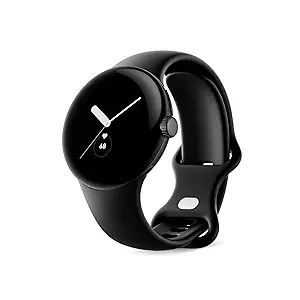
Google vs Nothing: Overview & Brand Philosophy
The smartwatch market represents a collision between advanced ambient computing and modern consumer design. Google entered this space with the Pixel Watch series after years of developing Wear OS for third-party manufacturers and acquiring fitness titan Fitbit. Google's philosophy centers on deep software integration, pervasive artificial intelligence, and clinical-grade health tracking. The Pixel Watch is positioned as a premier flagship wearable designed to act as a seamless extension of the Android and Pixel ecosystem, prioritizing sophisticated biometric insights, voice-driven ambient computing via Google Assistant, and high-end industrial aesthetics.
Conversely, London-based Nothing, operating in the wearable segment primarily through its sub-brand CMF by Nothing, approaches the category with a radically different ethos. Founded on the principle of making design-forward technology accessible, Nothing strips away the bloat and complexity of traditional operating systems in favor of bold minimalism, high customizability, and ultra-aggressive pricing. Instead of trying to put an entire smartphone on your wrist, Nothing focuses on essential utility: reliable notifications, core health tracking, exceptional industrial design, and class-leading battery longevity without premium recurring costs.
This dynamic creates a compelling contrast for consumers. Google represents the traditional, full-stack smartwatch paradigm, featuring an open app ecosystem, complex onboard processing, and seamless smart-home interactivity. Nothing represents the lean, focused lifestyle wearable, challenging the necessity of expensive micro-computers on the wrist by proving that essential connectivity and striking aesthetics can be delivered at a fraction of the cost.
Key Differences & Technological Comparison
The fundamental divergence between Nothing and Google lies in their operating systems, hardware architecture, and target audiences. Understanding these core technological variances is crucial for evaluating which wearable aligns with your daily routine.
- Operating System & Ecosystem: Google Pixel Watches run on Wear OS, granting native access to the Google Play Store, third-party applications (like Spotify, Strava, and WhatsApp), robust notification interactions with full keyboard input, and comprehensive Google Home control. Nothing devices utilize lightweight, proprietary Real-Time Operating Systems (RTOS). While this means near-instant responsiveness and zero interface lag, it eliminates the possibility of third-party app downloads, complex app interactions, or rich digital ecosystem workflows.
- Health & Biometric Tracking: Google leverages Fitbit's clinically validated health algorithms. The Pixel Watch features multi-path optical heart rate sensors, an electrical sensor for ECG (electrocardiogram) readings, continuous electrodermal activity (cEDA) tracking for stress detection, and skin temperature sensing. Nothing smartwatches provide baseline health monitoring, including continuous heart rate, SpO2 (blood oxygen), basic sleep stage tracking, and pedometer functions. However, Nothing lacks regulatory clearances for ECG or deep predictive health diagnostics, making Google the definitive choice for medical-grade tracking.
- Hardware, Materials & Display: Google employs a distinctive, domed 3D glass aesthetic with recycled stainless steel or custom aluminum housings, housing high-pixel-density AMOLED displays capable of peak brightness levels exceeding 2,000 nits. Nothing embraces a bold, retro-futuristic aesthetic. Devices like the CMF Watch Pro series utilize lightweight aluminum alloy frames, flat displays, and unique interchangeable functional bezels. Nothing relies on large, crisp AMOLED panels that emphasize bold typography and custom minimalist watch faces.
- Battery Architecture: Battery life is where Nothing holds a massive architectural advantage. Because its RTOS consumes minimal processing power, a Nothing smartwatch can operate between 7 to 13 days on a single charge with regular usage. Google’s computationally demanding Wear OS, paired with continuous background sensor polling, yields approximately 24 to 36 hours of battery life, necessitating a daily charging ritual.
Pros & Cons Comparison
Google Smartwatches
- Pros:
- Deep ecosystem integration with native Google Maps, Wallet, Assistant, and Calendar.
- Comprehensive, medically certified health suite powered by Fitbit, including ECG and stress management.
- Rich app library available via the Wear OS Google Play Store.
- Interactive messaging with full voice-to-text, dictation, and virtual keyboard support.
- Premium fit and finish with an elegant, water-resistant domed display.
- Cons:
- Battery life is restricted to 1–1.5 days, requiring frequent charging.
- Significantly higher purchase price compared to entry-level alternatives.
- Certain advanced Fitbit metrics and historical tracking locked behind a Fitbit Premium subscription.
Nothing Smartwatches
- Pros:
- Exceptional value-for-money ratio with premium-feeling materials at an entry-level price.
- Phenomenal battery longevity lasting up to nearly two weeks on a single charge.
- Distinctive, ultra-clean software design language and bold external hardware modularity.
- Large, highly readable AMOLED displays with intuitive touch controls.
- Universal cross-platform functionality with both Android and iOS devices.
- Cons:
- No third-party app support or expandable software platform.
- Limited notification interactivity (read-only without deep response mechanisms).
- Lacks advanced medical sensors like ECG, continuous EDA, or body composition tools.
- No onboard NFC for contactless payments in international markets.
Performance, Durability & Value Analysis
In terms of raw processing power and long-term durability, Google commands the high ground. The Pixel Watch utilizes dedicated multi-core wearable chipsets paired with a low-power co-processor, ensuring swift application execution, seamless animations, and advanced algorithmic processing directly on the wrist. Durability is reinforced by water resistance ratings up to 5 ATM (50 meters), making Google devices fully suitable for recreational swimming and aquatic tracking. However, the exposed, curved glass dome of the Pixel Watch presents an inherent vulnerability to direct edge impacts, requiring users to be conscious of physical hazards in rugged environments.
When assessing value, Nothing completely flips the market paradigm. While it cannot rival Google's silicon benchmark metrics, its custom chipsets are precisely tuned to drive the proprietary UI with zero frame drops, fulfilling daily tasks with exceptional efficiency. Build quality punches well above its weight class, featuring IP68 water and dust resistance and robust aluminum frames that handle daily scuffs with ease. From a pure economic standpoint, Nothing delivers approximately 80% of what the average consumer uses daily—time, steps, alarms, heart rate, and notifications—at less than a third of the investment required by Google, representing one of the highest value-to-cost metrics in the entire consumer tech landscape.
Final Verdict: Which Brand Should You Choose?
Your choice between Nothing and Google ultimately hinges on whether you require a full-fledged wrist computer or an efficient, stylish lifestyle companion.
Choose Google if: You demand a true extension of your Android smartphone. If you regularly use your watch to reply to messages, follow turn-by-turn navigation via Google Maps, make tap-and-go contactless payments, control smart home appliances, or require medically relevant health diagnostics such as ECG and detailed sleep apnea detection, Google is well worth the premium investment and daily charging routine.
Choose Nothing if: You value functional simplicity, striking industrial design, and weeks of battery life over redundant apps. If your primary goals are receiving glanceable notifications, tracking basic daily fitness metrics, enjoying a high-quality AMOLED screen, and avoiding the anxiety of daily charging cables—all while staying within a sensible budget—Nothing is the unquestionably smarter, more pragmatic choice.
Battery Life
When evaluating battery life between Google and Nothing (via its CMF sub-brand), consumers are looking at two fundamentally different engineering philosophies and technical architectures. Google’s Pixel Watch lineup runs on Wear OS, a full-featured, power-hungry operating system driven by advanced multi-core processors. Because Google prioritizes deep platform integration—such as continuous Fitbit biometric tracking, rich third-party app ecosystems, on-device Google Assistant, and high-brightness AMOLED displays—energy consumption is inherently high. Even with iterative power management improvements like dual-chip architecture in the Pixel Watch 2 and the introduction of a larger 45mm model in the Pixel Watch 3, Google devices typically max out at 24 to 36 hours of battery life with typical daily usage, requiring consumers to adopt a strict daily charging routine.
In stark contrast, Nothing’s wearable strategy centers around functional minimalism, utilizing a lightweight, proprietary Real-Time Operating System (RTOS) engineered specifically for hyper-efficiency. By eschewing computationally heavy app engines and continuous background data syncing, Nothing’s CMF Watch Pro series achieves battery longevity measured in weeks rather than hours. Users can routinely expect between 11 to 13 days of typical use on a single charge, or upwards of a full week even with the Always-On Display (AOD) engaged and continuous biometric sensors tracking heart rate and SpO2. This massive technical strength eliminates the battery anxiety typical of advanced smartwatches, turning charging from a daily chore into a bi-weekly afterthought.
Ultimately, the practical trade-off boils down to smart capability versus lifestyle convenience. Google delivers an uncompromised, feature-rich smartwatch experience where the cost of rich interactivity, cellular connectivity, and precise continuous fitness telemetry is an uncompromising demand for daily charging infrastructure. Nothing trades away deep software sophistication, extensive app libraries, and advanced voice-assistant tasks to deliver phenomenal battery endurance that suits users seeking basic notification triage, general fitness tracking, and minimal maintenance. For buyers at brandchoose.com prioritizing sheer uptime and freedom from charging cables, Nothing dominates handily, while Google is the necessary choice only for those willing to trade battery life for true computing power on the wrist.
Build Quality & Durability
When evaluating build quality and durability, Google and Nothing (via its CMF sub-brand) approach wearable engineering from fundamentally distinct price and market tiers. Google’s Pixel Watch lineup exemplifies premium, jewelry-like industrial design, utilizing 100% recycled aerospace-grade aluminum or stainless steel cases paired with custom 3D Corning Gorilla Glass 5. This domed, edge-to-edge glass aesthetic is visually striking and exceptionally well-machined, but its raised, borderless curvature leaves it inherently vulnerable to lateral impacts and edge chipping. In contrast, Nothing targets the high-utility, budget-conscious segment with its CMF Watch series, opting for robust, squared-off or round aluminum alloy frames with pronounced bezels that naturally shield the flat tempered glass display. While Nothing’s engineering lacks the seamless, luxury-grade tactile cohesion found in Google’s flagship devices, its functional architecture is pragmatic, deflecting direct abrasive contact away from the critical screen surface during rigorous daily wear.
The technical trade-offs extend significantly into water resistance, dust ingress protection, and overall environmental resilience. Google equips its smartwatches with superior 5 ATM water resistance coupled with an IP68 certification, certifying the hardware for surface-level aquatic activities like pool swimming and intense, sweat-heavy workouts without seal degradation. Conversely, Nothing’s offerings generally top out at an IP68 rating; while impervious to dust and protected against limited freshwater immersion, they lack dedicated atmospheric pressure ratings, making them unsuitable for regular swimming or high-velocity water sports. Furthermore, Google’s proprietary band attachment mechanism, though polarizing for consumers invested in universal straps, is an engineering triumph that locks seamlessly into the chassis with zero structural wobble, whereas Nothing uses traditional spring-pin lugs that offer universal strap versatility at the expense of a fully unified, gapless chassis build.
Ultimately, your choice centers on a compromise between high-tolerance luxury engineering and utilitarian impact resistance. Google delivers a flagship-tier experience defined by sophisticated metallurgy, robust waterproofing, and precise haptics, but consumers must contend with the ever-present fragility of an exposed domed crystal that often necessitates aftermarket bumper cases. Nothing provides remarkable structural rigidity for its aggressive price point, utilizing recessed glass and lightweight aluminum housing that holds up admirably against routine knocks and scuffs, yet it sacrifices true aquatic durability and long-term chassis refinement. For consumers prioritizing premium tactile craftsmanship and reliable water sports readiness, Google remains the superior engineered product, whereas Nothing offers a more resilient, cost-effective daily driver that requires far less aesthetic coddling.
Health & Fitness Tracking
When evaluating health and fitness tracking, Google and Nothing represent fundamentally different engineering philosophies and market tiers. Google, through its Pixel Watch line, leverages deep technical integration with Fitbit’s mature biomedical ecosystem. The Pixel Watch models feature advanced multi-path optical heart rate sensors, an electrical sensor for ECG readings, continuous electrodermal activity (cEDA) tracking for stress detection, and a dedicated skin temperature sensor. In contrast, Nothing’s wearable venture—operating primarily through its sub-brand CMF by Nothing—focuses on value-driven, baseline telemetry. Nothing equips its watches with standard photoplethysmography (PPG) sensors for continuous heart rate and blood oxygen (SpO2) monitoring, alongside basic accelerometer-based motion profiling. While Nothing achieves solid day-to-day metric capture for resting vitals and basic step counting, it fundamentally lacks the medical-grade diagnostic certifications, advanced sensor fusion, and algorithmic sophistication that Google deploys to filter out motion artifacts during high-intensity interval training.
The divergence becomes even more pronounced in software analytics, recovery algorithms, and ecosystem utility. Google’s platform delivers high-end biometrics, providing users with actionable recovery insights through Fitbit’s Daily Readiness Score, advanced sleep stage modeling with sleep apnea detection capabilities, and automatic workout detection that intelligently logs transitions. Nothing, utilizing its proprietary Nothing X or CMF platforms, offers a stripped-back, aesthetic-first interface that successfully tracks basic running metrics, cadence, and static health targets, but completely lacks holistic physiological interpretation such as heart rate variability (HRV) trends over time or guided stress intervention. Furthermore, Google provides robust multi-band or high-precision connected GPS implementations for precise route mapping, whereas Nothing’s budget-oriented satellite hardware can struggle with urban canyoning and rapid signal acquisition.
Ultimately, the choice between the two brands involves a trade-off between clinical-grade analytical depth and affordable utilitarian tracking. Google is the clear victor for dedicated athletes and health-conscious consumers who require comprehensive bio-sensing, regulatory-cleared heart health notifications, and deep integration with platforms like Google Health Connect and Strava. However, this level of biometric power exacts a severe operational toll, yielding merely 24 to 36 hours of battery life. Nothing, by deliberately omitting power-hungry advanced biomedical sensors and high-frequency background polling, delivers a reliable fitness companion capable of lasting over a week on a single charge. For casual users prioritizing basic activity accountability and step-counting without the burden of daily charging, Nothing serves as an exceptionally cost-effective alternative to Google’s premium, data-heavy ecosystem.
Smart Features & Connectivity
When evaluating smart features and connectivity, Google’s Pixel Watch lineup and Nothing’s CMF sub-brand operate on fundamentally divergent technical tiers, reflecting distinct engineering philosophies and price categories. Google integrates a full-fledged Wear OS architecture powered by capable multi-core silicon, offering a deeply integrated ecosystem experience. Pixel Watches feature standalone 4G LTE options, advanced NFC for contactless Google Wallet payments, Google Assistant voice processing, and direct access to the Google Play Store for third-party application deployment. In contrast, Nothing—primarily through its CMF Watch series—utilizes a lightweight, proprietary Real-Time Operating System (RTOS). Connectivity on Nothing's hardware is tethered strictly to Bluetooth (typically Bluetooth 5.3) for companion syncing, lacking cellular radio options, onboard NFC payment capabilities, and an open app ecosystem. While Nothing creatively bridges this gap with novel software touches—such as integrated ChatGPT voice access piped through the phone—its functional capabilities are bounded by basic notification mirroring and tethered interactions rather than autonomous computation.
The trade-offs between the two ecosystems dictate vastly different user experiences and operational friction. Google’s strength lies in rich, contextual utility: notifications are fully actionable (allowing users to dictate replies, type on an on-screen keyboard, or use smart chips), and integrations with Google Home allow for direct wrist-based IoT control. However, this heavy computational load and continuous background polling demand significant energy, restricting Google’s battery life to roughly 24 to 36 hours. Nothing counters this complexity with extreme efficiency and stripped-back functionality. Its RTOS prioritizes rapid performance, latency-free companion syncing, and clear Bluetooth calling via onboard microphones and speakers equipped with AI noise reduction. Because it eschews high-drain connectivity modules like LTE and the background overhead of true multitasking apps, Nothing achieves multi-day battery longevity (often 10 to 13 days) on a single charge.
Ultimately, the choice between Google and Nothing in connectivity and smart capability comes down to autonomous computing versus efficient peripheral mirroring. Google engineered the Pixel Watch as a true standalone secondary computer that seamlessly synchronizes with the Android framework, making it ideal for power users who require untethered navigation via Google Maps, rich message interactions, and frictionless mobile payments. Nothing, conversely, engineers a smart, communicative dashboard that acts as an accessible satellite to the smartphone. For consumers prioritizing standalone versatility and deep platform intelligence, Google is technologically unmatched; for those who view smart connectivity primarily through the lens of reliable call handling, battery endurance, and basic notification intake without ecosystem lock-in, Nothing offers a pragmatic, cost-efficient alternative.