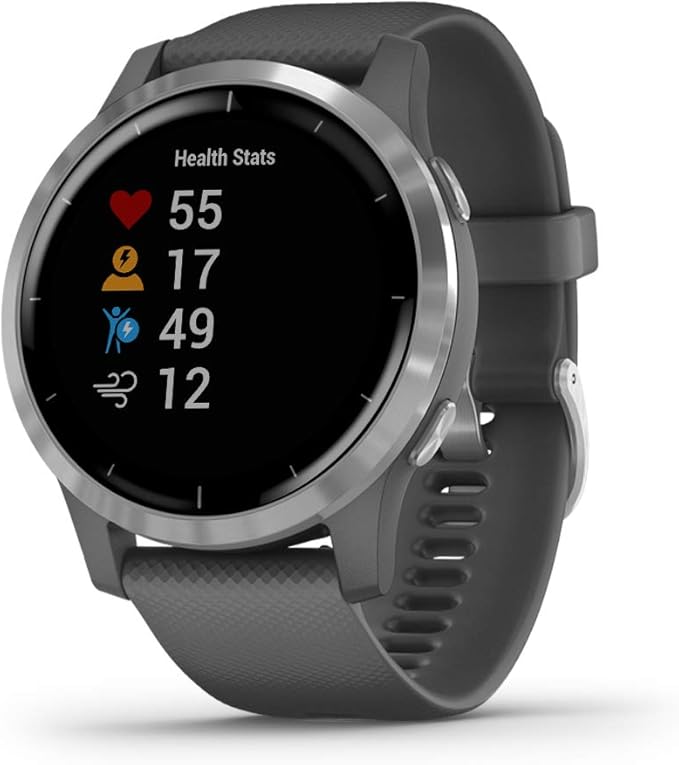
Nothing vs Garmin: Overview
Comparing Nothing and Garmin helps you determine which brand is best suited for your needs in Smart Watch. Both brands offer strong choices depending on your budget and key feature requirements.
Key Features & Comparison
Evaluate factors such as build quality, warranty, customer satisfaction, and total value before making your final purchase choice between Nothing and Garmin.
Battery Life
Garmin dominates the wearable market when it comes to power endurance, utilizing highly optimized real-time operating systems paired with memory-in-pixel (MIP) or high-efficiency AMOLED displays. Across flagship lines like the Fenix, Forerunner, and Enduro, users routinely experience battery life measured in weeks rather than days, with select solar-charging models extending operational longevity even further. Even during intensive multi-band GNSS tracking with active biometric polling, Garmin devices can sustain dozens of continuous hours, making them indispensable for ultra-endurance athletes, multi-day hikers, and consumers who view frequent recharging as a major pain point.
In contrast, Nothing approaches battery life through its CMF sub-brand wearables by prioritizing affordable efficiency over specialized endurance. Equipped with bright AMOLED displays and lightweight companion software, Nothing smartwatches typically deliver between 9 to 14 days of typical usage, or around a few days under aggressive always-on-display and continuous sensor tracking. While this multi-day threshold easily surpasses standard Wear OS and watchOS devices, it cannot compete with Garmin's hardware-level power management under heavy operational loads. For everyday casual wear, Nothing offers respectable, set-and-forget weekly charging, but lacks the deep energy reserve needed for demanding outdoor expeditions.
Build Quality & Durability
Garmin watches are built to survive extreme physical environments, utilizing military-grade testing standards (MIL-STD-810) for thermal, shock, and water resistance. High-end Garmin units feature titanium or diamond-like carbon (DLC) coated bezels, fiber-reinforced polymer cases, and scratch-resistant sapphire crystal lenses capable of withstanding direct abrasive impacts. With water resistance ratings frequently reaching 10 ATM (100 meters) or even dive-rated specifications, Garmin devices are engineered as rugged survival and performance instruments that withstand years of outdoor abuse without structural compromise.
Nothing adopts a modern, minimalist design language that favors urban aesthetics and industrial elegance over rugged durability. Utilizing sleek aluminum alloy frames with sandblasted finishes, curved glass surfaces, and lightweight silicone straps, Nothing watches offer a clean, premium visual feel that punches well above their budget-to-midrange price bracket. However, with ingress protection typically rated around IP68, they are engineered for sweat, rain, and light splashes rather than high-velocity watersports or deep submersion. While aesthetically refined for everyday office and casual lifestyle wear, Nothing's materials lack the scratch resistance and structural reinforcement inherent to Garmin's heavy-duty engineering.
Health & Fitness Tracking
Health and biometric analytics represent Garmin's core competency, powered by its proprietary Elevate optical sensor array and extensive Firstbeat analytics engine. Garmin provides clinical-level performance metrics, including multi-frequency heart rate variability (HRV) status, Body Battery energy monitoring, advanced sleep architecture with sleep need calculations, VO2 max, training readiness, and recovery time analysis. Furthermore, Garmin's sport-specific tracking features granular data fields for activities ranging from open-water swimming to technical trail running, supported by dual-frequency multi-GNSS tracking for unparalleled satellite positioning accuracy.
Nothing delivers a streamlined health tracking suite tailored for casual fitness enthusiasts rather than data-driven competitive athletes. Operating through the Nothing X or CMF Watch apps, these devices cover daily wellness fundamentals including continuous heart rate, blood oxygen (SpO2) saturation, basic sleep stage logging, and standard step counting alongside preset workout profiles. While sensor accuracy is competent for baseline trend monitoring, Nothing lacks the deep algorithmic sophistication, load-balancing analytics, and recovery recommendations found in Garmin's ecosystem. GPS tracking is integrated on certain models but falls short of Garmin's pinpoint multi-band precision in dense urban canyons or heavily forested environments.
Smart Features & Connectivity
Garmin approaches smart connectivity through an athlete-first, pragmatic lens, focusing on cross-platform stability across both iOS and Android. Its smart portfolio includes Garmin Pay for contactless transactions, offline music storage with direct Spotify, Deezer, and Amazon Music syncing, and smartphone notifications with quick-reply templates for Android users. Through the Connect IQ app store, users can install specialized data fields and custom watch faces, though the interface feels more utilitarian and data-dense than modern consumer smartwatch operating systems. Voice features and microphone capabilities are primarily reserved for select models like the Venu series.
Nothing focuses heavily on ecosystem synergy, user experience, and visual fluidity, echoing the distinctive dot-matrix design philosophy of Nothing OS. Smart features include integrated microphones and speakers for clear Bluetooth calling, basic voice assistant integration, comprehensive notification mirrors, and native hardware controls such as remote camera triggers and Nothing smartphone interactions. While it lacks an open app ecosystem, onboard offline music storage, and contactless payment infrastructure, Nothing delivers a more cohesive, smartphone-adjacent lifestyle interface that prioritizes smooth animations, intuitive UI navigation, and seamless everyday communication at an accessible price tier.