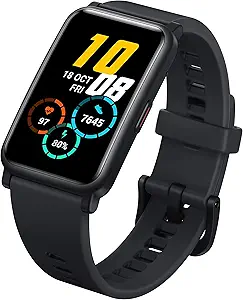
Motorola vs Honor: Overview
Comparing Motorola and Honor helps you determine which brand is best suited for your needs in Smart Watch. Both brands offer strong choices depending on your budget and key feature requirements.
Key Features & Comparison
Evaluate factors such as build quality, warranty, customer satisfaction, and total value before making your final purchase choice between Motorola and Honor.
Battery Life
When examining energy efficiency and overall battery performance, Honor consistently holds a notable competitive advantage over Motorola. Honor leverages lightweight, highly optimized proprietary operating systems (such as MagicOS for Solutions) paired with energy-dense silicon architectures, allowing flagship devices like the Honor Watch GS series and Watch 4 to deliver anywhere from 10 to 14 days of typical usage on a single charge. Even with continuous biological tracking and the Always-On Display (AOD) engaged, users rarely need to plug an Honor wearable in more than once a week. This impressive endurance is further supported by sophisticated power management algorithms that aggressively throttle inactive background tasks without sacrificing essential sensor wake-up responsiveness.
In contrast, Motorola’s wearable portfolio, primarily manifested through the Moto Watch line and earlier Wear OS iterations, presents a more varied and historically compromised battery profile. While modern Moto Watch devices running the proprietary Moto Watch OS have extended their runtime to roughly 7 to 10 days, their performance tends to degrade more sharply when high-draw functions like standalone GPS or continuous blood oxygen monitoring are engaged. Furthermore, legacy Wear OS-powered Moto 360 models required daily or near-daily recharging, a stigma Motorola has struggled to entirely shake in consumer perception. While Motorola has implemented effective rapid-charging protocols that replenish meaningful percentages within 45 minutes, Honor still provides superior long-term stamina, making it the more reliable option for off-grid travelers and uninterrupted sleep tracking.
Build Quality & Durability
The structural integrity and external design philosophies of Motorola and Honor showcase fundamentally different approaches to durability and aesthetics. Honor focuses heavily on outdoor-ready resilience combined with refined metallurgical finishes. Many of their performance models, such as the Honor Watch GS Pro, carry robust military-grade MIL-STD-810G certifications, demonstrating exceptional resistance to thermal shock, high altitudes, and extreme moisture. Honor frequently utilizes stainless steel bezels, scratch-resistant sapphire crystal glass, and high-strength composite polymers that deflect impacts effectively during intense sports or industrial tasks, paired with a consistent 5ATM water resistance rating suitable for open-water swimming.
Motorola, on the other hand, prioritizes urban sophistication and industrial minimalism, delivering sleek, lightweight enclosures crafted largely from aerospace-grade aluminum alloys. Devices like the Moto Watch 100 and Moto Watch 70 feature understated, clean lines and comfortable ergonomics that seamlessly blend into business and casual environments. However, this focus on low-profile elegance comes at the expense of ruggedness; Motorola models often rely on standard chemically strengthened glass rather than sapphire, making the display more susceptible to abrasions under harsh outdoor conditions. While Motorola guarantees dependable 5ATM or IP67/IP68 ingress protection for daily splashes and standard gym workouts, Honor undeniably engineers a more durable, combat-ready timepiece capable of enduring far more punitive physical environments.
Health & Fitness Tracking
In the domain of biometric sensing and athletic analytics, Honor delivers a significantly more comprehensive and scientifically validated experience. Benefiting directly from advanced sensor arrays derived from its previous engineering heritage, Honor’s TruSeen heart-rate monitoring and TruSleep algorithms offer high-frequency polling with clinical-grade accuracy. Honor smartwatches excel in granular workout metrics, tracking specialized parameters such as VO2 max, training load, aerobic/anaerobic training effects, and recovery times across over 100 distinct sporting disciplines. The integration of dual-frequency multi-satellite GNSS positioning in upper-tier models ensures that runners and cyclists receive pinpoint route mapping and precise pace readouts even in dense urban canyons or heavily forested trails.
Motorola offers a dependable, though comparatively elementary, health suite tailored toward casual wellness rather than athletic performance. The Moto Watch OS ecosystem integrates standard biometric modules capable of monitoring heart rate, SpO2 levels, step counts, and basic sleep stages. However, Motorola lacks the advanced athletic interpretation layers seen in Honor's ecosystem, meaning users receive raw data with fewer actionable recovery insights or deep-dive performance diagnostics. While GPS-equipped Moto devices capture standard route metrics adequately for the recreational jogger, satellite acquisition speeds are generally slower and tracking trails show minor drift compared to Honor's positioning hardware. For users seeking simple day-to-day wellness accountability, Motorola suffices, but performance-driven athletes will find Honor far more capable.
Smart Features & Connectivity
Smart capabilities and ecosystem connectivity reveal distinct strategic compromises between the two manufacturers. Honor delivers a deeply cohesive experience, particularly when paired with an Android or Honor smartphone. Many Honor smartwatches include onboard speakers and microphones, enabling crisp Bluetooth calling directly from the wrist, alongside local music storage that allows users to leave their phones behind during workouts. Some high-end models even offer eSIM cellular connectivity for untethered communication. However, Honor’s proprietary operating environment maintains a relatively closed garden, meaning third-party app availability is severely restricted, and notification interactions are often limited to pre-set quick replies without full on-screen keyboard dictation.
Motorola’s smart ecosystem offers broader accessibility across both Android and iOS platforms, though it features a simpler interface overall. Modern Moto Watch platforms emphasize clutter-free synchronization, focusing purely on mirrored notifications, weather updates, and basic media playback controls rather than trying to act as secondary smartphones. While this minimalist software architecture ensures a smooth, lag-free UI and universal compatibility, it sacrifices interactive depth: you will rarely find NFC mobile payments, standalone cellular configurations, or extensive third-party app stores on modern Moto wearables. Consequently, while Motorola excels in delivering an unobtrusive, universal companion device, Honor offers a much richer array of standalone smart conveniences and integrated audio-visual communications.