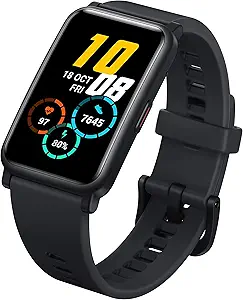







Mobvoi vs Honor: Overview
Comparing Mobvoi and Honor helps you determine which brand is best suited for your needs in Smart Watch. Both brands offer strong choices depending on your budget and key feature requirements.
Key Features & Comparison
Evaluate factors such as build quality, warranty, customer satisfaction, and total value before making your final purchase choice between Mobvoi and Honor.
Battery Life
When evaluating endurance, Honor and Mobvoi take fundamentally divergent architectural paths. Honor relies predominantly on a custom Real-Time Operating System (RTOS) or lightweight proprietary operating system paired with highly efficient dual-chipset architectures. Because the operating system executes minimal background overhead and strictly governs processing threads, Honor smartwatches—such as the Watch GS or MagicWatch series—frequently deliver extraordinary longevity, often ranging from 10 to 14 days under typical usage conditions. Even with continuous biological telemetry, such as sleep tracking and real-time heart rate monitoring enabled, power draw remains exceptionally low, making Honor an ideal ecosystem for users who prioritize charging intervals measured in weeks rather than days.
Mobvoi, by contrast, operates primarily within the power-hungry Google Wear OS ecosystem via its TicWatch lineup, which structurally demands vastly higher processing energy. To counter this inherent architectural penalty, Mobvoi engineered a pioneering dual-layer display system that superimposes an ultra-low-power FSTN liquid-crystal display atop an OLED panel, managed by co-processors. In "Smart Mode," running modern Wear OS with background polling and ambient features, Mobvoi devices typically achieve between 48 to 72 hours of autonomy—a strong figure for full-fledged smartwatches, but far behind Honor. While Mobvoi's "Essential Mode" can stretch device life to 30 to 45 days by shutting down high-level computational modules, it strips away the core connected utility, resulting in a practical dynamic where Honor provides far superior baseline continuous autonomy without feature compromise.
Build Quality & Durability
Honor approaches structural engineering with a focus on robust sports watch aesthetics and classical horology, depending on the targeted tier. Premium offerings often incorporate aerospace-grade materials such as titanium alloy bezels, high-grade stainless steel casings, and durable fluororubber or composite leather straps. The screen surfaces are generally shielded by chemically strengthened sapphire or high-hardness tempered glass, which provides commendable resistance against abrasive forces during outdoor activity. Most Honor watches boast 5 ATM water resistance ratings, certifying their chassis against pressure depths of up to 50 meters, and certain rugged iterations have been validated against rigorous MIL-STD-810G thermal, shock, and corrosion metrics to withstand hostile environmental deployments.
Mobvoi’s industrial design is anchored deeply in functional, tech-forward durability, prioritizing structural resilience to protect its dual-layer optical modules. The TicWatch Pro family consistently implements glass fiber-reinforced high-strength nylon cases combined with forged stainless steel or aluminum bezels, striking an effective balance between mechanical impact protection and wrist comfort. Mobvoi places substantial engineering emphasis on comprehensive ingress sealing; its flagship watches regularly feature IP68 dust-and-water protection complemented by US Military Standard 810H certifications and swim-ready 5 ATM ratings. In hand, Mobvoi devices feel intentionally dense and utilitarian, with tactile metallic pushers and knurled textures, whereas Honor balances rugged physical durability with a slightly sleeker, more refined consumer-grade finish.
Health & Fitness Tracking
Health intelligence in Honor devices is deeply rooted in sophisticated proprietary sensor clusters, often utilizing advanced photoplethysmography (PPG) arrays governed by TruSeen sensor algorithms. Honor offers deeply granular tracking for dynamic heart rate zones, peripheral blood oxygen saturation (SpO2), stress analysis, and sleep staging metrics derived from multi-variable biometric signals. For physical conditioning, Honor units include extensive dedicated workout modes alongside algorithmic tracking for training load, VO2 max, and aerobic/anaerobic recovery times. The data processing occurs locally on the watch with post-workout synchronization into the Honor Health app, which visualizes trends clearly, although third-party platform integration (like Strava or Google Fit) can occasionally be restricted by proprietary software ecosystem walls.
Mobvoi counters by deploying its proprietary TicHealth suite, running directly on Wear OS, which includes applications like TicPulse, TicOxygen, and TicZen for continuous vital sign auditing. While Mobvoi’s raw optical sensor pipelines produce highly dependable biological tracking, its competitive edge lies within algorithmic versatility and open ecosystem integration. Because Mobvoi watches link intrinsically to the Android framework, biometric metrics seamlessly synchronize not only with Mobvoi’s cloud platform but directly with Google Fit, Strava, and other third-party training repositories. Furthermore, newer Mobvoi sensors feature advanced capabilities like heart health anomaly detection, physical fatigue monitoring, and mental health metrics, making Mobvoi's health telemetry more natively extensible for users seeking integrated digital fitness ecosystems.
Smart Features & Connectivity
The smart capabilities of Honor smartwatches are inherently constrained by the parameters of their proprietary firmware. While Honor provides foundational smart functionality—such as mirroring smartphone notifications, conducting Bluetooth voice telephony via integrated speakers and microphones, music playback storage, and local offline alarms—it lacks an open, extensible application architecture. Users cannot install standard third-party software, interactive voice assistants outside of localized ecosystem variations are limited, and actionable notification replies are restricted to predefined canned responses, mainly functional only when paired with Android handsets. Honor excels at delivering clean, frictionless micro-interactions, but it cannot function as an autonomous computing node disconnected from the smartphone.
Mobvoi, harnessing the power of Google Wear OS, operates in an entirely different computational tier regarding connectivity and platform intelligence. The presence of the Google Play Store gives TicWatch owners native access to expansive app ecosystems, including Google Maps for standalone navigation, Spotify for offline streaming, and comprehensive task managers. Connectivity is enhanced by integrated NFC supporting Google Wallet for contactless payments, and select models feature standalone cellular eSIM connectivity. Furthermore, users can draft custom dictated replies via keyboard or voice recognition powered by Google Assistant. Mobvoi offers a truly connected, interactive smartwatch experience, making it the definitive choice for consumers who need expansive app support and true computing parity on the wrist.