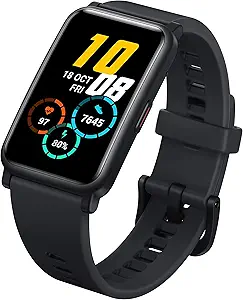
Honor vs Withings: Overview
Comparing Honor and Withings helps you determine which brand is best suited for your needs in Smart Watch. Both brands offer strong choices depending on your budget and key feature requirements.
Key Features & Comparison
Evaluate factors such as build quality, warranty, customer satisfaction, and total value before making your final purchase choice between Honor and Withings.
Battery Life
When examining battery endurance, Honor and Withings operate on fundamentally different architectural philosophies, leading to starkly contrasting user experiences. Honor equips its smartwatches with power-efficient custom operating systems (such as MagicOS for wearable devices) paired with dense lithium-polymer batteries. This engineering approach allows models like the Honor Watch GS series to achieve roughly 10 to 14 days of typical use on a single charge, even with continuous heart rate monitoring, sleep tracking, and intermittent GPS tracking enabled. Honor utilizes aggressive background process management and dual-chipset architectures to throttle power consumption during idle states, offering reliable multi-day autonomy that significantly outpaces traditional flagship smartwatches running wearOS or watchOS.
Withings, however, dominates the endurance category by implementing hybrid smartwatch architecture that blends analog mechanical hands with low-power sub-displays, such as E-ink or miniature PMOLED/OLED screens. Devices like the Withings ScanWatch 2 can run continuously for up to 30 days on a single charge under standard conditions, extending even further when shifted to power-reserve mode, which maintains basic analog timekeeping. By offloading intensive processing tasks to the companion smartphone app and omitting power-hungry, high-refresh-rate touchscreens, Withings provides unrivaled longevity. The trade-off is clear: Honor offers modern, full-screen digital vitality with solid two-week endurance, while Withings provides month-long, set-and-forget autonomy rooted in mechanical efficiency.
Build Quality & Durability
Honor focuses heavily on robust, sport-oriented industrial design combined with modern digital interfaces. Many of their premium offerings feature stainless steel or titanium alloy casings, supplemented by ceramic or hardened polymer case-backs designed to withstand rigorous outdoor environments. Models such as the Honor Watch GS Pro are tested to military-grade standards (MIL-STD-810G), offering resistance against thermal shock, salt spray, sand ingress, and extreme temperatures alongside a standard 5 ATM water resistance rating. The displays are typically shielded by scratch-resistant tempered glass or sapphire crystal, prioritizing survival in rugged athletic conditions without compromising tactile responsiveness.
Withings approaches build quality from the perspective of traditional luxury horology, prioritizing timeless aesthetics, elegance, and understated durability over utilitarian ruggedness. Utilizing high-grade 316L stainless steel cases, precisely calibrated mechanical gear trains, and anti-reflective sapphire glass across its flagship lines, Withings watches mimic the feel of classic Swiss timepieces. While they match Honor’s 5 ATM water resistance—making them suitable for swimming and daily water exposure—they generally lack the heavy shock absorption and drop resilience found in Honor’s outdoor-focused models. Users seeking durable, adventure-ready hardware will favor Honor’s reinforced construction, whereas those seeking refined, executive-level craftsmanship will appreciate Withings’ sophisticated analog design.
Health & Fitness Tracking
Honor delivers an athletic and sensor-rich tracking suite optimized for multi-sport training and dynamic lifestyle metrics. Leveraging its proprietary TruSeen optical sensor arrays and AI-enhanced algorithms, Honor devices capture continuous heart rate, SpO2 blood oxygen saturation, stress variations, and sleep stages with high granularity. Furthermore, Honor heavily integrates multi-system GNSS (GPS, GLONASS, Galileo) directly into the hardware, permitting standalone workout tracking, accurate pace calculations, and route mapping without needing a tethered smartphone. The accompanying fitness software is primed for athletes, featuring aerobic and anaerobic training effect scores, VO2 max estimation, and recovery intervals.
In contrast, Withings distinguishes itself through clinical validation and medical-grade diagnostics rather than purely athletic performance. The brand frequently partners with clinical institutions and secures CE and FDA clearances for features like its 1-lead electrocardiogram (ECG) for detecting atrial fibrillation and vascular age assessments. Newer iterations incorporate continuous baseline temperature monitoring via miniaturized heat-flux sensors to detect onset illnesses. While Withings effectively tracks daily steps, basic sleep cycles, and swimming workouts, it relies predominantly on connected GPS via a smartphone for outdoor routing. Consequently, Honor is technically superior for active sports conditioning and field tracking, while Withings excels as a proactive, medically focused health monitoring platform.
Smart Features & Connectivity
Smart features and software interconnectivity represent the widest operational divide between the two brands. Honor crafts its devices as interactive smartphone peripherals, outfitting them with vibrant, high-resolution AMOLED displays that support rich notifications, customized widget dashboards, and customizable watch faces. Depending on the model, Honor devices include onboard storage for local music playback, built-in microphones and speakers for Bluetooth telephony, and offline voice assistant integration. Connectivity is managed seamlessly over modern Bluetooth standards, delivering prompt notification mirrors and actionable alerts, though interaction depth remains dependent on paired Android or iOS ecosystem constraints.
Withings intentionally minimizes digital distractions, curating a hybrid experience where smart functionality is restricted to essential, non-intrusive alerts. Its small secondary display serves discreet scrolling text snippets for incoming calls, calendar events, and app notifications, lacking the visual canvas for photo previews, native typing, or comprehensive app ecosystems. Withings devices omit speakers, microphones, and local media storage, relying instead on clean, silent haptic vibrations for alerts. Connectivity through the Withings Health Mate app is extraordinarily reliable, synchronizing effortlessly with Apple Health and Google Health Connect. Honor is the definitive choice for users craving rich, on-wrist interaction and multimedia controls, whereas Withings serves users looking to disconnect from screen fatigue while preserving vital connectivity.