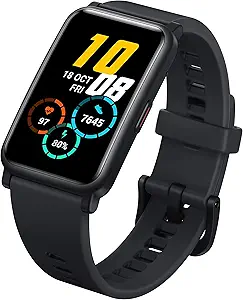
Honor vs TAG Heuer: Overview
Comparing Honor and TAG Heuer helps you determine which brand is best suited for your needs in Smart Watch. Both brands offer strong choices depending on your budget and key feature requirements.
Key Features & Comparison
Evaluate factors such as build quality, warranty, customer satisfaction, and total value before making your final purchase choice between Honor and TAG Heuer.
Battery Life
When examining battery endurance, Honor and TAG Heuer inhabit completely different operational philosophies. Honor builds its smartwatches around ultra-efficient proprietary operating systems, low-power dual-chip architectures, and aggressive background process optimization. Devices like the Honor Watch GS series easily achieve between 10 to 14 days of standard use on a single charge, and even heavy tracking sessions with GPS active can yield dozens of continuous hours. This exceptional longevity provides users with continuous biometric monitoring, frictionless sleep tracking, and a true set-it-and-forget-it experience that eliminates charging anxiety.
In contrast, TAG Heuer powers its Connected line with Google's Wear OS, a full-featured platform paired with performance-oriented Qualcomm Snapdragon hardware. This high-overhead computing environment demands substantial power, resulting in an endurance profile that typically tops out at one to one and a half days of use. While TAG Heuer incorporates intelligent power modes to preserve time-telling functions when the cell depletes, users must still commit to a daily charging regimen. Consequently, Honor dramatically outperforms TAG Heuer in runtime and battery efficiency, whereas TAG Heuer prioritizes continuous high-level computing power over long-term battery autonomy.
Build Quality & Durability
Build quality represents the area where TAG Heuer establishes undeniable superiority, rooted in Swiss horological heritage. TAG Heuer Connected watches are fabricated with the same artisanal craftsmanship as their mechanical counterparts, utilizing grade 2 or grade 5 titanium, mirror-polished or brushed stainless steel, scratch-resistant sapphire crystal lenses, and hand-finished ceramic bezels. The mechanical tolerances, crown feedback, and tactile deployment clasps reflect true luxury engineering designed to survive demanding conditions while retaining timeless, heirloom-grade aesthetic appeal.
Honor approaches durability from a modern industrial and pragmatic perspective. Its flagship smartwatches incorporate robust materials such as fluoroelastomer straps, stainless steel chassis, and reinforced polycarbonate composites, with select rugged models boasting high MIL-STD-810 military certifications. While Honor models are lightweight, structurally resilient, and fully capable of surviving harsh athletic environments and deep water exposure, they fundamentally remain mass-market consumer electronics. They lack the fine metallurgical finishing, weight balance, and premium tactile luxury that define TAG Heuer’s meticulously crafted casings.
Health & Fitness Tracking
Honor focuses heavily on comprehensive biological data collection and algorithmic sports science. Leveraging advanced sensor modules, Honor smartwatches offer continuous multi-wavelength photoplethysmography (PPG) for real-time heart rate monitoring, arterial blood oxygen (SpO2) tracking, stress analysis, and granular sleep staging through proprietary algorithms. The company integrates dedicated multi-satellite positioning systems (GNSS) with over 100 sports modes and tailored running courses, providing amateur and serious athletes with recovery metrics, VO2 max estimation, and actionable fitness insights directly within the companion app ecosystem.
TAG Heuer provides an elegant, curated approach to fitness through its bespoke Sports suite. Rather than overwhelming the user with raw scientific telemetry, the Swiss manufacturer focuses on premium tracking interfaces for running, cycling, swimming, and especially golf, where its dedicated Golf edition and specialized vector-mapped GPS application set the industry benchmark. However, TAG Heuer’s physical bulk, daily charging requirement, and less sophisticated overnight metrics make it less ideal for 24/7 metabolic and holistic sleep tracking. Honor delivers a far more expansive and medically oriented health framework, while TAG Heuer excels in polished, niche athletic execution.
Smart Features & Connectivity
Smart features and software capability highlight a clear trade-off between battery-conscious utility and rich digital capability. Honor smartwatches rely on a lightweight, RTOS-based platform designed primarily for basic smart extensions. Users receive incoming notification mirrors, basic quick-reply options on select devices, Bluetooth calling, offline music playback, and atmospheric widgets. However, Honor lacks a thriving third-party application ecosystem, mobile payments (in most western markets), and rich interactive notification handling, limiting the watch's utility to an informational companion rather than a standalone computing terminal.
TAG Heuer, utilizing Google's Wear OS platform, offers superior integration, app versatility, and standalone functionality. It supports the Google Play Store, giving wearers access to independent third-party navigation apps, streaming services, and productivity tools. Integration with Google Wallet facilitates frictionless contactless NFC transactions, while Google Assistant enables sophisticated voice commands and smart home orchestration. TAG Heuer also pairs this advanced functionality with exclusive digital watch faces that mirror historical mechanical references like the Carrera and Monaco, delivering a deeply customizable and technically versatile smartwatch experience that far outmatches Honor’s relatively static interface.