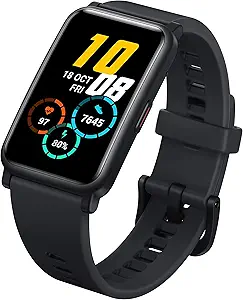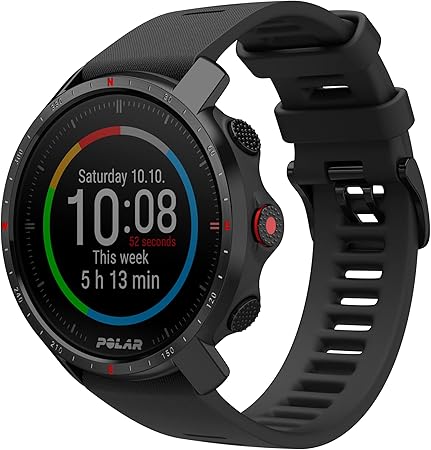







Honor vs Polar: Overview
Comparing Honor and Polar helps you determine which brand is best suited for your needs in Smart Watch. Both brands offer strong choices depending on your budget and key feature requirements.
Key Features & Comparison
Evaluate factors such as build quality, warranty, customer satisfaction, and total value before making your final purchase choice between Honor and Polar.
Battery Life
When examining battery endurance, Honor and Polar approach power management from fundamentally different engineering philosophies. Honor smartwatches, notably the Watch GS and MagicWatch series, leverage dual-chipset architectures paired with highly optimized, lightweight proprietary operating systems. This setup allows them to deliver exceptional longevity in everyday conditions, frequently achieving between 10 to 14 days of typical smartwatch use on a single charge. Honor accomplishes this by aggressively managing background refresh rates and utilizing low-power coprocessors for continuous passive metrics, making their devices exceptionally convenient for consumers who prioritize infrequent charging over high-frequency GPS polling.
Conversely, Polar designs its wearable hardware with endurance athletes in mind, prioritizing power efficiency during sustained, high-accuracy sensor operation rather than multi-week passive standby. Devices like the Polar Vantage and Grit X series offer between 30 to 40 hours of continuous multi-system GPS and optical heart rate tracking, expandable up to 100 hours via configurable power-save modes that reduce GPS sampling rates. In typical smartwatch use with continuous tracking, a Polar device usually requires recharging every 5 to 7 days. While Honor wins the passive standby and general lifestyle endurance contest, Polar is engineered for prolonged sports tracking where absolute runtime under heavy GPS load is the critical metric.
Build Quality & Durability
Honor focuses on combining consumer lifestyle elegance with rugged elements, producing timepieces that blend seamlessly into office environments while surviving routine outdoor exposure. Models like the Honor Watch GS Pro showcase robust polycarbonate chassis reinforced with stainless steel bezels, MIL-STD-810G thermal, shock, and water resistance certifications, and 5 ATM water ratings. However, the bulk of Honor’s catalog leans toward polished aluminum alloys, curved glass faces, and vivid AMOLED touchscreens that, while visually striking and premium to the touch, are inherently more vulnerable to scratches, impact damage, and harsh outdoor elements encountered during technical trail running or mountaineering.
Polar targets demanding athletic environments, resulting in utilitarian, purpose-built hardware where durability directly impacts performance. The Finnish manufacturer employs premium aerospace-grade titanium or glass-fiber reinforced polymer casings, flanked by scratch-resistant sapphire crystal lenses and knurled physical pushers designed for tactile feedback in wet, sweaty, or gloved conditions. Polar’s outdoor line, especially the Grit X Pro, undergoes extensive military-grade standard testing (MIL-STD-810H) and boasts 100-meter water resistance ratings suitable for open water swimming and extreme weather. While Honor excels in sleek, modern consumer styling, Polar demonstrates superior resilience and structural integrity engineered specifically for rigorous athletic abuse.
Health & Fitness Tracking
Honor provides an accessible, broad-spectrum wellness suite that caters well to lifestyle fitness enthusiasts and general consumers. Utilizing algorithms often derived from or comparable to Huawei’s TruSeen sensor arrays, Honor watches measure continuous heart rate, SpO2 saturation, sleep stages via TruSleep, and stress levels with respectable precision for casual workouts. The companion apps deliver clear, easily digestible daily summaries and casual workout logging across dozens of activity modes. However, Honor's platform largely functions as a passive tracking recorder; it lacks the granular biomedical data processing, physiological modeling, and adaptive training plans required by competitive endurance athletes.
Polar stands as an industry benchmark in sports science, physiological analysis, and biometrics. Its Precision Prime sensor fusion technology combines multi-channel optical LEDs with bio-impedance skin contact sensors to eliminate motion artifacts during high-intensity training. Polar’s software ecosystem, anchored by Polar Flow, delivers advanced sports-science tools such as Training Load Pro, Recovery Pro, Nightly Recharge, and Running/Cycling Performance Tests. These algorithms analyze autonomic nervous system recovery and cardiorespiratory load to provide actionable, prescriptive guidance rather than mere descriptive metrics. For serious athletes seeking precise heart rate variability, training periodization, and recovery diagnostics, Polar is distinctly superior to Honor.
Smart Features & Connectivity
Honor establishes a clear advantage in daily lifestyle convenience and digital connectivity. Integrated with high-resolution AMOLED displays, Honor smartwatches function as capable smartphone peripherals, offering on-wrist Bluetooth calling with built-in microphones and speakers, onboard storage for standalone MP3 playback, customizable voice assistant integrations, and rich notification handling. The user interface is fluid, vibrant, and responsive, delivering a full-featured smartwatch experience that integrates tightly with Android ecosystems, allowing users to handle calls and quick-reply to communications directly from the wrist without reaching for their handset.
In contrast, Polar keeps smart connected features intentionally minimal to preserve processor overhead, battery stability, and athletic focus. While modern Polar watches support basic push notifications, weather forecasts, and basic music playback controls for a tethered smartphone, they explicitly omit microphones, speakers, voice assistants, and native third-party app stores. Where Polar excels in connectivity is within the athletic peripheral domain, offering seamless, robust multi-channel Bluetooth Low Energy (BLE) pairing with external heart rate chest straps, cycling power meters, cadence sensors, and direct syncing with platforms like Strava and TrainingPeaks. For everyday smartwatch utility, Honor is the decisive choice, whereas Polar restricts connectivity to athletic instrumentation.