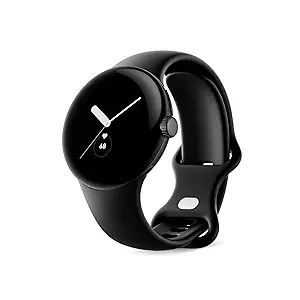
Google vs Withings: Overview
Comparing Google and Withings helps you determine which brand is best suited for your needs in Smart Watch. Both brands offer strong choices depending on your budget and key feature requirements.
Key Features & Comparison
Evaluate factors such as build quality, warranty, customer satisfaction, and total value before making your final purchase choice between Google and Withings.
Battery Life
When evaluating battery longevity, Google and Withings exist at opposite ends of the wearable spectrum due to fundamentally divergent engineering philosophies. Google’s Pixel Watch lineup is built on Wear OS, powering a vibrant, high-refresh-rate AMOLED display, continuous background connectivity, and rich interactive applications. Consequently, Google watches require daily replenishment, typically yielding between 24 to 36 hours of operational uptime per charge even with aggressive power management modes enabled. For users who rely heavily on continuous GPS tracking during outdoor runs or sleep monitoring, charging becomes a structured, non-negotiable daily routine that demands strategic dock placement.
In stark contrast, Withings leverages a hybrid smartwatch architecture that minimizes power-hungry graphical overhead, relying primarily on traditional analog mechanical movements augmented by small, energy-efficient PMOLED or grayscale sub-dials. As a result, Withings flagships like the ScanWatch 2 easily deliver between 25 and 30 days of continuous operation on a single charge under standard usage profiles. This phenomenal endurance eliminates battery anxiety, ensures uninterrupted continuous health monitoring across entire monthly cycles, and represents a massive advantage for frequent travelers and wellness-focused consumers who prioritize effortless, passive tracking over heavy digital interactivity.
Build Quality & Durability
Google approaches smartwatch build quality through modern, minimalist consumer electronics styling, marked by a distinct domed glass silhouette and recycled aluminum or stainless steel cases. While visually striking and comfortable on the wrist, the prominent edge-to-edge custom 3D Corning Gorilla Glass creates exposed curvature that increases susceptibility to accidental impact and edge abrasions during rigorous outdoor activities. Google watches feature a 5 ATM water resistance rating, making them suitable for shallow-water swimming, but their sleek, polished design clearly skews toward metropolitan fashion and ergonomic comfort rather than rugged, heavy-duty resilience.
Withings, conversely, embraces traditional horological craftsmanship, delivering watches that closely resemble premium luxury analog timepieces. Fabricated using high-grade 316L stainless steel cases paired with scratch-resistant sapphire crystal glass, Withings devices exhibit superior structural resistance against scuffs, drops, and micro-scratches compared to Google's curved mineral composites. Rated for 5 ATM water resistance with robust mechanical crown integration, Withings builds are tailored for enduring physical longevity, seamlessly bridging the gap between sophisticated formal boardrooms and the wear-and-tear of everyday active lifestyles.
Health & Fitness Tracking
In the health and fitness domain, Google draws upon its integrated Fitbit ecosystem to provide a deeply analytical, multi-sensor athletic tracking suite. Equipped with a custom multi-path optical heart rate sensor, skin temperature sensors, and cEDA (continuous electrodermal activity) monitoring for real-time stress tracking, Google devices offer exhaustive behavioral insights. The integration of advanced sleep architecture analysis, GPS-tracked running metrics, and tailored cardiovascular load benchmarks makes Google watches an exceptional tool for active individuals seeking dynamic workout logs, daily readiness scoring, and intensive fitness coaching.
Withings focuses its engineering on medically validated clinical health metrics rather than competitive athletic performance. The brand is renowned for securing regulatory clearances (such as FDA and CE marks) for advanced diagnostics like medical-grade, on-demand single-lead electrocardiograms (ECGs) for atrial fibrillation detection and baseline wrist-based SpO2 oxygen saturation monitoring. Furthermore, Withings excels at passive, longitudinal baseline monitoring—such as tracking core body temperature fluctuations and nocturnal breathing disturbances—translating raw telemetry into clinically actionable PDF reports that users can directly export and share with healthcare professionals.
Smart Features & Connectivity
Google holds a decisive advantage regarding smart functionality, digital ecosystem integration, and autonomous connectivity. Running Google's modern Wear OS platform, Pixel watches offer seamless access to Google Assistant for precise voice commands, turn-by-turn navigation through Google Maps, convenient contactless transactions with Google Wallet, and a vast ecosystem of third-party applications via the Google Play Store. Supported by deep notification interactivity, rich messaging replies, and available standalone 4G LTE cellular models, a Google smartwatch serves as a capable, self-sufficient smartphone companion on the wrist.
Withings purposefully restricts its smart features to maintain its classic aesthetic and preserve its month-long battery performance. Connectivity is centered around discreet vibration alerts and basic notification previews routed through the small embedded display, allowing users to screen incoming calls, texts, and calendar alerts without full interactivity or keyboard input. Lacking third-party app stores, onboard payment solutions, voice assistants, and cellular modems, Withings provides intentional, low-distraction utility designed for users who want to be subtly notified without being tethered to a secondary digital screen.
Compare current retail pricing, active promotions, and verified stock availability directly from authorized stores: