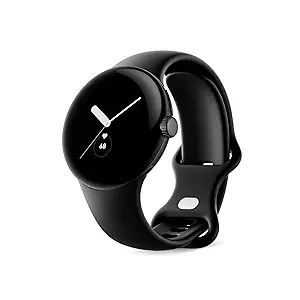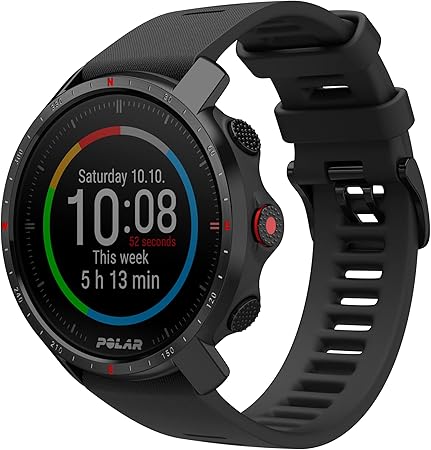







Google vs Polar: Overview
Comparing Google and Polar helps you determine which brand is best suited for your needs in Smart Watch. Both brands offer strong choices depending on your budget and key feature requirements.
Key Features & Comparison
Evaluate factors such as build quality, warranty, customer satisfaction, and total value before making your final purchase choice between Google and Polar.
Battery Life
When evaluating battery longevity, Google and Polar exist on opposite ends of the operational spectrum due to their divergent design philosophies. Google’s Pixel Watch lineup is engineered around a full-fledged, high-overhead operating system (Wear OS) driving vibrant, responsive AMOLED displays and constant background connectivity. Consequently, Google watches typically yield between 24 and 36 hours of battery life under normal operational conditions, necessitating a daily or nightly charging routine. While modern iterations feature rapid charging that can restore roughly 80% capacity in 45 minutes, heavy usage involving continuous GPS tracking and the always-on display significantly depletes the power cell, demanding careful power management from users who also wish to utilize continuous sleep tracking.
In stark contrast, Polar builds endurance-oriented sport watches optimized specifically for extended runtime in demanding athletic environments. Utilizing low-power proprietary operating systems paired with power-efficient memory-in-pixel (MIP) or intelligently modulated AMOLED panels, Polar devices such as the Grit X and Vantage series deliver battery lifespans measured in days rather than hours. Users routinely experience anywhere from 5 to 7 days in standard smartwatch mode with continuous optical heart rate monitoring, and between 30 to 40 hours of continuous, multi-band GPS training. Polar also integrates extensive power-saving profiles that adjust GPS ping rates and disable ancillary sensors, making them vastly superior tools for ultra-endurance athletes, multi-day trekkers, and users who prioritize charging autonomy over power-hungry multimedia features.
Build Quality & Durability
Google's hardware design prioritizes minimalist luxury and contemporary consumer aesthetics, yielding a device that transitions effortlessly into professional and casual social settings. The Pixel Watch features a distinctive, custom domed glass crystal that curves seamlessly into a recycled stainless steel or matte aluminum chassis. While this pebble-like contour is visually striking and ergonomically comfortable on smaller wrists, the prominent 3D glass edge is inherently susceptible to impacts, scratches, and lateral abrasions. Even with custom Corning Gorilla Glass formulations, the lack of a raised protective bezel makes it less suitable for rugged outdoor use or abrasive contact sports, positioning the device firmly within the urban lifestyle category.
Polar approaches build quality from an uncompromising, performance-first perspective, engineering devices designed to endure harsh environmental stress. Models like the Polar Grit X Pro and Vantage V3 are constructed according to military-grade durability standards (MIL-STD-810G/H), featuring ultra-strong aerospace titanium or stainless steel bezels designed to protect the display against blunt impacts. Polar frequently utilizes scratch-resistant sapphire crystal glass alongside extreme temperature, drop, and water resistance ratings up to 100 meters (10 ATM). The tactile, textured physical buttons on Polar watches are specifically engineered to provide immediate physical feedback even when operated with thick gloves or in heavy rain, standing in functional opposition to Google's sleek, touch-dominated design.
Health & Fitness Tracking
Google approaches health and fitness primarily through its deep integration with the Fitbit ecosystem, catering comprehensively to holistic lifestyle wellness, baseline health metrics, and motivational tracking. The Pixel Watch suite provides clinically oriented consumer metrics, including automated ECG assessments for atrial fibrillation detection, continuous cEDA (continuous electrodermal activity) monitoring for physiological stress tracking, and skin temperature sensors. Fitbit’s strength lies in translating complex physiological data into accessible metrics such as the Daily Readiness Score, Sleep Score, and Active Zone Minutes. However, deeper historical analytics and comprehensive trend reporting often require a premium recurring subscription, and the interface is optimized for general lifestyle wellness rather than high-performance athletic periodization.
Polar, conversely, is an industry-standard authority in precision sports science and physiological load management, offering an ecosystem entirely free of paywalls. Polar devices feature the Elixir biosensing technology or advanced Precision Prime sensor fusion, combining multi-wavelength optical channels with skin contact sensors to eliminate motion artifacts during high-intensity training. The platform provides elite-level analytical tools such as Training Load Pro, Recovery Pro, Orthostatic Tests, and Running/Cycling Performance Tests that evaluate cardiovascular strain and muscular exertion with scientific rigor. Polar’s ecosystem is purpose-built for athletes seeking actionable insights into VO2 max, running power directly from the wrist, and structural recovery, far outstripping Google’s more generalized fitness paradigms.
Smart Features & Connectivity
Google excels decisively in smart features and ecosystem connectivity, leveraging the comprehensive architecture of Wear OS to function as a direct extension of modern digital life. The Pixel Watch boasts rich, contextual Google Assistant integration, turn-by-turn navigation via Google Maps, seamless contactless payments through Google Wallet, and access to the vast Google Play Store library. Users can interact with rich, actionable notifications, reply via voice dictation or a fully functional on-screen QWERTY keyboard, control Google Home IoT devices, and stream audio independently via Spotify or YouTube Music over optional LTE connections. This deep platform synergy delivers a frictionless, standalone communication experience unmatched by specialized fitness trackers.
Polar intentionally minimizes smart functionality to preserve processing headroom, system stability, and battery life, restricting its connectivity suite to core essentials. Polar devices provide basic mirrored notifications from paired iOS or Android smartphones, music controls for media playing on the host phone, and localized weather forecasts, but they lack voice assistants, direct messaging capabilities, standalone cellular modules, and an independent application ecosystem. While Polar synchronizes cleanly with major athletic hubs like Strava, TrainingPeaks, and Komoot, it operates purely as an athletic instrument and passive notification display rather than an interactive wrist-worn computing platform, making it a utilitarian choice for athletes seeking minimal digital distractions.
Compare current retail pricing, active promotions, and verified stock availability directly from authorized stores: