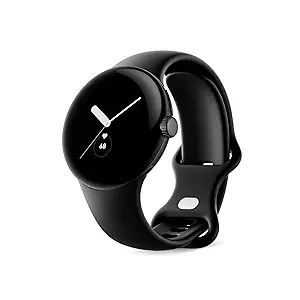






Google vs One Plus: Overview
Comparing Google and One Plus helps you determine which brand is best suited for your needs in Smart Watch. Both brands offer strong choices depending on your budget and key feature requirements.
Key Features & Comparison
Evaluate factors such as build quality, warranty, customer satisfaction, and total value before making your final purchase choice between Google and One Plus.
Battery Life
When comparing OnePlus and Google in power management, OnePlus holds an overwhelmingly superior position due to its innovative Dual-Engine Architecture. Devices like the OnePlus Watch 2 utilize two distinct processors running two operating systems side by side: a Qualcomm Snapdragon W5 paired with Wear OS for intensive tasks, and a low-power BES2700 co-processor running an RTOS for background tracking. This engineering feat allows OnePlus smartwatches to comfortably deliver up to 100 hours of continuous use in smart mode, and as much as 12 days in power-saver mode, while maintaining vital health metrics. Coupled with rapid VOOC Fast Charging that revitalizes days of power in less than an hour, OnePlus effectively eliminates the anxiety of frequent charging cycles.
Conversely, Google's Pixel Watch lineup has struggled to break past the standard single-day battery threshold. While the Pixel Watch 2 improved upon its predecessor by integrating the Snapdragon W5 chipset, it realistically delivers roughly 24 hours of operation with the Always-On Display active. Users frequently find themselves needing to incorporate daily charging routines—often before bed if sleep tracking is desired—to prevent mid-day shutdowns. Although Google has optimized background battery drain through Wear OS updates and utilizes magnetic fast charging, it remains tethered to a traditional high-power smartwatch cadence, trading prolonged endurance for compact design aesthetics and dense sensor processing.
Build Quality & Durability
In structural design and resilience, OnePlus adopts an expansive, rugged aesthetic crafted to endure physical impact. The brand relies on premium, industrial-grade materials such as cold-forged stainless steel chassis and 2.5D sapphire crystal faces that offer exceptional scratch resistance. Adhering to rigorous durability benchmarks, recent OnePlus watches feature 5ATM water resistance, an IP68 dust-and-water ingress rating, and MIL-STD-810H military certification. The physical styling is bolder and bulkier, which provides robust perimeter protection for the display against accidental scrapes and outdoor hazards, though it inherently demands a wrist size that can accommodate a larger case.
Google approaches build quality with an emphasis on minimalist, luxury-tier industrial design, centering on its signature dome-shaped form factor. The Pixel Watch series utilizes 100% recycled aerospace-grade aluminum to keep the chassis remarkably lightweight and sleek, paired with a custom custom-molded 3D Corning Gorilla Glass 5 display. While visually striking and seamless against the wrist, the exposed curved glass edge is considerably more vulnerable to direct impacts compared to OnePlus’s recessed sapphire crystal. Nonetheless, Google matches the 5ATM water resistance and IP68 rating, making it entirely suitable for swimming and everyday wear, prioritized for ergonomic comfort rather than heavy-duty outdoor endurance.
Health & Fitness Tracking
Google holds a decisive advantage in health and wellness analytics due to its deep, native integration of the Fitbit ecosystem. The Pixel Watch series leverages multi-path heart rate sensors, an electrical sensor for skin conductance (cEDA) to monitor body response and stress levels, and a dedicated skin temperature sensor. The underlying algorithmic sophistication acquired through Fitbit translates into industry-leading sleep stage breakdown, Daily Readiness scores, and advanced cardiac monitoring (including irregular heart rhythm notifications via ECG). Although some advanced historical insights are gated behind a Fitbit Premium subscription, the sheer depth and clinical precision of Google’s biometric data set a high standard for preventative wellness tracking.
OnePlus delivers a solid suite of fitness metrics driven by its proprietary OHealth platform, featuring continuous heart rate, SpO2 blood oxygen saturation monitoring, sleep architecture tracking, and specialized sports modes like dedicated tennis and running form evaluations. While the hardware sensors capture dependable real-time data for casual-to-moderate athletes, the software ecosystem lacks the mature analytical nuance found in Google's Fitbit algorithms. OnePlus presents detailed raw data and daily summaries without requiring a monthly subscription, but it does not yet offer advanced wellness features like FDA-cleared ECG analysis or systemic stress tracking via galvanic skin response, making it slightly more utilitarian in its health ambitions.
Smart Features & Connectivity
Smart features and software synergy represent Google's home turf, as the Pixel Watch acts as the flagship hardware reference for Google's Wear OS platform. The interface provides a frictionless user experience, rich with deep native integrations including Google Assistant voice controls, Google Maps navigation, Google Wallet contactless payments, and seamless smart home control via Google Home. Third-party application support through the Google Play Store is comprehensive and native, allowing for offline music playback, independent messaging, and rich notifications. For consumers embedded in the broader Android or Pixel ecosystem, Google's smart watch features deliver unmatched ambient intelligence and voice-driven productivity.
OnePlus matches the fundamental software capabilities by adopting full Wear OS, granting its users access to the same vast Google Play Store library, Google Wallet, and Google Maps. However, the dual-OS infrastructure means that certain smart operations transition between Wear OS and the lower-power RTOS to preserve battery, which can occasionally introduce slight latency in background notifications or app wake states. OnePlus has refined its implementation to ensure quick pairing with Android phones and functional synchronization, yet it lacks the polished, deeply integrated proprietary touches like Pixel Call Assist, camera remote controls tailored for Pixel phones, or dedicated LTE cellular variants, keeping it slightly behind Google in true standalone smart connectivity.