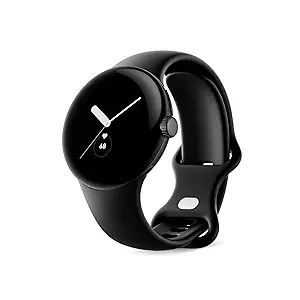
Google vs Huawei: Overview
Comparing Google and Huawei helps you determine which brand is best suited for your needs in Smart Watch. Both brands offer strong choices depending on your budget and key feature requirements.
Key Features & Comparison
Evaluate factors such as build quality, warranty, customer satisfaction, and total value before making your final purchase choice between Google and Huawei.
Battery Life
When examining energy efficiency, Huawei holds an undisputed, monumental advantage over Google. Huawei utilizes a highly optimized lightweight operating system (HarmonyOS) paired with dual-chipset architectures, enabling flagship models like the Watch GT and Watch Ultimate series to achieve between 7 to 14 days of typical usage on a single charge. Even with intensive biometric tracking, regular outdoor GPS workouts, and continuous sleep analysis enabled, users rarely need to reach for a charger more than once a week. This ultra-long endurance significantly reduces battery anxiety and preserves long-term battery cycle health, making Huawei wearables uniquely dependable for multi-day endurance events, international travel, and persistent habit tracking.
Conversely, Google's Pixel Watch line suffers from the typical constraints inherent to feature-rich Wear OS smartwatches, delivering roughly 24 to 36 hours of battery life under normal operational conditions. The computationally demanding operating system, continuous background processing for Assistant, and dynamic haptic feedback necessitate daily recharging sessions. While Google has iteratively improved charging speeds to minimize downtime, the need for a daily charging regimen remains an operational compromise. For consumers prioritizing continuous, uninterrupted data collection without the friction of frequent dock visits, Huawei completely outclasses Google's power management paradigm.
Build Quality & Durability
Huawei takes an uncompromised, horological approach to hardware design, frequently deploying materials traditionally reserved for high-end luxury mechanical timepieces. Premium Huawei models prominently feature aerospace-grade titanium cases, scratch-resistant sapphire crystal lenses, and high-tech ceramic rear covers. Models such as the Huawei Watch Ultimate push durability standards even further by incorporating amorphous zirconium-based liquid metal and achieving 100-meter water resistance ratings suitable for technical scuba diving. The resulting industrial aesthetic is robust, masculine, and remarkably resilient against abrasive outdoor environments, scratches, and high hydrostatic pressures.
Google embraces a radically different design philosophy, leaning into an organic, minimalist, and streamlined aesthetic characterized by its signature domed glass chassis and recycled aluminum housings. The seamless pebble shape of the Pixel Watch is refined and visually distinctive, but its edge-to-edge curved cover glass—despite utilizing custom Corning Gorilla Glass—inherently exposes more fragile surface area to lateral impacts and accidental wall scrapes. While Google provides a dependable 5 ATM water resistance rating and a comfortable, lightweight profile optimized for 24/7 wearability, Huawei's material choices provide superior structural integrity, scratch protection, and extreme-environment resilience.
Health & Fitness Tracking
Google leverages the deeply established algorithmic capabilities of its Fitbit integration to deliver exceptional holistic wellness, sleep architecture, and stress management insights. The Pixel Watch suite excels at longitudinal health analysis, utilizing multi-path heart rate sensors, continuous electrodermal activity (cEDA) tracking for stress detection, and clinically validated ECG capabilities. Fitbit's daily readiness metrics and comprehensive sleep stage tracking are among the most refined in the consumer technology sector. However, Google gatekeeps a notable portion of its deepest historical analytics and advanced sleep profiles behind the recurring Fitbit Premium subscription paywall, introducing long-term operational costs for dedicated data trackers.
Huawei counters with its proprietary TruSeen and TruSport biometric platforms, delivering exceptional sensor accuracy and a vast array of specialized athletic capabilities without any subscription fees. Huawei watches monitor continuous SpO2, arterial stiffness, skin temperature, and accurate real-time heart rate via multi-channel photodiode arrays. For athletes, Huawei's dual-frequency multi-constellation GNSS provides pinpoint route tracking, accompanied by advanced biomechanical metrics like running ability index (RAI), lactate threshold, and recovery analytics. While Google holds a slight qualitative edge in cognitive stress detection and sleep behavioral coaching, Huawei provides a more comprehensive, subscription-free athletic performance toolkit.
Smart Features & Connectivity
In the domain of true smartwatch capabilities and platform ecosystem synergy, Google completely outmaneuvers Huawei. Running full-fledged Wear OS, the Pixel Watch functions as an indispensable extension of the Android ecosystem, featuring deep native integration with Google Assistant, Google Maps turn-by-turn navigation, Google Wallet, Gmail, and Google Calendar. Users enjoy access to the extensive Google Play Store, which offers a rich catalog of standalone third-party applications, actionable and context-rich notifications, full voice-to-text messaging with smart dictation, and independent cellular LTE configurations that allow true tetherless operation.
Huawei's smart ecosystem, by contrast, is critically impaired by geopolitical trade restrictions and platform limitations, particularly for users outside of mainland China. While Huawei devices handle basic Bluetooth calls, music storage, and standard notification mirroring proficiently, interaction options are fundamentally restricted; users cannot natively dictate detailed replies to third-party messaging apps on iOS or most Android forks. The companion AppGallery repository offers a negligible selection of mainstream third-party software, and the absence of ubiquitous contactless payment support or rich voice assistant ecosystems significantly lowers Huawei's utility as a comprehensive, communicative wearable companion compared to Google's platform.