Google vs Honor: Overview
Comparing Google and Honor helps you determine which brand is best suited for your needs in Smart Watch. Both brands offer strong choices depending on your budget and key feature requirements.
Key Features & Comparison
Evaluate factors such as build quality, warranty, customer satisfaction, and total value before making your final purchase choice between Google and Honor.
Battery Life
When examining energy efficiency, Google and Honor represent fundamentally divergent philosophies in wearable architecture. Google's Pixel Watch lineup relies on a power-hungry operating system (Wear OS) driving a rich application ecosystem, continuous background syncs, and advanced machine learning algorithms. Despite iterative battery capacity increases and multi-chip architectures that delegate idle tasks to low-power co-processors, Google devices typically top out at 24 to 36 hours of active use with the Always-On Display engaged. This operational envelope demands a disciplined daily charging cadence, making multi-day tracking scenarios or continuous GPS endurance runs challenging without midday top-offs.
Conversely, Honor prioritizes extended autonomy by deploying proprietary, lightweight operating systems (such as MagicOS for solutions like the Honor Watch series) paired with highly optimized dual-core silicon. By aggressively managing screen refresh rates, throttling background processes, and utilizing RTOS foundations, Honor smartwatches comfortably achieve anywhere from 7 to 14 days of typical usage on a single charge. While this longevity comes at the expense of interactive third-party application execution, it presents an immense practical advantage for users who prioritize continuous sleep staging, frequent outdoor GPS logging, and freedom from nightly charging tethers.
Build Quality & Durability
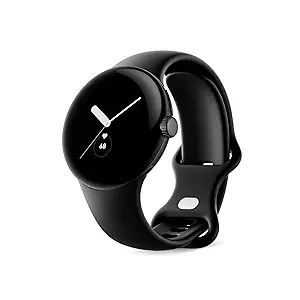
Google approaches smartwatch build quality with a minimalist, luxury-jewelry design language defined by its signature domed custom 3D Corning Gorilla Glass and recycled aluminum or stainless steel cases. The seamless tactile integration between the rotating crown and the curvilinear chassis reflects exceptional industrial precision. However, this aesthetic introduces clear durability vulnerabilities: the exposed, edge-to-edge curved glass perimeter lacks the impact protection of a raised bezel, leaving the display inherently susceptible to perimeter fractures and scuffs during accidental collisions, despite standard 50-meter (5 ATM) water resistance ratings.
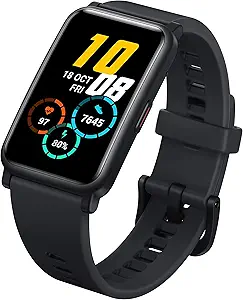
In contrast, Honor leans toward functional, sports-centric resilience and classical horological framing. Honor wearables frequently incorporate aviation-grade aluminum alloys, stainless steel, or composite fiber cases flanked by raised ceramic or metallic bezels that physically shield the AMOLED display from lateral impacts. Models in Honor's rugged categories often carry MIL-STD-810H certifications alongside 5 ATM water resistance, engineered specifically to endure thermal shocks, saltwater exposure, and abrasive outdoor conditions. While Honor's aesthetics may appear less avant-garde than Google's fluid pebble profile, the physical construction provides greater long-term durability against rigorous daily wear.
Health & Fitness Tracking
Google's health architecture is deeply anchored in Fitbit's clinically validated biosensor ecosystem, giving it a pronounced analytical edge. Utilizing advanced multi-path optical heart rate sensors, an electrical sensor for ECG readings, and continuous electrodermal activity (cEDA) tracking for stress detection, the Pixel Watch delivers elite-level data fidelity. Google excels particularly in contextual health metrics, translating complex heart rate variability (HRV), skin temperature deviations, and sleep architectures into actionable daily readiness and stress management scores, albeit sometimes gating advanced historical trends behind the Fitbit Premium subscription wall.
Honor delivers an exceptionally capable hardware-level fitness package through its proprietary TruSeen multi-channel PPG sensor modules, but its analytical ecosystem is more utility-focused. Honor smartwatches provide continuous SpO2 monitoring, resting heart rate logging, real-time recovery metrics, and dozens of sport-specific tracking profiles that feature integrated GNSS for precise standalone route tracking. While Honor's raw athletic tracking and VO2 max estimations are commendable, its sleep staging analysis and psychological stress algorithms lack the clinical depth and behavioral machine-learning nuances that define Google's Fitbit-powered health intelligence.
Smart Features & Connectivity
Smart features represent Google's definitive stronghold. Powered by Wear OS, the Pixel Watch functions as a legitimate micro-smartphone on the wrist, offering deep integration with the Google ecosystem, including Google Assistant, Maps turn-by-turn navigation, Google Wallet (NFC), and native Gmail/Calendar interactions. Users benefit from rich, actionable notifications with full on-screen keyboard dictation, autonomous LTE configurations, and access to the vast Google Play Store for third-party utilities like Spotify, Strava, and smart home controls, delivering unmatched wrist-based productivity.
Honor takes a pragmatic, streamlined approach to connectivity that favors core utility over application-layer extensibility. While Honor devices reliably handle incoming call management via integrated Bluetooth microphones and speakers, display mirrored notifications, and support basic offline music storage and camera remote triggering, they operate largely as closed systems. The lack of an expansive third-party app marketplace, absence of interactive text-reply capabilities on iOS (and limited on Android), and restricted NFC payment regional support make Honor far more of a sophisticated fitness-focused digital companion than a true standalone smart device.
Compare current retail pricing, active promotions, and verified stock availability directly from authorized stores: