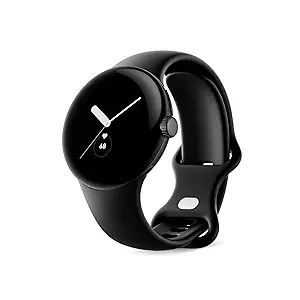
Google vs Amazfit: Overview
Comparing Google and Amazfit helps you determine which brand is best suited for your needs in Smart Watch. Both brands offer strong choices depending on your budget and key feature requirements.
Key Features & Comparison
Evaluate factors such as build quality, warranty, customer satisfaction, and total value before making your final purchase choice between Google and Amazfit.
Battery Life
When examining battery endurance, Google and Amazfit operate on fundamentally different engineering philosophies, leading to starkly contrasting user experiences. Google’s Pixel Watch lineup is engineered around a resource-heavy architecture running Wear OS, which prioritizes complex background computing, vibrant fluid animations, and real-time sensor processing. Consequently, Google watches typically provide around 24 to 36 hours of battery life per charge, necessitating daily charging habits akin to a smartphone. While recent iterations have optimized power consumption through co-processor offloading and improved fast charging—allowing users to reach roughly 80% capacity in under an hour—the fundamental constraint of an active operating system leaves power users vulnerable to battery anxiety during continuous multi-day use or extended GPS tracking.
Conversely, Amazfit has built its reputation on exceptional battery longevity by employing proprietary, low-power microcontrollers and a lightweight operating system known as Zepp OS. Models like the Amazfit Balance or T-Rex series effortlessly deliver anywhere from 7 to 24 days of real-world operational life on a single charge, depending on display settings and sensor polling frequencies. Even under heavy GPS usage or continuous continuous bio-tracking scenarios, an Amazfit device can endure weekend-long expeditions without requiring a proprietary magnetic puck. The practical trade-off for consumers lies between Google’s true smartwatch ecosystem requiring daily power management versus Amazfit’s ‘charge-and-forget’ utility that trades intricate background processing for remarkable independence from the outlet.
Build Quality & Durability
Google emphasizes minimalist, jewelry-inspired industrial design, utilizing a distinctive domed aesthetic that seamlessly blends glass and recycled metals. The Pixel Watch series features custom 3D Corning Gorilla Glass that curves smoothly into a polished stainless steel or recycled aluminum chassis. This seamless contouring results in an exceptionally sleek, lightweight, and modern wrist presence that transitions effortlessly from the gym to formal environments. However, the prominent exposed glass dome presents an inherent vulnerability; despite protective coatings, it lacks the raised defensive bezels found on traditional outdoor timepieces, making it more prone to edge impacts and surface scuffing during rugged activities, despite its reliable 5 ATM water resistance rating.
Amazfit embraces a much wider spectrum of construction methodologies, heavily catering to both mainstream aesthetics and extreme outdoor resilience. While their lifestyle models, such as the GTR or Balance series, feature sleek aluminum alloy frames with sapphire glass options, their ruggedized lines, notably the T-Rex family, boast military-grade certifications (MIL-STD-810G). These outdoor-focused units integrate polymer-reinforced bezels, stainless steel bridge guards, and 10 ATM water resistance ratings engineered to withstand extreme thermal fluctuations, shock, and deep moisture exposure. While Google delivers superior refinement and refined haptics that feel like luxury consumer tech, Amazfit offers superior structural defense and materials diversity better suited for severe physical wear and demanding environmental conditions.
Health & Fitness Tracking
Google approaches health monitoring through the deep integration of Fitbit’s enterprise-grade algorithms and clinical-level research. Equipped with multi-path optical heart rate sensors, continuous electrodermal activity (cEDA) monitors for stress tracking, and an ECG sensor, Google provides precise physiological insights with exceptional heart rate accuracy during high-intensity interval training. The integration with Fitbit’s software infrastructure translates raw telemetry into accessible consumer metrics like Daily Readiness Scores, deep sleep stage breakdowns, and stress management notifications. The primary trade-off, however, lies in Google's monetization model; extracting the full utility of these analytics often requires an ongoing Fitbit Premium subscription, gating deeper retrospective trend analysis behind a paywall.
Amazfit counters this with its proprietary BioTracker PPG optical sensor suite and the Zepp ecosystem, delivering an expansive array of health metrics without recurring subscription fees. Amazfit devices monitor blood oxygen saturation, heart rate variability, skin temperature, and sleep metrics, aggregating them into a simplified PAI (Personal Activity Intelligence) score alongside athletic readiness assessments. For fitness enthusiasts, Amazfit’s dual-band circularly polarized GPS antenna system offers class-leading tracking precision in dense urban or forest canopies, often outperforming Google’s standard GPS arrays. While Amazfit offers broader out-of-the-box sport modes and raw metric accessibility, Google still holds an edge in clinical-grade algorithmic interpretation, third-party medical accuracy validation, and nuanced sleep architecture analysis.
Smart Features & Connectivity
In the realm of smart functionality, Google stands in a superior tier of capability and software maturity thanks to Wear OS and native integration with the broader Google ecosystem. Users have direct access to the Google Play Store, enabling downloads of an expansive third-party application catalog ranging from Spotify and Strava to WhatsApp and YouTube Music. The watch functions as a fully realized digital assistant powered by Google Assistant, offering natural-language interactions, home automation control via Google Home, turn-by-turn navigation through Google Maps, and seamless tap-to-pay convenience using Google Wallet. Supported by rich notification responses featuring full interactive keyboards and optional LTE standalone connectivity, Google provides an uncompromised wrist-computing experience.
Amazfit’s Zepp OS, while fast and remarkably battery-efficient, operates as an RTOS-style (Real-Time Operating System) platform with distinct functional boundaries. It handles essential smart tasks reliably, such as mirroring notifications, offering basic canned responses on Android, and delivering local weather or event alerts. Higher-end models incorporate offline voice commands and integrated Amazon Alexa, alongside Bluetooth call capabilities and limited mini-app support via the Zepp store. However, the third-party ecosystem remains rudimentary, mobile payment solutions are constrained by regional banking partnerships, and the interactive depth of notifications is substantially narrower. Consequently, while Amazfit satisfies pragmatic utility, Google offers an interconnected, highly interactive smartwatch experience that can truly substitute for a smartphone in numerous daily workflows.
Compare current retail pricing, active promotions, and verified stock availability directly from authorized stores: