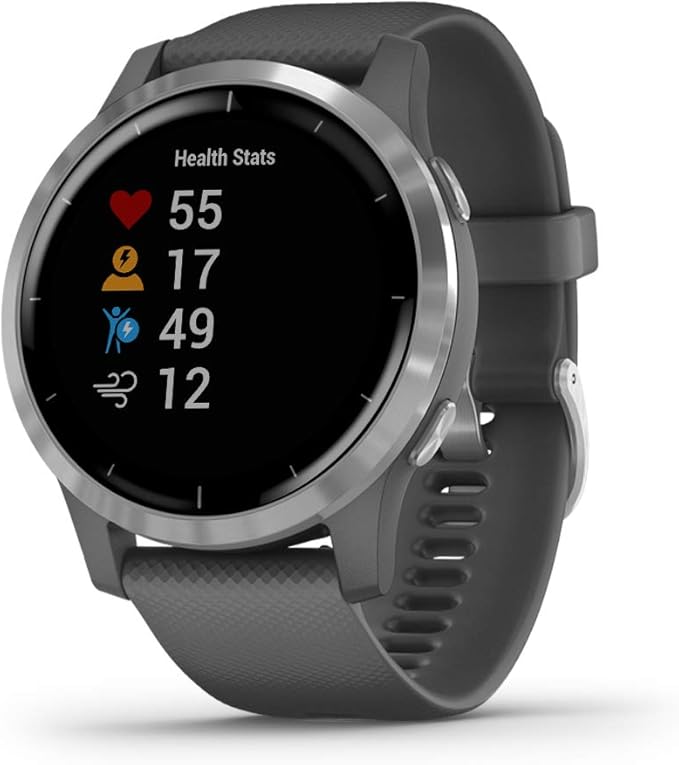
Garmin vs Withings: Overview
Comparing Garmin and Withings helps you determine which brand is best suited for your needs in Smart Watch. Both brands offer strong choices depending on your budget and key feature requirements.
Key Features & Comparison
Evaluate factors such as build quality, warranty, customer satisfaction, and total value before making your final purchase choice between Garmin and Withings.
Battery Life
Garmin watches are engineered to provide expansive endurance tailored to demanding athletic pursuits and continuous outdoor activity. Across its portfolio—from the high-performance Fenix and Enduro series to the lifestyle-oriented Venu lineup—Garmin achieves battery life that scales from several days to multiple weeks or even months when utilizing solar-charging variants like Power Glass. The underlying engineering balances transflective memory-in-pixel (MIP) or efficiently managed AMOLED displays with high-capacity lithium-ion cells and sophisticated power management profiles. Users can granularly adjust GPS polling rates, sensor frequencies, and display timeouts to stretch battery performance through multi-day expeditions, making Garmin a benchmark for uncompromised runtime under heavy telemetry loads.
Withings approaches battery longevity from an entirely different design philosophy, leaning on the inherent energy efficiency of hybrid smartwatch architecture. By pairing traditional mechanical hands with minimalist monochrome OLED or E-Ink sub-dials, models such as the ScanWatch 2 and Horizon achieve typical runtimes of 30 days on a single charge, followed by an additional reserve mode providing roughly 20 days of basic timekeeping and step tracking. Because Withings offloads real-time GPS processing to a connected smartphone, its watches bypass the high-drain satellite radios that deplete conventional smartwatches. For consumers seeking a set-and-forget wearable requiring monthly rather than weekly or daily charging routines, Withings offers a clear advantage, albeit at the expense of continuous high-power display usage.
Build Quality & Durability
Garmin devices are constructed with ruggedness, environmental resistance, and field survival as primary criteria. Higher-end models incorporate fiber-reinforced polymer chassis complemented by forged titanium bezels, diamond-like carbon (DLC) coatings, and scratch-resistant sapphire crystal lenses. Many of its tactical and adventure references conform to MIL-STD-810 military specifications for thermal shock, operational drop resilience, and ingress resistance, alongside water ratings scaling from 5 ATM up to 10 ATM (100 meters) or dive-grade 100-meter ratings on the Descent line. The industrial design prioritizes tactile physical pushers that ensure positive mechanical feedback through thick gloves or subaquatic conditions, sacrificing minimalist aesthetics in favor of maximum environmental durability.
Withings adopts an horological approach rooted in traditional Swiss watchmaking cues, emphasizing understated luxury and executive presentation over backcountry ruggedness. Devices like the ScanWatch Horizon and Nova feature premium marine-grade 316L stainless steel cases, fluted rotating bezels, and flat sapphire glass crystals with anti-reflective treatments. Water resistance typically tops out at 5 ATM or 10 ATM, making them fully capable of handling swimming and showering, though they lack the shock-dampening polymer buffers and reinforced bezel guards seen on adventure-grade tool watches. Withings excels in executive and formal environments where polished stainless steel or brushed metal links are preferred, trading high-impact outdoor impact resistance for timeless, scratch-resistant elegance.
Health & Fitness Tracking
Garmin represents the gold standard in granular athletic performance analytics, physiological stress monitoring, and dynamic training adaptation. Utilizing its proprietary Elevate optical sensor array, Garmin delivers continuous heart rate, pulse oximetry, HRV Status, Vo2 max estimation, and recovery metrics. Its Firstbeat analytics engine computes complex metrics such as Body Battery, Training Readiness, Hill Score, and real-time stamina tracking, which synthesize sleep architecture, recovery trends, and acute training loads. Furthermore, Garmin natively includes multi-band GNSS for independent, centimeter-level spatial tracking, comprehensive running dynamics, power meter interoperability, and custom workout structures, making it unmatched for athletes seeking performance optimization.
Withings focuses its engineering on preventive, clinically validated consumer wellness and medical diagnostic tracking rather than elite athletic performance. Its optical sensor clusters integrate FDA-cleared and CE-certified medical features, including on-demand medical-grade electrocardiograms (ECGs) to detect atrial fibrillation, continuous temperature monitoring via the TempTech24/7 module to detect early illness onset, and vascular age assessments. While Withings tracks everyday fitness activities, sleep apnea patterns, and heart rate trends effectively, it relies on connected GPS and lacks the deep anaerobic threshold, pacing, and multi-sport transition capabilities of Garmin. Withings is optimized for holistic health tracking and proactive health management, appealing to health-conscious users rather than endurance-driven athletes.
Smart Features & Connectivity
Garmin smartwatches function as feature-rich standalone peripherals with a broad spectrum of digital conveniences and multi-platform platform compatibility. Most mid-to-high tier Garmin models support onboard music storage with offline caching for Spotify, Deezer, and Amazon Music, alongside Garmin Pay for contactless NFC transactions. The Garmin Connect IQ store provides a vast repository of third-party apps, custom data fields, and watch faces. Additionally, Garmin devices offer robust satellite connectivity options via integration with inReach satellite communicators, detailed topo mapping on the wrist, and incident detection that automatically transmits live coordinates during outdoor accidents, though voice-assistant integration and voice calls remain restricted to select models like the Venu 3.
Withings delivers a deliberately restrained smart experience designed to prevent notification fatigue while maintaining seamless integration with iOS and Android. Notification handling is limited to scrolling text across the tiny embedded sub-display, which alerts the wearer to incoming calls, messages, and calendar entries without facilitating interactive responses or onboard application execution. There is no local music storage, third-party app ecosystem, or contactless payment architecture built into the platform. Instead, Withings pours its connectivity engineering into frictionless data synchronization with Apple Health, Google Health Connect, and its companion Withings app, serving consumers who desire a distraction-free analog watch face paired with quiet, background telemetry collection.
Compare current retail pricing, active promotions, and verified stock availability directly from authorized stores: