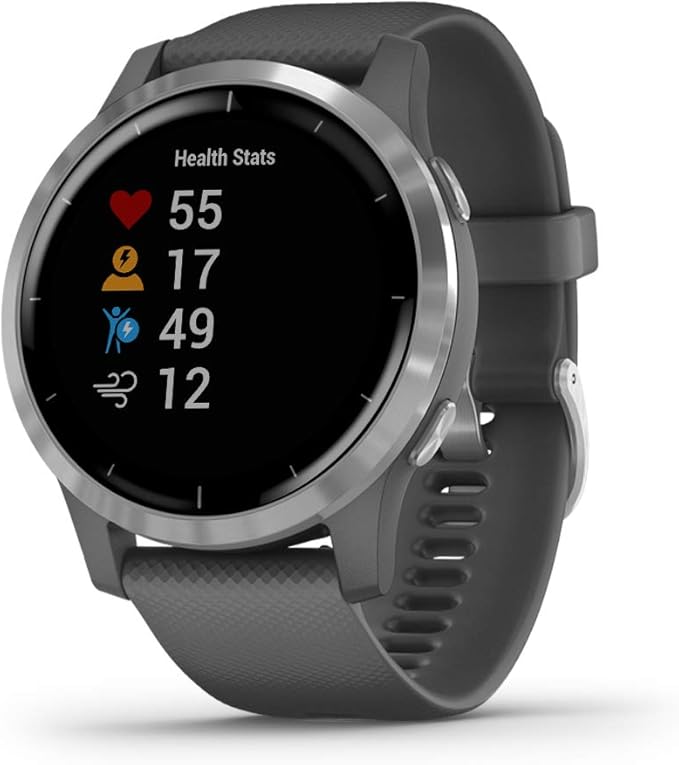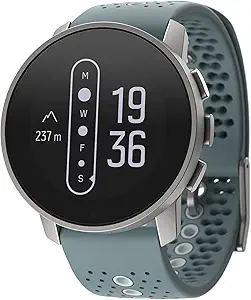






Garmin vs SUUNTO: Overview
Comparing Garmin and SUUNTO helps you determine which brand is best suited for your needs in Smart Watch. Both brands offer strong choices depending on your budget and key feature requirements.
Key Features & Comparison
Evaluate factors such as build quality, warranty, customer satisfaction, and total value before making your final purchase choice between Garmin and SUUNTO.
Battery Life
Garmin sets the benchmark for endurance in the GPS smartwatch sector by leveraging proprietary Power Glass solar charging technology, memory-in-pixel (MIP) transflective displays, and finely tuned power management architectures. Flagship models such as the Enduro 3 and Fenix 8 provide multi-week longevity in smartwatch mode and extend continuous GPS tracking beyond 100 hours without solar supplementation, reaching well past 200 hours in optimal sunlight. Garmin gives users granular telemetry control via customizable Power Manager profiles, enabling the disabling of specific sensors, satellite bands (switching between dual-frequency and standard GPS), and display refresh rates to maximize operational uptime during multi-day expeditions.
Suunto takes a distinct architectural approach, prioritizing intelligent battery modes and minimalist software overhead to achieve impressive longevity. Models like the Suunto Vertical and Suunto Race deliver exceptional performance, with the Vertical offering robust solar-assisted tracking that challenges Garmin's top tier, clocking up to 85 continuous hours of dual-band GNSS tracking. Suunto's intelligent battery algorithms predict remaining capacity and prompt the user to switch profiles mid-activity if reserve levels deplete faster than expected. While Garmin leads in pure flexibility and passive solar-harvesting efficiency across a wider breadth of devices, Suunto excels at providing reliable, ultra-marathon-ready stamina with straightforward, set-and-forget power presets.
Build Quality & Durability
Suunto has long cultivated a reputation for uncompromising industrial design rooted in Nordic minimalism and extreme-environment reliability. The brand emphasizes structural rigidity, utilizing grade-5 titanium or surgical-grade stainless steel bezels married to fiber-reinforced polyamide cases, sapphire crystal lenses, and tactile mechanical pushers engineered for use with heavy winter gloves. Built in Finland using 100% renewable energy, devices like the Suunto 9 Peak Pro and Vertical are tested to rigorous military standards (MIL-STD-810H) and boast true 100-meter water resistance. Suunto's aesthetic leans toward sleek, low-profile silhouettes that integrate seamlessly into both alpine conditions and professional settings without sacrificing thermal or impact resistance.
Garmin engineers its outdoor wearables with a ruggedized, utilitarian ethos that prioritizes field survivability and modular serviceability. Models within the Fenix, Epix, and Instinct ecosystems feature exposed Torx screws, deeply recessed displays, and robust DLC (Diamond-Like Carbon) coatings on titanium bezels to resist harsh abrasion. While standard Garmin models conform to 100-meter water resistance ratings, specialized variants like the Descent line offer certified diving depth ratings with sealed inductive buttons. Garmin cases tend to be slightly bulkier and more aggressive in design compared to Suunto's streamlined forms, but they offer unparalleled structural shock absorption and proven resilience across deserts, peaks, and open oceans.
Health & Fitness Tracking
Garmin dominates the analytical health and physiological modeling space through its proprietary integration of Firstbeat Analytics algorithms alongside the Elevate Gen 5 optical heart rate sensor array. Garmin's metrics—including Body Battery, Training Readiness, HRV Status, Real-Time Stamina, and Sleep Score—synthesize multi-day recovery indicators, ambient temperature, altitude acclimatization, and chronic training loads. This gives athletes an intricate, highly predictive roadmap of their systemic fatigue and potential output. The sheer breadth of sport-specific profiles, structured training programs, and onboard metrics like running power and cadence estimation makes Garmin an all-in-one physiological laboratory on the wrist.
Suunto approaches training and recovery from a classic endurance coaching perspective, utilizing an open training management system heavily aligned with TrainingPeaks metrics like Normalized Power, Intensity Factor, and Training Stress Score (TSS). The Suunto App visualizes progressive overload, recovery trends, and autonomic nervous system status via overnight HRV tracking without overwhelming the athlete with gamified interpretations. While Suunto's optical heart rate sensing has historically lagged slightly behind Garmin's latest dual-sensor configurations in high-cadence or erratic-movement activities, Suunto compensates with highly responsive GNSS pacing, clean graphical data fields, and distraction-free readouts that focus strictly on athletic progression and recovery balance.
Smart Features & Connectivity
Garmin operates as a mature hybrid between an athletic tool and a modern connected smartwatch, offering an extensive ecosystem that outclasses traditional sports instrument manufacturers. Garmin devices support contactless payments via Garmin Pay, offline music storage with direct synchronization for Spotify, Deezer, and Amazon Music, and two-way voice integration on select models via integrated microphones and speakers. Furthermore, Garmin's Connect IQ app store allows third-party developers to deploy custom data fields, complex mapping widgets, and connected lifestyle tools, while seamless ANT+ and Bluetooth Smart multi-device pairing allows concurrent connection to power meters, smart trainers, and heart rate straps.
Suunto purposefully maintains a restrained, focused smart feature portfolio to minimize distractions and preserve core operating system efficiency. The brand delivers core connected conveniences such as rich smartphone notifications, incoming call alerts, media playback controls for paired phones, and integration with the SuuntoPlus ecosystem. SuuntoPlus provides specialized micro-apps that inject targeted race-day utilities, nutrition reminders, and sport-specific algorithmic tools directly into workout screens. However, Suunto eschews onboard music storage, NFC payments, and open communication hardware like speakers. The platform relies on clean, high-bandwidth Bluetooth synchronization with mobile devices and third-party services like Strava, catering specifically to users who prioritize wilderness functionality over urban smartwatch amenities.