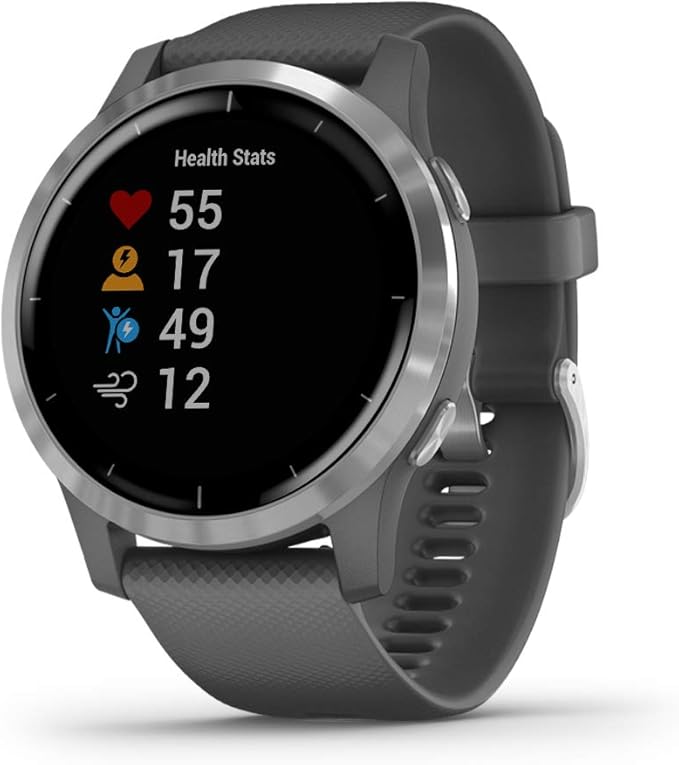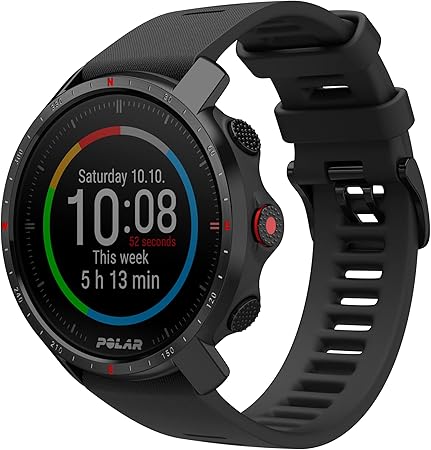






Garmin vs Polar: Overview
Comparing Garmin and Polar helps you determine which brand is best suited for your needs in Smart Watch. Both brands offer strong choices depending on your budget and key feature requirements.
Key Features & Comparison
Evaluate factors such as build quality, warranty, customer satisfaction, and total value before making your final purchase choice between Garmin and Polar.
Battery Life
Garmin is widely regarded as an industry benchmark for endurance, utilizing highly optimized, low-power proprietary operating systems combined with advanced power management profiles. Across its broad portfolio—from the MIP-display Fenix and Enduro lines to the AMOLED Epix and Forerunner models—Garmin devices routinely deliver exceptional longevity. Flagship ultra-endurance models can run for several weeks in smartwatch mode and offer up to 150 hours of continuous multi-band GPS tracking, augmented significantly by Power Glass solar charging technology. This allows endurance athletes and backcountry adventurers to undertake multi-day expeditions without carrying dedicated power banks, with granular battery saver modes that let users toggle individual sensors to maximize remaining runtime.
Polar takes a more conservative approach to battery engineering, prioritizing lightweight designs that support standard endurance training cycles rather than extreme multi-day expeditions. Devices like the Polar Vantage and Grit X series deliver respectable numbers, typically offering up to 40 to 60 hours of continuous training with standard GPS and optical heart rate monitoring, and roughly five to seven days in regular smartwatch mode. While Polar provides valuable power-saving settings—such as adjusting GPS recording intervals and disabling continuous HR tracking during activities—it lacks the advanced solar harvesting capabilities and hyper-granular sensor control found in high-end Garmin units. For daily training routines and typical marathon preparation, Polar’s battery performance is more than sufficient, but Garmin remains the superior choice for sustained, off-grid use.
Build Quality & Durability
Garmin engineers its hardware with an aggressive focus on rugged survivability, particularly in its outdoor and multisport segments. Flagship series incorporate premium materials including fiber-reinforced polymer chassis, forged titanium bezels, diamond-like carbon (DLC) coatings, and scratch-resistant sapphire crystal lenses. The physical architecture is validated against rigorous military standards (MIL-STD-810G) for thermal, shock, and water resistance, often featuring 10 ATM (100 meters) water ratings suitable for high-speed watersports and recreational diving. The knurled physical buttons provide positive tactile feedback under heavy sweat or while wearing thick gloves, ensuring dependable mechanical operation when capacitive touchscreens fail in wet environments.
Polar emphasizes a streamlined, minimalist Nordic design language that prioritizes ergonomics and low wrist weight over tank-like bulk. Even Polar's most rugged outdoor watch, the Grit X Pro, utilizes aerospace-grade titanium or stainless steel bezels paired with sapphire glass, passing MIL-STD-810H durability standards while maintaining a noticeably lighter profile on the wrist than an equivalent Garmin Fenix. This lower-mass design directly improves optical sensor contact during rapid, ballistic movements by reducing watch bounce. However, Polar devices generally top out at a 100-meter water resistance rating and often feel less impervious to extreme mechanical impacts than Garmin's heavily armored bezels, striking a balance optimized for aerodynamic athletic performance rather than severe wilderness abuse.
Health & Fitness Tracking
Garmin provides a vast, data-rich ecosystem that translates raw physiological metrics into actionable readiness and training guidance. Utilizing its Elevate optical sensor array and Firstbeat Analytics algorithms, Garmin measures Heart Rate Variability (HRV), blood oxygen saturation, respiration, and sleep architecture to produce metrics like Body Battery, Training Status, and Training Readiness. Its strength lies in sheer analytical breadth, offering native wrist-based running power, real-time stamina tracking during efforts, and comprehensive sport-specific profiles ranging from track running to backcountry skiing. However, Garmin's dense matrix of metrics can sometimes feel overwhelming, occasionally presenting disparate numbers that require user interpretation to establish a clear recovery plan.
Polar approaches health and fitness tracking through a deeply scientific, physiological lens that is universally respected by sports scientists and elite coaches. Polar's Precision Prime sensor technology—combining optical channels with bio-impedance skin-contact sensors—is renowned for minimizing motion artifacts and delivering exceptionally accurate heart rate data. The platform differentiates itself through recovery algorithms like Nightly Recharge and Sleep Plus Stages, which evaluate autonomic nervous system (ANS) recovery alongside sleep quality to provide precise training recommendations via FitSpark. Polar’s Training Load Pro and Recovery Pro avoid arbitrary gamification, focusing instead on cardio and muscle load metrics that help prevent overtraining. While Polar supports fewer niche sports than Garmin, its core physiological data interpretation is remarkably cohesive and research-backed.
Smart Features & Connectivity
Garmin bridges the gap between dedicated sports tool and functional smartwatch with considerable success. It incorporates independent offline music storage compatible with Spotify, Deezer, and Amazon Music, alongside Garmin Pay for contactless NFC transactions. The Garmin Connect IQ app store allows users to install third-party watch faces, data fields, and micro-apps, while high-end models feature full-color, routable onboard topographic mapping directly on the wrist without requiring a phone tether. Connectivity across ANT+, Bluetooth Low Energy (BLE), and Wi-Fi ensures instantaneous workout uploads and flawless pairing with power meters, chest straps, smart trainers, and cycling radars like the Garmin Varia.
Polar deliberately restricts its smart feature implementation, maintaining a steadfast focus on pure training analytics. Modern Polar models provide foundational smartwatch conveniences—such as push notifications, basic weather forecasts, and music playback controls for a paired smartphone—but generally lack onboard music storage, NFC contactless payment hardware, and an open third-party application store. Onboard mapping has only recently been introduced on flagship units via breadcrumb trails or offline vector maps, lacking the rich, standalone POI database and turn-by-turn routing recalculation native to Garmin. While Polar reliably pairs with external sensors and cycling power meters via Bluetooth, it has historically eschewed native ANT+ integration on its wrist units, making its connected ecosystem noticeably leaner and more dependent on a nearby smartphone.
Compare current retail pricing, active promotions, and verified stock availability directly from authorized stores: