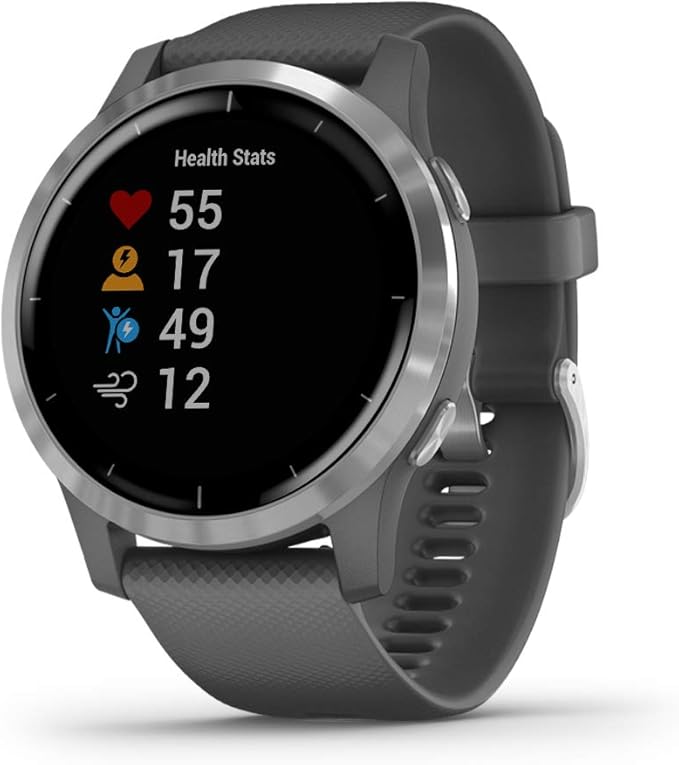
Garmin vs Motorola: Overview
Comparing Garmin and Motorola helps you determine which brand is best suited for your needs in Smart Watch. Both brands offer strong choices depending on your budget and key feature requirements.
Key Features & Comparison
Evaluate factors such as build quality, warranty, customer satisfaction, and total value before making your final purchase choice between Garmin and Motorola.
Battery Life
Garmin represents the gold standard in wearable endurance, designing devices powered by specialized, power-efficient operating systems and reflective memory-in-pixel (MIP) or optimized AMOLED displays. Depending on the model, such as the Enduro, Fenix, or Instinct series, Garmin smartwatches routinely deliver battery life measured in weeks or even months rather than days, with select solar-charging variants offering virtually indefinite runtimes under the right conditions. Even in power-intensive multi-band GNSS tracking modes, Garmin watches can operate continuously from 20 to over 100 hours. This exceptional longevity stems from deliberate architectural choices: a lightweight proprietary OS, absence of power-hungry third-party app frameworks, and sophisticated power management profiles that allow users to toggle individual sensors to maximize field uptime.
In stark contrast, modern Motorola smartwatches, such as the Moto Watch 70, Moto Watch 100, and earlier Moto 360 lines, approach battery life from a budget-friendly lifestyle perspective. Current Moto Watch models run Moto Watch OS, a streamlined, proprietary real-time operating system that avoids the heavy drain of Google's Wear OS, netting roughly 7 to 14 days of typical usage on a single charge. While this is a respectable performance tier that easily outclasses standard Wear OS or watchOS devices, it cannot compete with Garmin's technical sophistication. Motorola relies on relatively basic sensor polling rates and standard lithium-ion capacities without advanced solar harvesting or granular sensor shut-off controls, making it adequate for casual weekly charging cycles but ill-suited for multi-day backcountry expeditions.
Build Quality & Durability
Garmin watches are engineered to endure extreme environmental conditions, frequently adhering to rigorous military standards (MIL-STD-810G) for thermal, shock, and water resistance. Across its premium lineups, Garmin incorporates high-grade materials including fiber-reinforced polymer cases, DLC (Diamond-Like Carbon) coated titanium bezels, and scratch-resistant sapphire crystal lenses. Water resistance ratings typically range from 5 ATM up to 10 ATM (100 meters), with dedicated diving models like the Descent reaching 20 ATM. The physical architecture prioritizes tactile, sealed mechanical buttons alongside or in place of touchscreens, ensuring flawless operation in freezing temperatures, heavy rain, or underwater environments where capacitive screens inevitably fail.
Motorola approaches build quality with an emphasis on urban aesthetics and cost-effective manufacturing rather than extreme ruggedness. Devices like the Moto Watch 100 utilize stamped aluminum alloy cases with standard tempered glass lenses and silicone bands, providing a sleek, modern profile suitable for office environments and light gym sessions. Durability ratings generally cap out at 5 ATM or basic IP67/IP68 ingress protection, which safeguards against casual swimming and daily splashes but lacks the structural reinforcement necessary for high-velocity water sports, rock climbing, or abrasive impacts. While Motorola delivers clean lines and impressive chassis refinement for its accessible price bracket, its materials lack the structural resilience and specialized engineering found throughout Garmin's catalog.
Health & Fitness Tracking
Garmin operates as an elite biomechanical tracking laboratory on the wrist, driven by proprietary Elevate optical sensor arrays, multi-band satellite networks, and deep first-party analytics acquired via Firstbeat Technologies. The platform offers unprecedented metrics, including heart rate variability (HRV) status, Body Battery energy monitoring, Training Readiness, VO2 max estimation adjusted for heat and altitude, lactate threshold tracking, and real-time stamina metrics. For athletic training, Garmin's ecosystem supports external ANT+ and Bluetooth chest straps, power meters, running dynamics pods, and cycling computers. The companion Garmin Connect app provides a desktop-class analytics platform that professional athletes and performance coaches rely on for structural periodization and performance optimization.
Motorola provides a far more consumer-level approach, prioritizing baseline wellness indicators over athletic micro-metrics. Modern Moto Watches cover essential biometrics: continuous heart rate monitoring, blood oxygen (SpO2) saturation, basic sleep stage tracking, and standard daily step counts, complemented by a modest selection of predefined workout tracking profiles. However, Motorola lacks the sophisticated algorithmic depth found in Garmin's suite; it does not calculate nuanced training load balances, physiological recovery demands, or advanced pacing strategies like PacePro. The Moto Watch companion app offers clean, easy-to-digest dashboards for casual users maintaining general fitness, but serious runners, triathletes, and data enthusiasts will quickly encounter the ceiling of its analytical capabilities.
Smart Features & Connectivity
Garmin balances smart functionality against its core performance mandate, offering a functional set of connected utilities through its Connect IQ ecosystem. Users gain access to offline music storage for Spotify, Deezer, and Amazon Music, Garmin Pay contactless payments, and mirrored smartphone notifications with quick-reply templates for Android users. Select specialized devices also feature integrated microphones and speakers for voice assistant passthrough or onboard LED flashlights. However, Garmin’s smart experience remains intentionally utilitarian; third-party app availability is heavily skewed toward data fields and fitness utilities rather than lifestyle applications, and the interface eschews fluid transit animations in favor of computational efficiency.
Motorola focuses on delivering mainstream daily conveniences, though its modern trajectory presents notable trade-offs. The legacy Moto 360 series excelled as a flagship Wear OS platform boasting rich Google Assistant integration, third-party apps, and fluid touch interactions, but modern Moto Watch OS devices operate on a much lighter framework. Today's Moto Watches provide rapid Bluetooth synchronization for media playback controls, phone call notifications, and basic weather reporting, but forfeit deep app ecosystems, native voice assistants, and NFC-based contactless payment solutions. While Motorola provides a seamless, clutter-free experience that integrates well with basic Android workflows, neither brand positions itself as a full Wear OS or Apple Watch alternative—Garmin excels through targeted performance utilities, whereas Motorola prioritizes essential, low-overhead lifestyle notifications.
Compare current retail pricing, active promotions, and verified stock availability directly from authorized stores: