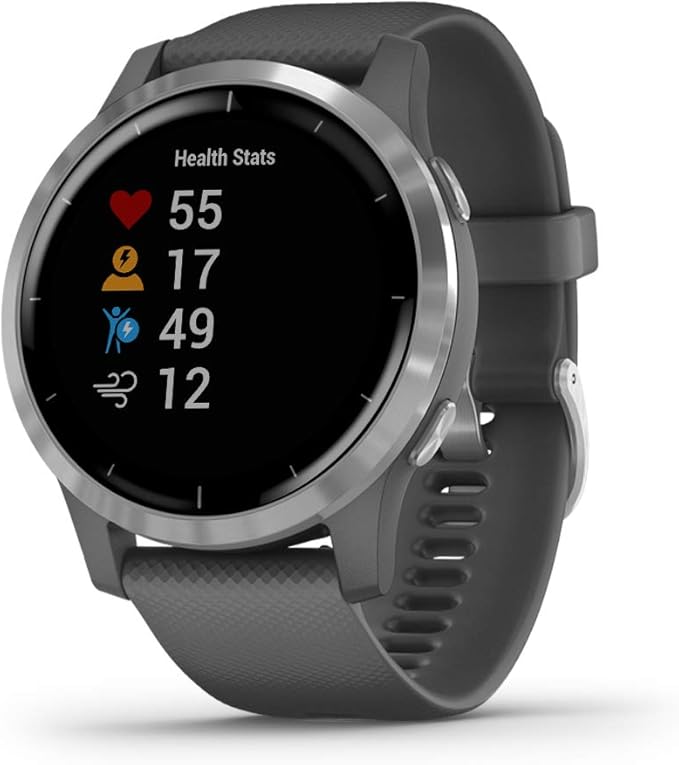





Garmin vs Mobvoi : Overview & Brand Philosophy
The smartwatch market presents a fascinating spectrum of design philosophies, best exemplified by the divergence between Garmin and Mobvoi. Garmin, an American-multinational pioneer founded on GPS navigation, has carved out an almost untouchable reputation in the athletic, outdoor, and endurance communities. Garmin views the smartwatch primarily as a dedicated, high-performance training tool and survivability instrument, engineering devices that prioritize exhaustive biometric telemetry, hardware resilience, and multi-week battery longevity over flashy lifestyle micro-interactions.
Conversely, Mobvoi, an innovative Chinese artificial intelligence company backed by Google, approaches wrist-wearable technology from a lifestyle and productivity perspective. Operating predominantly on Google's Wear OS platform with its flagship TicWatch lineup, Mobvoi excels at seamless smartphone extension, ambient computing, and software versatility. Mobvoi's core philosophy centers on bringing intuitive AI voice interactions, rich app ecosystems, and affordable dual-display innovation to everyday consumers seeking modern wrist-based convenience.
While both brands engineer devices capable of monitoring your heart rate, tracking runs, and delivering notifications, their target audiences rarely overlap directly. Garmin constructs mission-critical hardware designed to withstand ultramarathons, alpine ascents, and oceanic dives. Mobvoi constructs intelligent, urban-centric wrist computers optimized for checking emails, managing calendars, processing contactless payments, and maintaining digital connectivity on the go.
Key Differences & Technological Comparison
The most pronounced divergence between Garmin and Mobvoi lies in their operating systems and battery architectures. Mobvoi's flagship TicWatch devices utilize Wear OS, allowing users complete access to the Google Play Store, third-party apps like Spotify and Strava, and full notification reply capabilities with dynamic keyboards and Google Assistant. To mitigate the notorious battery drain of Wear OS, Mobvoi pioneered an ingenious Dual-Display technology, stacking an ultra-low-power FSTN liquid crystal screen atop an active AMOLED panel, stretching Wear OS battery life to an impressive 3 to 4 days.
Garmin rejects Wear OS entirely in favor of a proprietary, lightweight operating system. While Garmin devices sacrifice rich app interactions—interactive text replies are limited to Android users with static templates, and voice interaction is restricted to high-tier models—they gain an astronomical advantage in power management. Many Garmin models utilize Memory-in-Pixel (MIP) transflective displays that thrive in direct sunlight, and select models incorporate Power Glass solar charging, delivering battery runtimes ranging from 7 days on entry-level models to well over 30 days on rugged lines like the Enduro and Instinct series.
In terms of sensor technology and data interpretation, Garmin sits in an elite tier. Its Elevate optical heart rate sensors, multi-band GNSS with SatIQ technology, and proprietary metrics like Training Readiness, HRV Status, and Body Battery provide professional-grade physiological insights. Mobvoi leverages its proprietary TicHealth suite alongside Google Fit. While Mobvoi delivers competent continuous heart rate, SpO2, and sleep tracking, its algorithms are built for general wellness rather than prescriptive athletic recovery, periodized training, or granular biomechanical feedback.
Pros & Cons Comparison
Garmin
- Pros:
- Unmatched battery life, lasting anywhere from a week to well over a month depending on the model.
- Industry-leading GPS accuracy powered by multi-band GNSS and topographical offline mapping capabilities.
- Deep physiological insights including Training Load, VO2 Max, Recovery Advisor, and Body Battery.
- Exceptional build quality with titanium, sapphire, and fiber-reinforced polymer options built to military standards.
- Universal cross-platform parity, operating identically on both iOS and Android.
- Cons:
- High barrier to entry with premium models commanding significant price tags.
- Limited third-party smartwatch app ecosystem through the Garmin Connect IQ store.
- Clunky and constrained interactive notification management compared to true smart operating systems.
Mobvoi
- Pros:
- Rich Wear OS ecosystem offering direct access to the Google Play Store, Google Wallet, and third-party apps.
- Innovative Dual-Display technology that sets the benchmark for battery performance within the Wear OS market.
- Highly competitive pricing, providing premium features at an accessible mid-tier price point.
- Superior on-wrist communication with built-in speaker/mic hardware for answering calls and dictating messages.
- Cons:
- Inconsistent historical software support and delayed major Wear OS platform updates.
- Fitness and recovery algorithms lack the prescriptive depth demanded by serious athletes.
- Significantly reduced feature compatibility when paired with Apple's iOS ecosystem.
Performance, Durability & Value Analysis
From an endurance and lifecycle perspective, Garmin justifies its elevated price tag through exceptional longevity. Garmin watches routinely survive half a decade of extreme temperature swings, underwater pressures, and mechanical abrasions without software degradation or structural failure. Garmin also maintains support for legacy hardware through regular firmware updates and boasts a robust customer support infrastructure capable of hardware replacements. For an athlete, the cost-per-year breakdown makes Garmin a sound, low-depreciation investment.
Mobvoi presents exceptional up-front value for consumers seeking maximum smart functionality per dollar. A flagship TicWatch Pro generally costs less than half the price of a high-end Garmin Fenix or Forerunner 965 while offering a vastly richer interactive lifestyle experience. However, Mobvoi's long-term value is dampened by software update delays, such as prolonged waits for historical Wear OS versions, and materials that—while durable for urban use—do not match the ruggedized, adventure-grade construction of Garmin's high-tier portfolio.
Final Verdict: Which Brand Should You Choose?
Your choice between Garmin and Mobvoi boils down to a fundamental choice between a high-performance fitness instrument and a connected lifestyle wearable.
Choose Garmin if: You are a runner, cyclist, hiker, triathlete, or fitness enthusiast who prioritizes deep metric analysis, exceptional physical durability, and multi-week battery life. If you want an uncompromising tool that tracks your workouts with surgical precision, maps uncharted trails, and frees you from charging cables, Garmin is the undisputed champion.
Choose Mobvoi if: You are an Android user looking for an intelligent everyday companion that seamlessly handles texts, phone calls, calendar events, and streaming media via the Google Play Store. If you desire a fluid smartwatch experience with better battery life than standard Wear OS or Apple devices, and you want it at an accessible, budget-conscious price, Mobvoi is the smarter pick.
Battery Life
When evaluating battery architecture, Garmin and Mobvoi represent fundamentally different engineering philosophies within the smartwatch sector. Mobvoi, operating primarily in the Google Wear OS ecosystem, tackles power consumption through innovative hardware layering. Its flagship TicWatch Pro series utilizes an ingenious dual-display setup featuring a low-power, transflective FSTN LCD layered over a vibrant, high-drain OLED panel. This configuration allows Mobvoi watches to run a full, power-intensive smartwatch operating system while squeezing out a respectable 72 to 90 hours in "Smart Mode," or up to 45 days in an ultra-restricted "Essential Mode." However, this approach represents a compromise: users must tether themselves to battery-management profiles, and engaging active GPS tracking or standard full-color always-on display functionality quickly degrades the battery to roughly one to two days, placing a noticeable ceiling on high-intensity endurance.
In contrast, Garmin approaches battery longevity not as a mitigation strategy, but as the foundational pillar of its engineering. Rather than burdening its devices with a heavy third-party operating system, Garmin employs a proprietary, highly optimized, RTOS (Real-Time Operating System) that sips power conservatively. Consequently, Garmin’s standard lifestyle watches like the Venu series regularly achieve 5 to 10 days, while performance models such as the Forerunner, Fenix, and Enduro lines offer operating times ranging from two weeks to well over a month on a single charge. Garmin's technical dominance is further amplified by its specialized transflective Memory-in-Pixel (MIP) displays, industry-leading Power Glass solar-charging technology, and hyper-efficient multi-GNSS chipsets that allow for dozens to hundreds of continuous hours of satellite tracking—metrics Mobvoi simply cannot rival.
The practical trade-offs between the two brands come down to lifestyle versus mission-critical autonomy. Mobvoi engineered an exceptionally clever solution for the urban professional who demands rich app integration, Google Assistant capabilities, and cellular connectivity, accepting the reality of charging their device two to three times a week. Garmin, however, is the clear victor in raw endurance, technical resilience, and power efficiency, making it the undisputed choice for ultra-runners, outdoor adventurers, and consumers who view weekly or daily charging routines as a deal-breaker.
Build Quality & Durability
When evaluating build quality and structural durability, Mobvoi and Garmin cater to fundamentally different operational environments through their engineering choices. Mobvoi primarily designs with the urban, tech-centric lifestyle in mind, utilizing aerospace-grade aluminum alloys, stainless steel, and high-strength fiberglass-reinforced polycarbonate in its flagship TicWatch series. Recent iterations, such as the TicWatch Pro 5, feature MIL-STD-810H certification and Gorilla Glass display protection, successfully handling daily wear, minor impacts, and moisture with a 5 ATM water resistance rating. However, Mobvoi's engineering prioritizes sleek aesthetics and capacitive touch responsiveness, which leans closer to traditional luxury consumer electronics rather than hardened, survivalist field gear. The dual-layer display integration is a mechanical triumph for power efficiency, but the overall casing remains vulnerable to sustained, heavy-abrasion scenarios.
Conversely, Garmin represents the gold standard in ultra-rugged wearable architecture, particularly across its Fenix, Instinct, and Tactix ecosystems. Garmin’s design philosophy eschews mere consumer-grade elegance in favor of extreme endurance, employing premium materials such as DLC (Diamond-Like Carbon) coated titanium bezels, fiber-reinforced polymer chassis, and scratch-impervious Power Sapphire crystals. While Mobvoi settles for standard recreational resistance, Garmin watches routinely feature water ratings of 10 ATM (waterproof to 100 meters) or even dive-rated specifications exceeding 40 meters, reinforced with hermetically sealed physical push-buttons designed to withstand deep underwater actuation where touchscreens invariably fail. The thermal, shock, and scratch resistance engineered into Garmin hardware ensures survival in catastrophic sub-zero climes, desert heat, and violent impacts that would fracture or compromise a typical Mobvoi casing.
The practical trade-offs between the two brands ultimately center on operational intent versus wrist presence. Mobvoi offers a refined, lightweight build that seamlessly bridges the gap between office wear and moderate fitness tracking, delivering adequate durability for the everyday commuter at a considerably more accessible price point. The limitation, however, lies in its reliance on external touchscreen navigation and standard glass metallurgy that can scratch under aggressive rock or trail contact. Garmin’s mechanical trade-off is its inherent utilitarian bulk, heavier wrist mass, and premium price tag, but consumers receive near-indestructible tool-watch engineering designed to outlast multiple device release cycles. For extreme environments, multi-day backcountry survival, and heavy physical abuse, Garmin is comprehensively unmatched; for daily urban use with dependable baseline toughness, Mobvoi provides a pragmatic and well-constructed balance.
Health & Fitness Tracking
When evaluating health and fitness tracking, Garmin operates in an entirely different tier of engineering and data sophistication compared to Mobvoi. Garmin’s heritage is rooted in sports science and GPS navigation, which is evident in its cutting-edge Elevate optical heart rate sensors, multi-band GNSS tracking, and specialized Firstbeat analytics algorithms. Garmin watches offer an exhaustively detailed physiological ecosystem, measuring dynamic metrics such as Training Readiness, Heart Rate Variability (HRV) Status, VO2 Max, and anaerobic training effect with near-clinical precision. In contrast, Mobvoi approaches fitness from a consumer-smartwatch perspective with its TicWatch series. Utilizing its proprietary TicHealth suite alongside dual-display technology, Mobvoi covers standard baseline metrics including continuous heart rate, SpO2, sleep tracking, and basic stress detection, but it lacks the sports-specific depth, external sensor compatibility (like ANT+ chest straps or power meters), and biomechanical insight native to Garmin's platform.
The practical trade-offs between the two ecosystems hinge largely on the user's fitness aspirations versus their daily lifestyle demands. Garmin Connect stands as one of the most comprehensive and free-to-use fitness analytics platforms on the market, offering granular, post-workout data, sport-specific profiles ranging from ultra-running to open-water swimming, and proactive recovery metrics like the Body Battery. Mobvoi, while integrating well with the broader Wear OS ecosystem and Google Health Connect, delivers a more utilitarian tracking experience tailored to casual gym-goers and everyday step-trackers. Furthermore, Mobvoi has historically gated some advanced sleep and physiological insights behind a subscription model, which compares unfavorably to Garmin’s entirely paywall-free data architecture.
Ultimately, the technical division between these brands reflects their core identities. Mobvoi’s TicWatch lineup is best suited for the everyday user who desires an Android-centric smartwatch first, with health tracking serving as a competent secondary feature for general wellness and casual workouts. Conversely, Garmin is engineered for the dedicated athlete, outdoor adventurer, and data-driven enthusiast. With unmatched GPS accuracy, class-leading sensor fidelity, and an exhaustive suite of recovery and performance diagnostics, Garmin represents the gold standard in health and fitness tracking, vastly outperforming Mobvoi in both athletic depth and long-term utility.
Smart Features & Connectivity
When evaluating smart features and connectivity, Mobvoi and Garmin represent fundamentally different engineering philosophies, catering to distinct user priorities. Mobvoi’s flagship TicWatch series leverages Google’s Wear OS platform, positioning its devices as genuine extensions of the modern smartphone. Equipped with robust Qualcomm Snapdragon chipsets and dual-display architecture, Mobvoi watches excel in interactive smart functionality. Users gain access to the extensive Google Play ecosystem, allowing direct installation of third-party applications like Spotify, Strava, and WhatsApp. Furthermore, Mobvoi delivers advanced communication features, including full QWERTY keyboard input, voice-to-text dictation driven by Google Assistant, and LTE cellular configurations on select models that allow for complete phone untethering. Contactless transactions are seamlessly handled via Google Wallet with broad banking support, making Mobvoi an exceptionally versatile, daily companion for users deeply integrated into the Android framework.
In contrast, Garmin approaches smart features through a proprietary, low-overhead operating system engineered to prioritize battery longevity and mission-critical reliability over interactive computational power. Garmin devices—spanning from the lifestyle-oriented Venu series to the outdoor-focused Fenix and Forerunner lines—provide a more curated suite of smart features. Notifications are largely passive; while Android users can respond using customizable preset text templates, iOS users are limited to read-only alerts, and voice capabilities are restricted to a select few models (such as the Venu 3) that bridge directly to your phone's native assistant via an onboard microphone and speaker. For mobile payments, Garmin Pay utilizes a secure tokenization system, though its banking institution support is noticeably narrower than Google Wallet. Where Garmin maintains a distinct connectivity strength is in external peripheral integration: its watches boast dual ANT+ and Bluetooth Low Energy (BLE) channels, allowing seamless pairing with external cycling power meters, heart rate chest straps, radar sensors, and specialized satellite communicators like the Garmin inReach.
The practical trade-off between the two brands hinges on the balance between interactive versatility and autonomous utility. Mobvoi delivers a rich, connected smartwatch experience comparable to the Apple Watch or Samsung Galaxy Watch, but this comes at the expense of energy efficiency and iOS feature parity, as Wear OS provides a compromised experience for iPhone users. Garmin sacrifices the deep notification actionability, rich third-party app ecosystem, and standalone LTE independence seen in Mobvoi's catalog, but in exchange, it offers rock-solid cross-platform synchronization, multi-week battery life, and superior protocol connectivity for performance hardware. Consumers seeking seamless digital interaction, dictation, and standalone urban utility will find Mobvoi superior, whereas those who view smart notifications as a secondary complement to athletic telemetry and extended field reliability will be better served by Garmin.