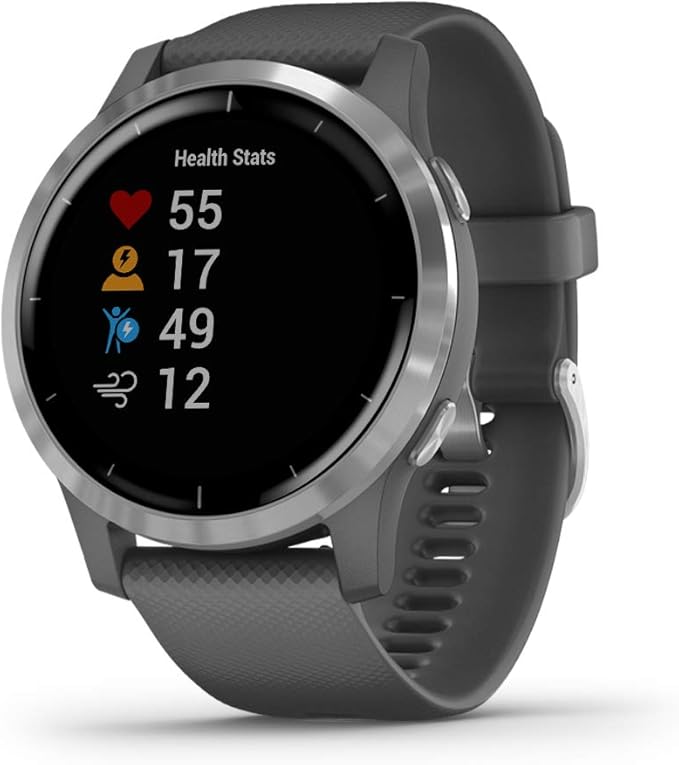
Garmin vs Fossil: Overview
Comparing Garmin and Fossil helps you determine which brand is best suited for your needs in Smart Watch. Both brands offer strong choices depending on your budget and key feature requirements.
Key Features & Comparison
Evaluate factors such as build quality, warranty, customer satisfaction, and total value before making your final purchase choice between Garmin and Fossil.
Battery Life
When examining battery endurance, Garmin stands in an entirely different tier of engineering compared to Fossil. Garmin designs its wearables around ultra-low-power memory-in-pixel (MIP) or efficiently managed AMOLED displays paired with proprietary RTOS architectures, resulting in battery life measured in weeks rather than hours. Advanced outdoor models such as the Fenix or Enduro series integrate solar harvesting lenses, pushing runtimes even further, while basic fitness trackers reliably yield 5 to 14 days of continuous operation with 24/7 biometric monitoring and multiple hours of continuous multi-band GPS tracking. This eliminates battery anxiety entirely for endurance athletes, outdoor adventurers, and standard users alike.
Conversely, Fossil smartwatches—predominantly powered by Google's Wear OS or their hybrid e-ink sub-lines—face the severe battery limitations common to full-featured smartwatch ecosystems. Standard Fossil models rely on Qualcomm Snapdragon Wear processors and vibrant, power-hungry displays that necessitate daily charging, typically offering between 24 to 36 hours under moderate usage, with continuous GPS sessions depleting the cell within a few hours. While Fossil offers custom battery modes to throttle connectivity and display settings, and their Hybrid HR line achieves upwards of two weeks by utilizing mechanical hands over e-ink screens, Fossil's mainstream digital lineup cannot compete with Garmin's specialized, power-efficient platform.
Build Quality & Durability
Garmin's approach to build quality is deeply rooted in rugged utilitarianism and extreme environment resistance. Built to withstand punishing athletic and outdoor scenarios, Garmin watches feature robust polymer cases reinforced with fiber, stainless steel, or lightweight titanium bezels, and scratch-resistant Corning Gorilla Glass or sapphire crystal lenses. Water resistance ratings across Garmin's performance lineups typically sit at 5 ATM to 10 ATM, with diving models reaching 100 meters or deeper. Their buttons provide tactile, positive feedback designed to be operated with heavy gloves or underwater, reflecting an uncompromising commitment to structural integrity, thermal resistance, and military-grade shock resilience.
Fossil approaches build quality from a heritage watchmaking perspective, emphasizing aesthetic refinement, urban lifestyle elegance, and traditional horological detailing. Utilizing high-polish stainless steel, brushed metallic accents, and premium interchangeable leather or link bracelets, a Fossil smartwatch looks natural in formal and professional environments where a utilitarian Garmin might appear out of place. However, this focus on lifestyle fashion creates compromises in durability: Fossil watches generally possess lower water resistance ratings (usually 3 ATM), standard scratch resistance, and finishes that are more prone to scuffs and impacts, making them well-suited for office and casual wear rather than intense trail expeditions or contact sports.
Health & Fitness Tracking
Garmin is universally recognized as an industry benchmark in athletic telemetry and physiological data analysis. Leveraging its proprietary Elevate optical heart rate sensors and sophisticated Firstbeat analytics algorithms, Garmin provides exhaustive metrics including VO2 max, training load balance, Heart Rate Variability (HRV) status, Body Battery energy monitoring, and advanced sleep architecture tracking. For athletes, the depth of sport-specific profiles, running dynamics, power curve metrics, and recovery recommendations offers an actionable, hyper-specialized training ecosystem that adapts dynamically to the user's physical stress levels and performance trajectory.
Fossil offers standard health and wellness tracking that satisfies the needs of general fitness enthusiasts, utilizing platforms like Google Fit or Fossil's proprietary companion software. These watches capably monitor step counts, daily active minutes, calorie expenditure, continuous heart rate, and basic sleep stages. However, Fossil lacks the granular physiological algorithms, multi-sport precision, and recovery metrics found on Garmin devices. Sensor accuracy on Fossil watches can struggle during high-intensity interval training or erratic wrist movements, and the analytical depth is geared primarily toward maintaining general daily wellness milestones rather than guiding structured athletic periodization or high-performance athletic training.
Smart Features & Connectivity
In the realm of smart features and modern connected convenience, Fossil asserts a clear operational advantage due to its integration with Google's Wear OS ecosystem. Fossil users benefit from rich, interactive third-party application support via the Google Play Store, seamless Google Assistant integration, turn-by-turn navigation via Google Maps, and robust digital payment solutions through Google Wallet. Paired with an Android device, Fossil allows users to dictate or type direct replies to incoming notifications, access advanced media streaming controls, and enjoy deep smartphone synchronization that essentially acts as a functional extension of the phone itself.
Garmin approaches smart connectivity through a conservative, fitness-first lens powered by its Connect IQ store. While Garmin devices provide essential modern conveniences such as smart notifications, canned text responses for Android users, offline music storage via Spotify or Deezer, and contactless transactions via Garmin Pay, the overall experience is distinctly less dynamic than Wear OS. The app ecosystem is heavily skewed toward custom data fields and fitness widgets rather than versatile productivity tools, and the interface lacks interactive voice assistants or seamless full-keyboard messaging, marking a distinct trade-off where Garmin prioritizes reliable autonomy over deep smartphone integration.