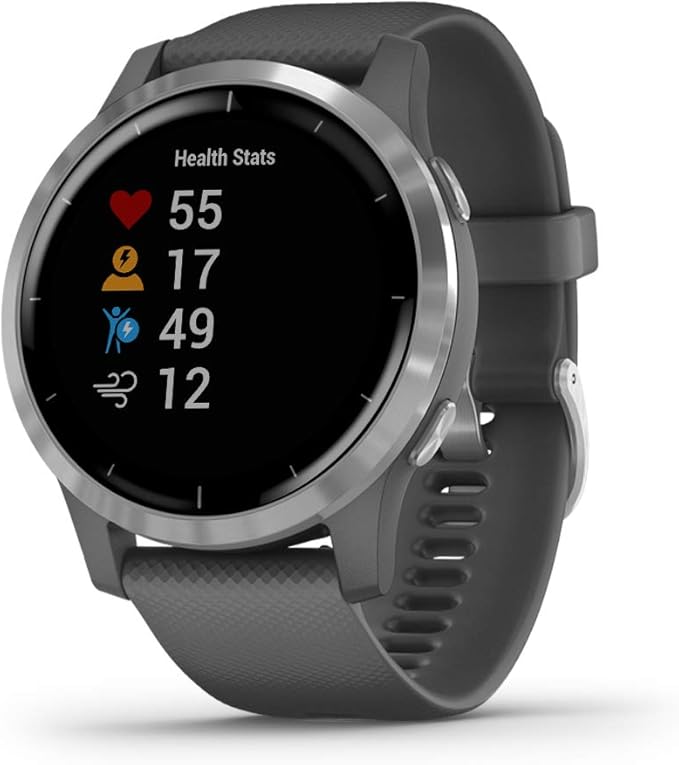
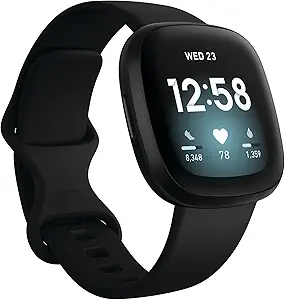
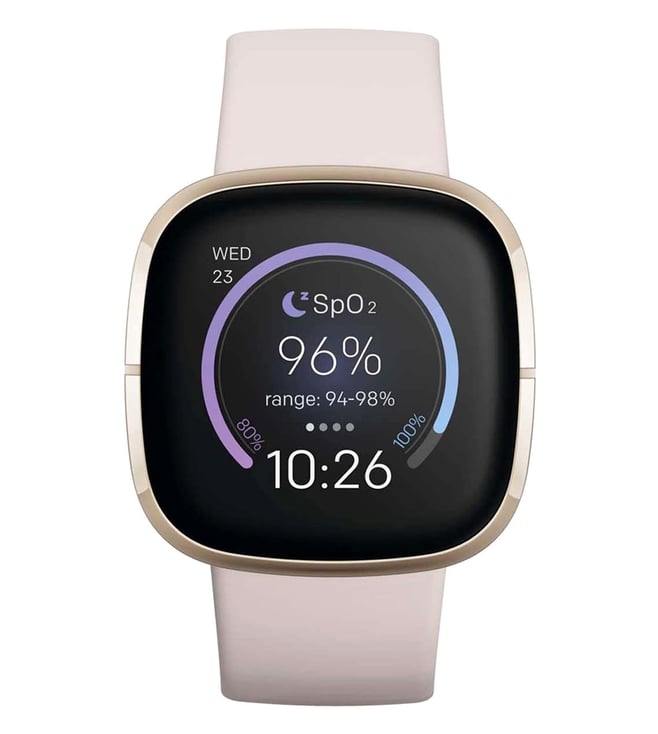
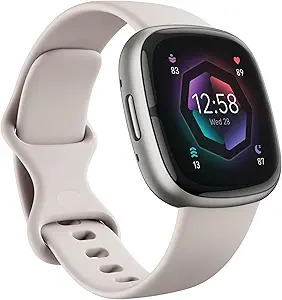
Garmin vs Fitbit: Overview & Brand Philosophy
In the evolving landscape of wearable technology, few rivalries are as storied as Garmin versus Fitbit. While both brands dominate the wrist-worn fitness tracker and smartwatch markets, they originate from fundamentally different design philosophies. Garmin, founded on a bedrock of aviation and marine GPS navigation, treats the smartwatch primarily as a performance instrument. Its ecosystem is engineered for endurance athletes, outdoor adventurers, and data-obsessed fitness enthusiasts who demand deep analytical metrics, rugged industrial durability, and absolute independence from cellular networks or frequent charging cycles.
Conversely, Fitbit pioneered the mainstream consumer wellness movement with a philosophy rooted in holistic health, accessibility, and behavioral modification. Acquired by Google in 2021, Fitbit emphasizes ambient health monitoring—seamlessly tracking steps, sleep quality, stress levels, and active zone minutes without overwhelming the user with hyper-technical data. Fitbit devices are designed to integrate frictionlessly into everyday life, relying on sleek, unobtrusive aesthetics, intuitive touchscreen navigation, and lifestyle-oriented smart features powered by Google's software ecosystem.
Ultimately, this distinction shapes the end-user experience: Garmin builds complex, highly customizable tactical tools intended to help you train for a marathon or survive off-grid expeditions, while Fitbit creates user-friendly lifestyle wearables engineered to encourage long-term, daily wellness habits and monitor vital physiological baselines.
Key Differences & Technological Comparison
When Comparing Garmin and Fitbit, the technological divergence becomes immediately apparent in hardware architecture, sensor accuracy, tracking algorithms, and software monetization.
Hardware and Display Technology: Garmin utilizes a wide array of display technologies tailored to specific use cases. Its outdoor-focused lines (such as the Fenix and Instinct series) rely on transflective Memory-in-Pixel (MIP) displays that excel in direct, harsh sunlight and consume negligible battery life, while its lifestyle lines (like the Venu and Epix) feature vibrant AMOLED screens. Furthermore, Garmin heavily incorporates physical buttons alongside touchscreens, ensuring reliability in rain, underwater, or when wearing heavy gloves. Fitbit (featured across the Sense, Versa, and Charge lineups) almost exclusively uses color AMOLED touchscreens with capacitive side grooves or single physical buttons, prioritizing a minimalist, modern aesthetic at the expense of wet-weather tactile usability.
Biometrics, GPS, and Data Analytics: Garmin is renowned for its industry-leading multi-band (dual-frequency) GNSS positioning systems, providing unmatched tracking accuracy in challenging environments like dense urban canyons or deep tree cover. Its proprietary Elevate optical heart rate sensors feed into sophisticated training metrics—such as Training Readiness, HRV Status, VO2 Max, and Lactate Threshold—all calculated locally on the device without paywalls. Fitbit matches or exceeds Garmin in passive health analytics, notably sleep staging and electrodermal activity (cEDA) tracking for stress detection. However, its GPS tracking is predominantly single-frequency and noticeably less robust, often relying on "Connected GPS" (piggybacking off your phone) in its lower-tier trackers.
Ecosystem and Monetization: A critical differentiator lies in how data is accessed. Garmin adopts a zero-subscription model: whether you buy a $150 Forerunner or a $1,000 Fenix, every advanced metric, training plan, and map layer in Garmin Connect is free for life. Fitbit gates some of its deepest insights—including comprehensive Sleep Profiles, historical health metric trends, and guided workout libraries—behind the "Fitbit Premium" monthly subscription tier, a point of contention for budget-conscious consumers.
Pros & Cons Comparison
Garmin
- Pros:
- Exceptional battery life ranging from 5 days on AMOLED models to weeks or months on solar/MIP variants.
- No subscription fees; full access to all historical data, training plans, and advanced metrics.
- Class-leading multi-band GPS tracking, breadcrumb routing, and full onboard topographical mapping.
- Extensive catalog featuring ruggedized materials (titanium, sapphire crystal, fiber-reinforced polymer).
- Deep platform compatibility, pairing equally well with iOS and Android devices.
- Cons:
- Steep learning curve due to dense, complex menus and data overload.
- Significantly higher entry price across mid-range and flagship models.
- Smartwatch capabilities (voice assistants, native app ecosystem) are relatively basic compared to dedicated smartwatches.
Fitbit
- Pros:
- Market-leading, highly accurate sleep stage tracking and sleep score algorithms.
- Sleek, lightweight, and fashionable designs that fit discreetly on any wrist size.
- Intuitive, clutter-free mobile companion app tailored to mainstream health tracking.
- Tight integration with Google services, including Google Maps, Google Wallet, and Google Assistant.
- Accessible price point across both fitness bands and smartwatches.
- Cons:
- Advanced sleep and wellness metrics locked behind the recurring Fitbit Premium subscription.
- Durability and long-term hardware reliability historically lag behind Garmin's rugged builds.
- Subpar athletic training metrics and less reliable standalone GPS performance.
- Shorter battery life (typically 4–6 days) compared to Garmin's extended-endurance hardware.
Performance, Durability & Value Analysis
From a hardware longevity perspective, Garmin sets the gold standard in the wearable category. Its engineering prioritizes high-grade components: fiber-reinforced polymer casings, stainless steel or titanium bezels, and scratch-resistant Corning Gorilla Glass or sapphire crystal lenses. It is not uncommon for a Garmin device to remain fully operational through five to seven years of intense, daily punishment in saltwater, mud, and sub-zero temperatures. Fitbit builds consumer-grade devices that emphasize comfort and light weight using aluminum and silicone; however, user reports and lab tests show that they are more vulnerable to screen scuffs, band connector failures, and water ingress over prolonged heavy use.
When assessing value, the comparison shifts depending on your time horizon. Fitbit devices initially appear to offer superior value due to their sub-$150 entry trackers (like the Charge 6) and sub-$250 smartwatches (like the Versa 4). However, factoring in the recurring cost of Fitbit Premium to unlock full analytics can easily add $80 per year, quickly closing the financial gap. Garmin requires a substantially higher upfront capital investment—frequently spanning between $300 and $900—yet delivers superior hardware longevity, zero subscription overhead, and unparalleled residual resale value, making it the more cost-effective investment over a multi-year lifecycle.
Final Verdict: Which Brand Should You Choose?
Choosing between Garmin and Fitbit comes down to your personal lifestyle objectives, athletic ambitions, and tolerance for analytical complexity.
Choose Fitbit if: Your primary goals revolve around general lifestyle wellness, weight management, stress reduction, and sleep hygiene. If you want a lightweight, elegant wearable that tracks your daily movement accurately, gives you simple, actionable insights, integrates cleanly with your Google account, and doesn't require a master's degree in exercise science to interpret, Fitbit—specifically the Charge 6 or Versa 4—is an exceptional, user-friendly choice.
Choose Garmin if: You are an endurance runner, cyclist, triathlete, hiker, or data-driven gym-goer. If you require multi-day battery life, accurate standalone GPS mapping, indestructible hardware, and actionable physiological metrics like training load and heart rate variability—without ever paying a monthly subscription fee—Garmin is unquestionably the superior platform. For road runners, the Forerunner series offers unbeatable performance; for outdoor explorers, the Instinct or Fenix lines remain the pinnacle of wearable endurance tech.
Battery Life
When evaluating battery longevity in the smartwatch ecosystem, Fitbit and Garmin approach power management from fundamentally different engineering philosophies, catering to distinct user demands. Fitbit designs its hardware primarily around casual daily wear, sleep tracking, and basic fitness, utilizing power-efficient processors coupled with vibrant AMOLED displays on flagships like the Sense 2 and Versa 4. This architecture delivers a dependable 4 to 6 days of battery life under typical usage scenarios. However, this longevity quickly erodes when engaging in resource-intensive tasks; continuous native GPS tracking drains a modern Fitbit battery in just 5 to 12 hours. Fitbit’s technical trade-off lies in aggressive background sensor throttling and display timeouts, which preserves energy for basic pedometer and heart-rate functions but limits the device's capability as a standalone, multi-day sports computer.
Garmin, by contrast, operates on specialized sports engineering where multi-day endurance under relentless sensor loads is a core functional requirement rather than a secondary feature. Even Garmin's entry-level wearables often achieve 7 to 14 days of uptime, while flagship multisport series—such as the Fenix, Enduro, and Instinct—reach staggering milestones ranging from 16 to over 40 days in smartwatch mode. Garmin accomplishes this through proprietary low-power operating systems and diverse display technologies, most notably transflective Memory-in-Pixel (MIP) screens that consume virtually zero static power and thrive in direct sunlight. Furthermore, Garmin integrates Power Glass solar harvesting technology and advanced multi-GNSS power modes, allowing continuous GPS tracking to operate from 24 hours on compact models to well over 100 hours on ultra-endurance variants.
Ultimately, the practical trade-off between these brands comes down to convenience versus performance capability. Fitbit offers adequate, predictable battery performance that comfortably eliminates daily charging anxiety for the lifestyle consumer, though it demands charging every few days—especially if utilizing the Always-On Display (AOD) mode. Garmin dominates the endurance paradigm, presenting a virtually unmatched technical advantage for backcountry athletes, ultra-runners, and outdoor enthusiasts who require active satellite tracking over consecutive days without access to a wall outlet. For users seeking an unobtrusive, weekly-recharged lifestyle tracker, Fitbit suffices, but Garmin represents the gold standard of battery engineering for power users unwilling to compromise on sensor uptime.
Build Quality & Durability
When assessing engineering quality and durability, Garmin stands as the benchmark for rugged resilience, whereas Fitbit targets a sleeker, lifestyle-oriented aesthetic. Garmin’s design philosophy is rooted in outdoor endurance and tactical utility. Its chassis architecture frequently incorporates fiber-reinforced polymers, aerospace-grade titanium, and DLC (Diamond-Like Carbon) coated stainless steel bezels, as seen in the Fenix and Epix series. Display protection is equally robust, relying on chemically strengthened Power Glass, Corning Gorilla Glass DX, or scratch-proof sapphire crystal. In contrast, Fitbit prioritizes lightweight, all-day comfort with rounded, pebble-like chassis typically composed of anodized aluminum and resin. While high-end Fitbit models like the Sense 2 utilize Gorilla Glass 3, the seamless, glass-heavy curvature leaves the display significantly more exposed to edge impacts and abrasive contact than Garmin’s recessed, bezel-protected lenses.
The technical disparities become even more evident under physical stress and extreme environmental conditions. Garmin engineers its performance wearables to meet rigorous standards, with many devices built to U.S. military specifications (MIL-STD-810) for thermal shock, ballistic impact, and operational altitude. Furthermore, Garmin offers superior water resistance, routinely rating its sports watches at 10 ATM (100 meters) or dive-ready 20 ATM, utilizing tactile, hermetically sealed physical buttons that operate reliably underwater and with heavy gloves. Fitbit, on the other hand, designs for casual aquatic use, standardizing on a 5 ATM (50-meter) rating suitable for recreational swimming but inadequate for high-impact water sports. Fitbit’s shift toward capacitive inductive buttons and minimalist touchscreens also compromises operational reliability in rain, mud, or during high-sweat workouts, presenting a critical trade-off in usability under harsh conditions.
The practical trade-offs ultimately define the target demographic for each brand. Fitbit’s construction excels in unobtrusiveness; the devices are exceptionally thin, featherlight, and ergonomically superior for passive sleep tracking and discreet office wear, though long-term durability is sometimes hampered by proprietary silicone band degradation and adhesive wear. Conversely, Garmin’s industrial build yields a noticeably bulkier, heavier wrist profile that can feel unwieldy during sleep or under formal cuffs. However, Garmin offsets this bulk with virtually indestructible hardware, modular silicone and nylon quick-release straps, and field-tested longevity that outlasts standard consumer electronics upgrade cycles, making it the definitive choice for athletes demanding structural integrity over minimalist fashion.
Health & Fitness Tracking
When evaluating the health and fitness tracking capabilities of Fitbit and Garmin, the fundamental difference lies in their target audiences: Fitbit engineers for passive, holistic lifestyle wellness, while Garmin builds for high-performance athletic analytics. Fitbit excels in continuous baseline health monitoring, leveraging its advanced multi-path optical sensor array and algorithms to track sleep architecture, heart rate variability (HRV), skin temperature deviations, and electrodermal activity (cEDA) for real-time stress detection. Its Daily Readiness Score synthesizes this data into straightforward, actionable lifestyle guidance. However, many of Fitbit’s deepest physiological trends and granular historical analyses remain locked behind its Fitbit Premium subscription, representing a continuous cost of ownership that detracts from its overall hardware value.
Garmin, conversely, is an engineering powerhouse for active training and biomechanical tracking. Utilizing proprietary Elevate optical sensors alongside multi-band, dual-frequency GNSS systems, Garmin provides vastly superior spatial accuracy for outdoor runs, cycling, and swims. Where Fitbit presents aggregated wellness scores, Garmin delivers deeply technical athletic metrics such as VO2 max, lactate threshold, Training Status, Acute Load, and real-time Stamina tracking without any paywalled data tiers. Garmin’s Body Battery metric stands out as a peerless dynamic energy monitor, balancing physical strain against autonomic nervous system recovery via continuous HRV analysis. While its Sleep Score algorithms historically lagged behind Fitbit’s nuanced sleep stage detection, recent integration of Firstbeat Analytics has largely closed that gap.
Ultimately, the trade-off hinges on whether a user prioritizes passive lifestyle modification or data-driven athletic optimization. Fitbit provides a more approachable, user-friendly interface that excels in keeping sedentary or moderately active users engaged through passive health surveillance, gentle habit-nudging, and market-leading sleep tracking. Garmin demands a steeper learning curve and carries a higher hardware entry price, but it rewards athletes, outdoor adventurers, and serious fitness enthusiasts with an exhaustive suite of unpaywalled metrics, advanced recovery guidance, and professional-grade tracking fidelity that Fitbit’s consumer-centric ecosystem cannot match.
Smart Features & Connectivity
When evaluating smart features and connectivity, Fitbit and Garmin approach everyday utility from fundamentally distinct engineering philosophies. Fitbit, operating under the Google umbrella, leans heavily into lifestyle integration and streamlined user experience. Modern Fitbit devices—such as the Sense 2 and Versa 4—excel in daily smart interactions by offering native Google Wallet integration, turn-by-turn navigation via Google Maps, and deeply integrated, contextual notifications with actionable quick replies for Android users. Bluetooth pairing is stable and frictionless, bolstered by Google Fast Pair on compatible devices. In contrast, Garmin designs its smart architecture around utility, outdoor independence, and data telemetry. While Garmin devices provide standard notifications and calendar alerts across both iOS and Android, their interface feels more utilitarian and less app-centric. However, Garmin's technical implementation of onboard sensors, multi-band GNSS, and robust Bluetooth/ANT+ connectivity allows seamless pairing with external cycling power meters, heart rate chest straps, and specialized gear that the consumer-focused Fitbit ecosystem simply cannot interface with.
The trade-offs between the two platforms become most pronounced when examining local media management, contactless payments, and app ecosystems. Garmin holds a distinct technical advantage for music lovers and off-grid athletes; premium Garmin watches offer true offline storage and playback for Spotify, Deezer, and Amazon Music, complete with dedicated Wi-Fi syncing that lets users stream to Bluetooth headphones without a smartphone. Conversely, recent Fitbit hardware regressions have largely stripped offline music storage and third-party music control, forcing users to tether to their phones for media. When it comes to contactless payments, both Garmin Pay and Google Wallet on Fitbit are technically secure, but Fitbit benefits from Google's wider banking adoption globally compared to Garmin’s slightly narrower roster of supported financial institutions. Furthermore, Garmin’s Connect IQ store, while functionally dense, is visually archaic compared to the polished, consumer-friendly companion app interface engineered by Fitbit, which prioritizes seamless cloud synchronization and health data presentation over deep on-wrist customization.
Ultimately, the choice in smart connectivity hinges on the user’s definition of utility versus autonomy. Fitbit provides an exceptional smartwatch experience for mainstream users who prioritize seamless smartphone extension, digital voice assistance (via Amazon Alexa), and frictionless mobile payments within a sleek UI. Garmin, on the other hand, engineers superior hardware independence, offering advanced smart features tailored for endurance and performance—such as LiveTrack safety features, incident detection, and multi-network wireless protocols—making it the technically superior choice for users demanding phone-free reliability, specialized connectivity, and robust offline audio capabilities.
Compare current retail pricing, active promotions, and verified stock availability directly from authorized stores: