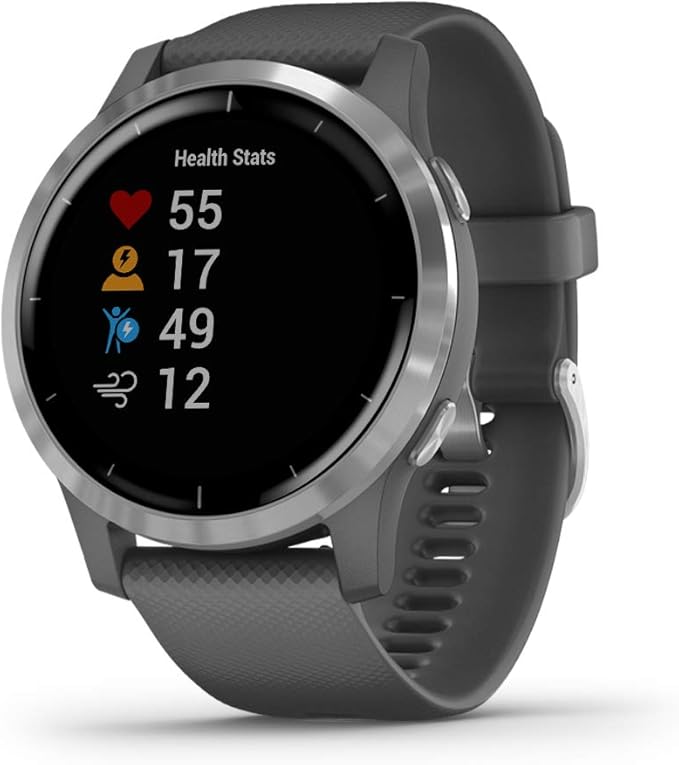
Garmin vs Amazfit: Overview
Comparing Garmin and Amazfit helps you determine which brand is best suited for your needs in Smart Watch. Both brands offer strong choices depending on your budget and key feature requirements.
Key Features & Comparison
Evaluate factors such as build quality, warranty, customer satisfaction, and total value before making your final purchase choice between Garmin and Amazfit.
Battery Life
Garmin approaches battery longevity through specialized hardware engineering, prioritizing function and continuous sensor utilization over high-refresh graphical displays. Models like the Enduro, Instinct, and Fenix series utilize sunlight-visible Memory-in-Pixel (MIP) screens, highly optimized dual-frequency GPS chipsets, and proprietary Power Glass solar charging technology. This setup enables battery life ranging from two weeks in standard smartwatch mode to months on solar-equipped models, or upwards of 60 to 150 hours of continuous multi-band GNSS tracking. Even Garmin's AMOLED offerings, such as the Epix and Venu lineups, maintain an impressive 5 to 14 days of typical use through intelligent ambient light regulation and fine-grained power management toggles.
Amazfit stands out as an exceptional value contender by achieving remarkable endurance via lightweight proprietary software (Zepp OS) and large-capacity lithium-polymer cells. Devices such as the Amazfit Balance, T-Rex series, and Bip models routinely deliver between 10 and 24 days of normal operation, even when driving vibrant, high-nit AMOLED panels with always-on displays. However, this longevity frequently relies on aggressive background process management and lower default sampling frequencies for biometric monitoring and location tracking. While Amazfit offers incredible passive standby and day-to-day longevity per dollar spent, Garmin maintains a distinct technical advantage for extended, multi-day GPS workouts where continuous computational power cannot be throttled to preserve power.
Build Quality & Durability
Garmin's construction philosophy is deeply rooted in military-grade resilience and expedition-level performance. The company frequently constructs its bezels and rear casings from premium materials such as DLC-coated titanium, 316L stainless steel, and fiber-reinforced polymers designed to withstand severe impacts and torsional stress. Screen protection is equally rigorous, with sapphire crystal and chemically strengthened Gorilla Glass standard on performance-tier models. Devices in the Instinct and Fenix ranges undergo stringent MIL-STD-810 testing for thermal shock, vibration, and water resistance up to 10 ATM or 100 meters, ensuring these watches survive intense marine, alpine, and desert conditions without seal degradation or button failure.
Amazfit achieves a modern, attractive aesthetic across its product line, employing aluminum alloy middle frames, high-density polymer composites, and anti-fingerprint tempered glass. The outdoor-focused T-Rex series also holds 15 military-grade MIL-STD-810G certifications and 10 ATM water resistance, demonstrating commendable structural integrity against drops, mud, and extreme temperatures. However, across the lifestyle and mid-range tiers (like the GTR, GTS, and Bip series), the build materials lean more toward lightweight consumer plastics and thinner glass coatings. While Amazfit watches feel light on the wrist and adequately endure everyday wear and recreational gym sessions, Garmin's tighter structural tolerances, mechanical button feedback, and resilient chassis engineering make it significantly better suited for extreme, sustained punishment.
Health & Fitness Tracking
Garmin represents the gold standard for sports science, athletic tracking, and biometric accuracy. Utilizing its advanced Elevate optical heart rate sensors paired with Firstbeat Analytics algorithms, Garmin delivers nuanced metrics such as Training Status, Training Readiness, HRV Status, VO2 Max, lactate threshold, and acute-to-chronic workload ratios. The platform natively supports external ANT+ and Bluetooth chest straps, power meters, and cadence sensors, facilitating seamless integration for professional runners, cyclists, and triathletes. Furthermore, Garmin's navigational suite—offering routable TopoActive maps, ClimbPro, and multi-band GNSS—remains unchallenged in providing reliable contextual workout data and route-finding capabilities in complex terrains.
Amazfit, powered by its proprietary BioTracker PPG optical sensors and Zepp OS algorithms, provides a surprisingly rich and user-friendly biometric suite for the general public and casual athletes. The Zepp app delivers comprehensive daily overviews, including PAI (Personal Activity Intelligence) scores, readiness tracking, continuous SpO2 readings, and detailed sleep architecture analysis. For common activities like running, cycling, and strength training, Amazfit devices track routes accurately using circular-polarized GPS antenna systems. Nevertheless, Amazfit's algorithmic models lack the physiological rigor, recovery prescription, and historical load analysis found in Garmin's Firstbeat engine, making Amazfit best suited for wellness tracking rather than structured, competitive performance training.
Smart Features & Connectivity
Garmin positions its smart capabilities as functional extensions of an active lifestyle rather than an all-in-one phone replacement. Depending on the model, users benefit from onboard music storage with offline caching from Spotify, Deezer, and Amazon Music, alongside contactless transactions via Garmin Pay. Select models like the Venu 3 integrate an onboard microphone and speaker for Bluetooth calls and basic digital assistant pass-through (Siri, Google Assistant). Garmin’s Connect IQ app store facilitates custom watch faces, data fields, and micro-applications, though the ecosystem remains largely focused on sports utility. Interactive notifications and canned text replies are supported on Android, but Garmin deliberately foregoes deep OS integrations to maintain stability, battery efficiency, and cross-platform parity between iOS and Android.
Amazfit embraces modern consumer-grade smart features through its lightweight Zepp OS platform. Many mid-to-high-tier Amazfit watches include built-in Amazon Alexa integration, onboard speakers and microphones for direct Bluetooth calling, and offline voice command capabilities for hands-free wrist control. The Zepp App ecosystem supports downloadable mini-apps, ranging from hydration reminders to calculators, which run smoothly with fluid interface animations. However, Amazfit exhibits limitations regarding external utility; native contactless payment support (Zepp Pay) is regionally restricted, and third-party music streaming services like Spotify do not allow offline playback on the device. Ultimately, while Amazfit provides a more immediate, smartwatch-like user interface at lower price points, Garmin provides superior third-party fitness ecosystem integrations and independent audio playback capabilities.
Compare current retail pricing, active promotions, and verified stock availability directly from authorized stores: