Fitbit vs Fossil: Overview
Comparing Fitbit and Fossil helps you determine which brand is best suited for your needs in Smart Watch. Both brands offer strong choices depending on your budget and key feature requirements.
Key Features & Comparison
Evaluate factors such as build quality, warranty, customer satisfaction, and total value before making your final purchase choice between Fitbit and Fossil.
Battery Life
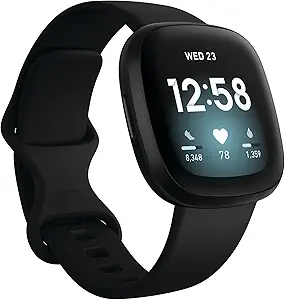
When evaluating battery performance, Fitbit decisively outperforms Fossil due to fundamentally different hardware architectures and operating system overhead. Fitbit devices, including the Versa and Sense lineups as well as their dedicated fitness trackers, are built around proprietary, lightweight firmware designed specifically for hyper-efficient power management. Consequently, most modern Fitbit smartwatches comfortably deliver between six to ten days of continuous operation on a single charge under moderate use. Even with continuous optical heart rate monitoring, sleep tracking, and intermittent GPS tracking enabled, users rarely need to plan their routines around daily charging intervals, making Fitbit remarkably convenient for uninterrupted lifestyle and health tracking.
In contrast, Fossil smartwatches—which predominantly run Google's full-featured Wear OS—struggle to match this longevity due to power-hungry chipsets and resource-intensive display rendering. Most Fossil Gen 5 and Gen 6 models achieve roughly 24 hours of endurance, necessitating daily visits to the magnetic charging dock. While Fossil has incorporated custom battery modes (such as Daily, Extended, and Time-Only) along with rapid-charging architectures that can boost cells to 80% within 30 to 45 minutes, the operational reality demands perpetual battery management. For consumers prioritizing multi-day expedition use or continuous overnight sleep tracking without charging anxiety, Fitbit offers an engineering advantage that Fossil simply cannot overcome within the Wear OS framework.
Build Quality & Durability
Fossil leverages over four decades of traditional watchmaking expertise, giving its smartwatches an unmistakable edge in aesthetic appeal, premium materials, and classic horological craftsmanship. Encased in high-grade stainless steel with knurled crowns, rotating home buttons, and traditional 22mm lug designs, Fossil watches emulate the luxurious feel of mechanical timepieces. Their bezels and chassis are robust, well-weighted, and pair seamlessly with an extensive array of standard leather, silicone, and stainless steel link bands. However, while their casings feel remarkably solid in urban environments, many Fossil models feature only a 3 ATM water resistance rating, making them splash-proof and suitable for shallow water activities, but less suited for intense aquatic sports or high-impact outdoor abuse.
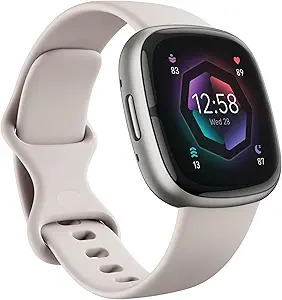
Fitbit takes a distinctly pragmatic, sport-oriented approach to structural design, utilizing aerospace-grade aluminum, lightweight polymers, and soft-touch fluoroelastomer straps. While premium models like the Fitbit Sense 2 incorporate refined metal housings, the overall design philosophy prioritizes ergonomic comfort, low-profile wrist presence, and continuous day-and-night wearability rather than ornate styling. Fitbit hardware generally carries a robust 5 ATM (50 meters) water resistance rating, rendering them fully swim-proof and far more resilient to heavy perspiration, open-water swimming, and accidental submersions than the majority of Fossil's catalog. The trade-off is clear: Fossil delivers high-fashion luxury that mimics an authentic luxury watch, whereas Fitbit offers utilitarian, ruggedized efficiency tailored for active movement.
Health & Fitness Tracking
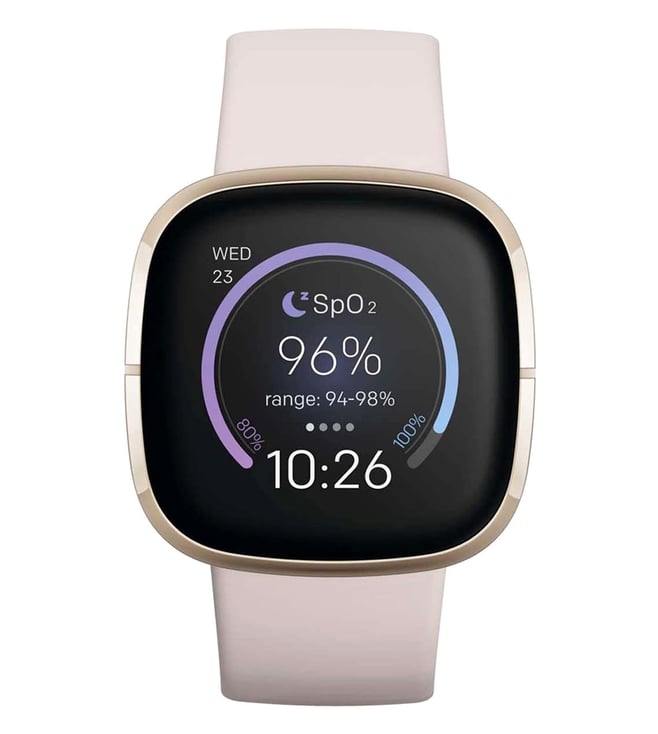
Fitbit stands as one of the foremost pioneers in digital health analytics, offering a profoundly comprehensive biometric suite that Fossil cannot rival. Fitbit devices feature sophisticated multi-path optical sensor arrays capable of tracking continuous heart rate, heart rate variability (HRV), peripheral blood oxygen saturation (SpO2), electrodermal activity (cEDA) for stress management, and skin temperature variations. The software ecosystem synthesizes these inputs into actionable, industry-standard metrics such as the Daily Readiness Score, Active Zone Minutes, and deeply granular sleep stage staging with sleep quality scores. Fitbit's holistic platform transforms complex biological telemetry into intuitive behavioral health guidance, solidifying its place as a true diagnostic and fitness companion.
Fossil, meanwhile, provides foundational health metrics that cater primarily to casual fitness enthusiasts rather than data-driven athletes. Powered by native Wear OS sensors and proprietary Fossil wellness software, recent models track continuous heart rate, blood oxygen levels, step cadence, and estimated calorie burn. However, the data presentation lacks the algorithmic depth, trend analysis, and sleep-tracking sophistication found in Fitbit's ecosystem. Sensor accuracy on Fossil devices can also be more prone to motion artifacts during high-intensity interval training or heavy wrist movement. Unless heavily augmented by third-party Wear OS applications such as Strava or Google Fit, Fossil remains a lifestyle accessory with supportive wellness features rather than a specialized health monitor.
Smart Features & Connectivity
Smart features and software versatility represent Fossil’s primary domain of superiority over Fitbit. Operating on Wear OS, Fossil watches function as true extensions of a smartphone, offering seamless access to the Google Play Store with thousands of downloadable native applications. Users enjoy deep integration with services like Google Assistant, Google Maps with standalone turn-by-turn navigation, dynamic notification management with full inline replying via on-screen keyboards, and direct audio streaming. With integrated speakers and microphones, Fossil devices also enable untethered Bluetooth calling directly from the wrist, providing a versatile computing platform that excels at productivity and connected lifestyle conveniences.
Fitbit, conversely, deliberately limits smart interactivity to preserve battery efficiency and system stability. While newer iterations incorporate basic Google ecosystem elements such as Google Wallet, Google Maps navigation prompts, and basic Alexa integration, app availability remains extremely restricted on Fitbit OS. Notification handling is largely passive; Android users are relegated to pre-configured quick replies, and iOS users face severe interactive limitations imposed by Apple's sandboxed environment. Fitbit devices lack native cellular options, robust third-party app stores, and comprehensive on-wrist communication tools, positioning them primarily as health-centric wearables with convenient alert badges rather than comprehensive wrist-bound computers.